


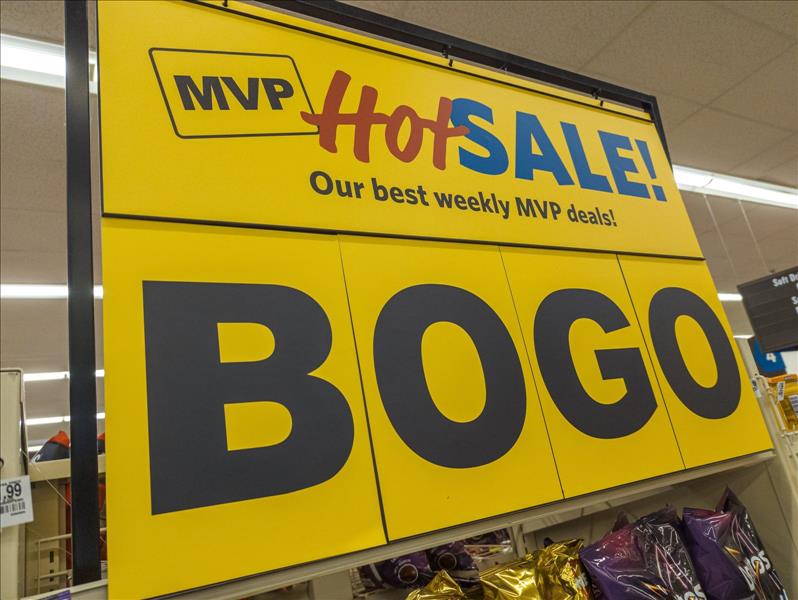
Why Some Grocery Store BOGO Deals Aren't Worth Buying


Buy one, get one free deals can be some of the most tempting offers in a grocery store. The promise of getting a second item at no additional cost makes it easy to feel like you are saving money, especially when grocery prices are already stretching household budgets. But not every BOGO promotion is a bargain. Store policies can affect how the discount works; the price may not be the lowest available, and buying an extra item can lead to waste if you do not actually need it.
GroceryCouponGuide may earn a commission when you buy through links in this article. As an Amazon Associate, we earn from qualifying purchases.
1. You May Have to Buy Both Items to Get the DealOne detail shoppers sometimes overlook is whether a store allows them to purchase just one item at a discounted price. At Publix, the BOGO policy differs in Florida from the way it works in Georgia and other states. Florida shoppers generally need to purchase both qualifying items to receive the promotion, while shoppers in Georgia may be able to buy just one item at half price. This difference can matter if you only need one package of a product, so it is worth checking the terms before assuming you can get the deal with a single item.
The distinction is tied to Publix's promotional policy, rather than a Florida law requiring shoppers to buy two items for every BOGO offer. The retailer has explained that its approach differs by market. In Florida, one item is sold at its regular price, with the second qualifying item free; in other states, shoppers may purchase a single qualifying item at half price. Because policies can vary by retailer and location, check the offer details or ask customer service before shopping.
2. The Regular Price May Still Be Better Somewhere ElseA BOGO promotion can look impressive when it is displayed beside a product's regular shelf price. But the discount does not automatically mean the item is cheaper than it would be at another grocery store. A product that costs $6 for two packages through a BOGO deal, for example, may still be more expensive than buying two packages at a store that normally charges $2.50 each.
This is why comparing the unit price can be more useful than focusing on the sale sign. Check the price per ounce, pound, or individual item, depending on what you are buying. It can also help to compare the product's usual price with the advertised promotion, rather than relying on the savings percentage alone. A BOGO deal may be a good discount from one store's regular price, but it is not necessarily the lowest price available.
3. The“Inflated Price Before the Sale” Claim Needs ContextShoppers sometimes hear that grocery stores raise prices before a BOGO promotion, making the discount appear larger than it really is. It is worth being cautious about this claim. A higher price before a sale does not automatically prove that a retailer raised it specifically to make the promotion look better. Grocery prices can change for several reasons, including supplier costs, demand, and store pricing decisions.
That said, misleading promotional pricing is a real concern in some cases. Federal guidance warns that raising the regular price, reducing the quantity or quality, or adding undisclosed conditions to a“free” or“buy one, get one” offer can mislead consumers. In 2026, Washington's attorney general also brought a lawsuit alleging that Albertsons, Safeway, and Haggen artificially increased prices on some products before BOGO promotions. Those are allegations in a specific case, not proof that every grocery store or BOGO sale works that way. Comparing prices over time and across stores is a practical way to judge whether a promotion offers genuine savings.
4. BOGO Deals Can Encourage You to Buy More Than You NeedEven when the discount is legitimate, a BOGO deal can encourage shoppers to spend more than planned. You may go to the store for one package of pasta sauce, cereal, or snacks, only to purchase two because the second item appears free. The extra product may be useful, but it can also be an unplanned addition to the grocery bill.
This is especially important for items with a short shelf life. Buying two packages of fresh produce, dairy products, or refrigerated foods may not save money if one goes bad before you can use it. Even shelf-stable items can become clutter when you buy more than your household needs. Before taking advantage of a BOGO promotion, consider whether you would purchase the second item at its regular price. If not, the deal may be encouraging an unnecessary purchase.
Tools that help (commission links)
Escali Primo digital kitchen scale
A basic digital kitchen scale for checking package weight when you compare unit prices at the store or portion bulk food at home.
View product
FoodSaver vacuum sealer bags (8" and 11" rolls, 5-pack)
FoodSaver vacuum-sealer rolls can be cut to size and used to freeze leftovers or bulk buys, which helps limit freezer burn.
View product
Some BOGO deals involve products that take up more room than shoppers expect. Large packages of paper goods, frozen foods, or pantry staples can be useful when you have space to store them. But buying a second item simply because it is free can make a small pantry, refrigerator, or freezer harder to manage
Storage also matters for food quality. Frozen items may be difficult to organize if the freezer is already full, and refrigerated products may get pushed to the back and forgotten. If you have limited space, it may be more practical to buy one item at a lower price elsewhere than to bring home two packages from a promotion. A good deal should fit your household's needs, not create another problem to solve.
6. Check Whether the Deal Requires a Loyalty Card or CouponSome grocery promotions are available to every shopper, while others require a loyalty account, digital coupon, or additional purchase. A BOGO sign may not tell the entire story, particularly if the offer is tied to a store's app or rewards program. If you do not activate the coupon or meet the terms, the discount may not appear at checkout.
Before buying, check the fine print for limits, eligible sizes, and whether the offer applies to specific brands or varieties. Some promotions allow shoppers to mix and match qualifying products, while others require two identical items. If you are shopping for a specific product, confirm that it is included in the offer. Reviewing the terms can help prevent an unexpected total at the register.
A BOGO Deal Is Only a Bargain If It Fits Your Shopping ListBOGO promotions can be worthwhile when you already need the product, the price is competitive, and you can use both items before they expire or lose quality. They can also be helpful for stocking up on shelf-stable products that your household regularly uses. The problem is not the promotion itself; it is assuming that every offer automatically saves money.
Before adding a BOGO item to your cart, check whether you need one or two, compare the unit price, and review the promotion's terms. Consider the product's shelf life, storage needs, and whether another store offers a better price. A little comparison shopping can help you take advantage of genuine savings without spending extra simply because a sale sign makes the purchase seem irresistible.
Want the free grocery savings guide?
Get our state-by-state guide to the cheapest grocery stores, plus savings tips and hand-picked deals twice a month.
Email addressFree. Unsubscribe anytime.
Legal Disclaimer:
MENAFN provides the
information “as is” without warranty of any kind. We do not accept any
responsibility or liability for the accuracy, content, images, videos,
licenses, completeness, legality, or reliability of the information
contained in this article. If you have any complaints or copyright issues
related to this article, kindly contact the provider above.


Comments
No comment