


Azerbaijani Carpets And Silk Road Heritage Celebrated In Sofia


By Alimat Aliyeva
A series of cultural events has been held in Sofia as part of Azerbaijan Carpet Week, organised at the initiative of the Azerbaijani Embassy in Bulgaria and Azerkhalcha OJSC.
The project aimed to familiarise Bulgarian audiences with Azerbaijan's rich carpet-weaving heritage, national and spiritual values, and contemporary artistic interpretations of traditional craftsmanship. The programme included a carpet exhibition, educational lectures and a visit to Chiprovtsi, one of Bulgaria's historic centres of carpet weaving, Azerkhalcha's press service said.
The events were organised as part of Azerbaijan's November programme in Bulgaria dedicated to Victory Day, a landmark occasion symbolising the national unity, determination and pride of the Azerbaijani people.
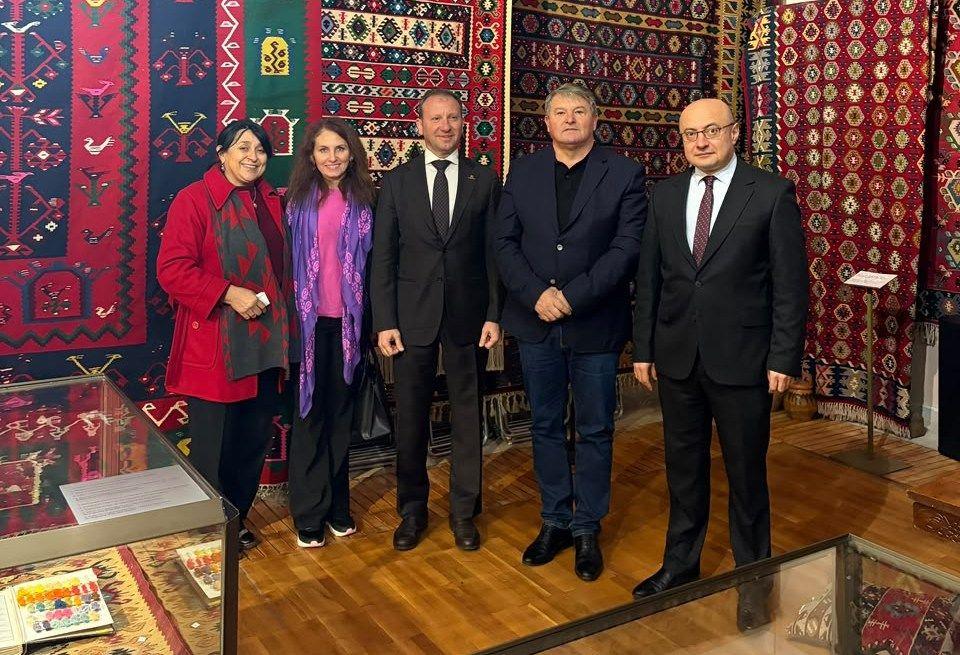
The exhibition, titled Azerbaijani Carpets: Knots of Heritage, was opened at the National Ethnographic Museum of the Bulgarian Academy of Sciences through a joint initiative of the Azerbaijani Embassy and Azerkhalcha.
The opening ceremony brought together representatives of the Bulgarian government and parliament, mayors, ambassadors and other members of the diplomatic corps, cultural and artistic figures, art historians, heads of cultural centres operating in Sofia, the director of the UNESCO Regional Centre for the Safeguarding of Intangible Cultural Heritage in Southeast Europe, and members of the Azerbaijani diaspora.
Azerbaijani Ambassador to Bulgaria Elmar Mammadyarov officially opened the exhibition.
In his remarks, the ambassador welcomed the guests and emphasised the importance of the exhibition in introducing Bulgarian audiences to Azerbaijan's carpet-making tradition and broader cultural heritage. He described Victory Day as a major historical milestone reflecting the unity and national determination of the Azerbaijani people, as well as their devotion to their homeland.
Mammadyarov said Azerbaijani carpets were unique works of art embodying the nation's centuries-old history, worldview, aesthetic traditions and collective memory. He added that presenting the exhibition in Bulgaria would help bring Azerbaijan's national and spiritual values, historical heritage and intergenerational craftsmanship traditions to a wider European audience.
The ambassador thanked all partners involved in organising the exhibition, as well as PASHA Holding, PASHA Bank and Kapital Bank for supporting the donation of five Azerbaijani carpets to Bulgaria's National Ethnographic Museum.
Emin Mammadov, chairman of the board of Azerkhalcha and a distinguished figure in the arts, also addressed the ceremony. He highlighted the importance of presenting Azerbaijani carpet art in Bulgaria for strengthening cultural cooperation between the two countries and generating greater international interest in Azerbaijan's heritage.
Mammadov noted that the exhibited pieces demonstrated the rich artistic language of Azerbaijani carpet weaving, particularly the distinctive character of its ornaments and compositional techniques. He described carpets as an integral part of the country's cultural heritage, preserving its aesthetic traditions and historical memory while transmitting craftsmanship from one generation to the next.
Alongside traditional carpets produced by Azerkhalcha, the exhibition featured collections developed in collaboration with contemporary Azerbaijani artists and designers.
Visitors had the opportunity to explore the Pazyryk, Hunting, Nakhchivan, Achma-Yumma and Karabakh carpets from Rufat Ismayil's collection; Rashad Alakbarov's Karabakh Carpets: A New Perspective collection; Aidan Salakhova's Architecture of Memory; and selected works from Samira Allahverdiyeva and Syama Mammadli's Fruits collection.
The exhibition brought together the historical foundations of Azerbaijani carpet art, the diversity of its regional schools and its evolving relationship with contemporary artistic expression.
As part of Azerbaijan Carpet Week, a series of lectures was also held at Sofia University and the National Ethnographic Museum. The events were jointly organised by the Centre for Azerbaijani Language and Culture of Baku Slavic University, operating within Sofia University, and the National Ethnographic Museum.
The lectures were dedicated to the 120th anniversary of the birth of Latif Karimov, an outstanding Azerbaijani carpet artist, carpet scholar, educator, art historian and People's Artist. Held under the overarching theme From Heritage to Contemporary Art, the sessions were delivered by Azerkhalcha Chairman Emin Mammadov.
Participants received detailed presentations on Azerkhalcha's activities, the ancient traditions of Azerbaijani carpet weaving, contemporary directions in the sector's development, and the integration of traditional craftsmanship with modern design and artistic practices.
Mammadov also discussed the decree issued by Azerbaijani President Ilham Aliyev on April 30, 2026, concerning the celebration of Karimov's 120th birth anniversary.
It was noted that November 2026 marks 120 years since the birth of Karimov, one of Azerbaijan's most prominent figures in the visual arts and carpet-making tradition, who was also a recipient of the USSR State Prize and held the titles of People's Artist, educator and art historian.
The lectures provided an opportunity for Bulgarian academics and students to gain a deeper understanding of the history and artistic characteristics of the Azerbaijani carpet-making school, while contributing to stronger bilateral cooperation in education and culture.
The Azerbaijani delegation subsequently travelled to Chiprovtsi, a Bulgarian town renowned for its centuries-old carpet-weaving traditions.
The delegation was welcomed by the town's mayor before visiting local historical and cultural landmarks, including the Chiprovtsi Carpet Museum.
During the visit, participants learned about the town's rich carpet-making heritage and the role of this traditional craft in preserving local cultural identity. Representatives of Azerkhalcha also met with local carpet artisans.
The discussions and exchange of expertise generated mutual interest, providing an opportunity to examine both the similarities and differences between the rich carpet-making traditions of the two nations.
Azerbaijan Carpet Week in Sofia served as a comprehensive platform for showcasing Azerbaijan's cultural heritage, traditional craftsmanship and contemporary artistic potential to Bulgarian audiences, while opening further opportunities for cultural and educational cooperation between the two countries.

Legal Disclaimer:
MENAFN provides the
information “as is” without warranty of any kind. We do not accept any
responsibility or liability for the accuracy, content, images, videos,
licenses, completeness, legality, or reliability of the information
contained in this article. If you have any complaints or copyright issues
related to this article, kindly contact the provider above.


Comments
No comment