


Von Der Leyen Demands EU Role In Ukraine Peace Talks Amid New Sanctions


Von der Leyen Demands EU Role in Ukraine Peace Talks Amid New Sanctions
European Commission President Ursula von der Leyen asserted on Friday that Europe's inclusion in ongoing Ukraine peace negotiations is "self-explanatory" to protect the bloc's security interests, while announcing that Brussels will unveil a 22nd sanctions package against Russia alongside a 2027 financing plan for Kyiv later this month.
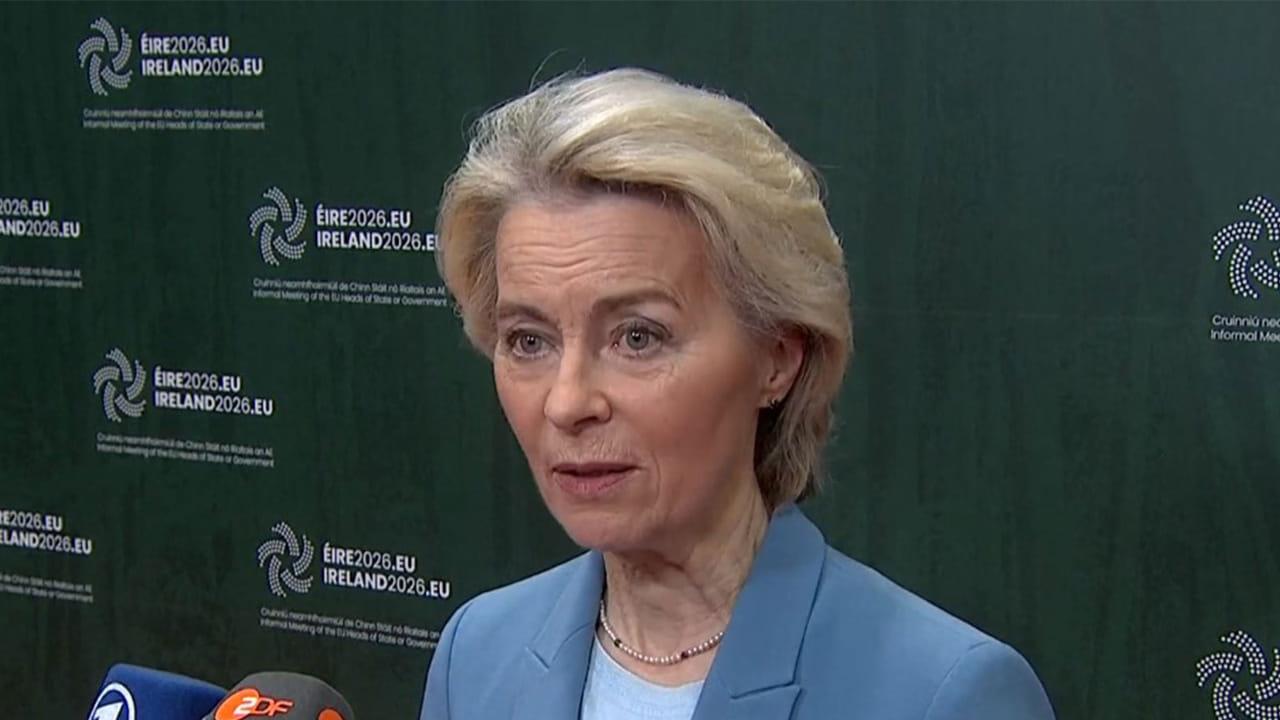
Speaking to reporters ahead of the Informal European Council summit in Dublin, von der Leyen welcomed recent diplomatic momentum, including a prisoner exchange, and underscored that European leaders must have a direct voice at the negotiating table as talks progress. "We will also discuss the peace talks. I welcome the exchange of prisoners, and I think it is self-explanatory that Europe is included in the peace talks to safeguard our interests, but also to support Ukraine," von der Leyen said.
To ensure Kyiv negotiates from a position of strength, the European Commission is preparing a dual track of economic pressure on Moscow and sustained financial backing for Ukraine ahead of the formal European Council summit scheduled for November 26–27. "And in this context, we will come forward as a Commission with a proposal for the financing of the Ukrainian needs in 2027, and with the 22nd sanctions package before the next European Council," she stated.
Her remarks come amid intense diplomatic discussions in the Irish capital, where EU leaders and Ukrainian President Volodymyr Zelenskyy have been coordinating Europe's role in the peace process and debating the appointment of a dedicated European envoy. Zelenskyy met US President Donald Trump's Special Envoy Steve Witkoff and Jared Kushner in Ireland following their talks with Russian President Vladimir Putin in Moscow, with discussions focusing on a major prisoner exchange, greater European participation in peace negotiations and further diplomatic engagements to end the Ukraine conflict.
Announcing the meeting in a post on X, Zelenskyy said the discussions had resulted in three key outcomes, including preparations for what could become the largest prisoner exchange since the beginning of the war. He also highlighted the need for European representatives to play a more active role in the diplomatic process, stressing that Ukraine wanted Europe to have an equal position at the negotiating table. "First, a humanitarian outcome – prisoners will be released, and we are counting on the largest prisoner exchange since the start of this war. The second outcome – we are involving European representatives even more actively in diplomacy so that they can have an equal seat at the negotiating table. Ukraine always defends the interests of all of Europe," he said.
The meeting in Ireland followed discussions between Witkoff, Kushner and Putin at the Kremlin in Moscow, where the US envoys reviewed the latest developments in negotiations involving Russia, Ukraine and the United States. According to a statement issued by the Kremlin, Putin thanked the US envoys for their efforts and asked them to convey his gratitude to Trump for facilitating contacts with the Ukrainian side. He also highlighted progress on humanitarian cooperation, particularly the exchange of detainees.
During the meeting, Witkoff told Putin that Trump considered ending the conflict as quickly as possible a priority. However, major differences remain over territorial arrangements and future security guarantees. During the Kremlin discussions, Putin reiterated Moscow's opposition to the deployment of foreign troops on Ukrainian territory following a potential peace agreement. Highlighting Europe's inclusion in the talks, Kushner wrote on X, "Both sides have now agreed to expand the next round of negotiations to include our European partners. This will allow us to address the broader postwar European security arrangements alongside the territorial issues between Ukraine and Russia. A lasting end to the fighting requires credible security guarantees, deconfliction mechanisms, and reciprocal de-escalation commitments that reduce the risk of future conflict."
Earlier last month, European Union foreign policy chief Kaja Kallas announced nearly 1,600 sanctions listings targeting Russia's military-industrial complex and individuals linked to elections in occupied Ukrainian territories, asserting that sustained economic pressure on Moscow was necessary to end the war.

Legal Disclaimer:
MENAFN provides the
information “as is” without warranty of any kind. We do not accept any
responsibility or liability for the accuracy, content, images, videos,
licenses, completeness, legality, or reliability of the information
contained in this article. If you have any complaints or copyright issues
related to this article, kindly contact the provider above.


Comments
No comment