


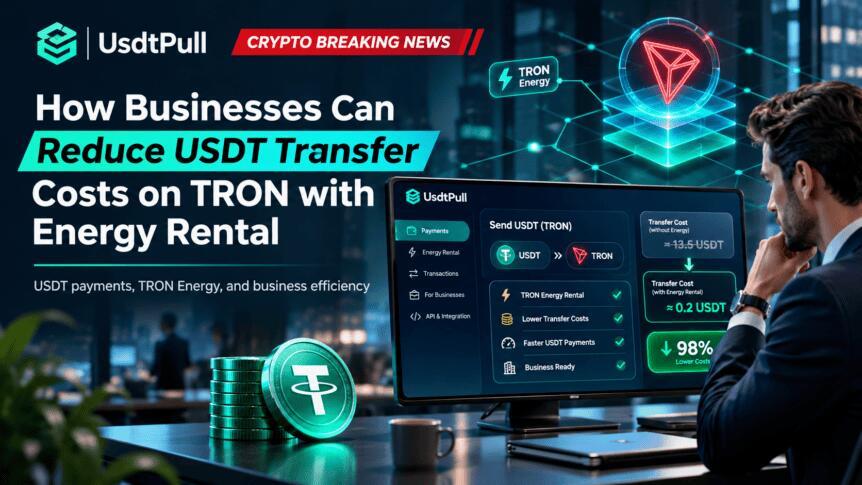
How Businesses Can Reduce USDT Transfer Costs On TRON With Energy Rental


USDT transfers on TRON use blockchain resources. When the sending wallet does not have enough Energy, the transaction can burn TRX instead. According to figures provided by UsdtPull and confirmed by the company for the campaign, a standard transfer uses roughly 65,000 Energy units, equivalent to around 6.5 TRX burned under the example network parameters. Transfers to an address that has not held USDT can require approximately 131,000 Energy units. Actual fees and resource requirements can change.
How Energy Rental WorksUsdtPull delegates rented Energy to the address that will send USDT, not the recipient. A user chooses the sending address, the amount of Energy required and a rental term. During the valid rental period, the wallet can use that Energy to execute eligible transactions instead of burning the corresponding TRX. The service also offers always-on Energy and an API for businesses that need to arrange resources automatically.
Potential Savings for High-Volume SendersAt an illustrative rental rate of 30 SUN per Energy unit, renting 65,000 Energy would cost the equivalent of 1.95 TRX, versus the example 6.5 TRX burn without sufficient Energy. That works out to a potential saving of around 70% on the Energy component of a transaction. These figures are illustrative, not a fixed quote: rental pricing and network conditions vary, so users should check the current amount before each order.
Practical Applications for BusinessesFor crypto exchanges, Energy rental can be integrated into withdrawal processing. OTC desks may use the platform's address checks before settling transfers. Payment and payout providers can combine repeat transfers with Energy provisioning and wallet monitoring. Whether those services deliver value depends on a company's transaction volume, integration requirements and cost structure.
Eight Services Beyond Energy RentalUsdtPull groups its tools into transaction resources, monitoring and infrastructure. Its eight services include Energy rental, always-on Energy, an Energy API, wallet tracking, USDT freeze checks, AML checks, crypto acquiring and a TRON node subscription. This wider set of products is aimed at teams that need payment operations and address monitoring in addition to resource rental.
Security and Operational ConsiderationsThe Energy rental model works through blockchain resource delegation and does not require customers to disclose private keys to receive Energy. Delegations can be checked on-chain. However, rental periods expire, fees change and businesses remain responsible for reviewing providers' technical reliability, operational security and compliance suitability. A wallet sending a transaction after its rented Energy has expired may still burn TRX.
A More Efficient Approach to Stablecoin OperationsFor companies handling USDT transfers throughout the day, managing network resources is part of managing payment costs. UsdtPull presents Energy rental as one way to reduce repetitive TRX burns while providing complementary tools for blockchain operations. Businesses can explore the UsdtPull business solutions and consult the current pricing page before making a decision.
Disclaimer: This article is for informational purposes only and does not constitute financial advice. Network conditions, prices and product features may change. Readers should independently verify current terms and risks.
Risk & affiliate notice: Crypto assets are volatile and capital is at risk. This article may contain affiliate links.
Legal Disclaimer:
MENAFN provides the
information “as is” without warranty of any kind. We do not accept any
responsibility or liability for the accuracy, content, images, videos,
licenses, completeness, legality, or reliability of the information
contained in this article. If you have any complaints or copyright issues
related to this article, kindly contact the provider above.


Comments
No comment