


Study: Women In PR Less Likely To Report Harassment To Employers


(MENAFN- PRovoke)
LONDON - More than half of the women surveyed for this year's Global Women in PR Annual Index said they had experienced harassment or inappropriate behaviour at work. Just over a third of those women reported it to their employer, with a sharp fall in reporting among in-house communications professionals.
The proportion of in-house respondents who reported an incident fell from 54% to 36%, while the agency figure held broadly steady at 38%, compared with 37% last year. Overall, 55% of respondents said they had experienced harassment or inappropriate behaviour at some point in their careers, broadly in line with last year's findings.
Bosses were the most frequently named perpetrators, cited by 67% of those who had experienced harassment or inappropriate behaviour. Fear of damage to their careers was the most common reason for staying silent, cited by 42% of those who did not report it.
Just 52% of respondents said their employer had policies or training to deal with harassment or inappropriate behaviour, down from 61% last year and 66% in 2024. Among women who did report an incident, 29% said nothing happened as a result, down from 38% last year.
Opinium conducted the online survey of 487 women in PR and communications around the world between June and October 2026. It was distributed through Global Women in PR's network and 55% of respondents were directors or above.
Male-Dominated Boards Rise Again
The share of respondents who described their organisation's board as mostly or entirely male rose from 51% to 59%, close to the level recorded in 2024. Just 13% reported a majority-female or all-female board, while the share reporting an even split fell from 29% to 24%. Among in-house respondents, 70% reported a male-dominated board, compared with 36% of those working at agencies.
“The 2026 Global Women in PR Annual Index shows an industry that runs on women and is run by men. The problem has been diagnosed for years. What's missing is the will to act,” wrote Stephen Waddington, professional adviser at Wadds Inc and co-founder of Socially Mobile, in a commentary accompanying the report.
Childcare and other caring responsibilities remained the most commonly cited barrier to women reaching senior positions, at 89%. Two-thirds of respondents said recruitment and promotion processes lacked transparency, and 18% said their organisation offered no active support for women's career development.
Nearly a quarter (23%) said their organisation had removed references to diversity and inclusion from its communications in the previous 12 months. This was reported by 32% of in-house respondents and 15% of those at agencies.
AI Raises Questions About How Juniors Learn
Almost all respondents (97%) said AI played a role in their day-to-day work, most often in drafting written content (85%) and research (80%). Those are also the kinds of tasks through which junior practitioners learn the job.
Just over half (51%) were concerned that automating junior-level tasks could reduce opportunities to learn at work, while 41% worried that AI could mean fewer entry-level roles.
“We cannot afford to make progress in technology at the expense of progress in equality,” said Global Women in PR co-founder Susan Hardwick.“The industry needs to think carefully about how we develop future talent, create opportunities for women to enter and progress in the profession, and ensure that the benefits of innovation are shared by everyone.”
Agencies Take a More Positive View of Flexible Working
Flexible working remains widespread. Nearly nine in ten respondents (89%) said they worked flexibly at least some of the time, up from 87% last year.
The proportion who said their organisation viewed it positively fell from 66% to 61%, while the share describing their employer's attitude as neutral rose from 23% to 29%. Agency respondents were more likely than those in-house to describe their employer's approach as positive (69% versus 55%).
Among women who worked flexibly, 52% said it had made no difference to their career progression and 30% said it had helped. Flexible working was also the most popular measure for getting more women into board roles, cited by 70% of respondents.
Three in Ten Returners Started Back at a Lower Level
Almost two in five respondents (38%) had taken a career break or were taking one at the time of the survey. That rose to half of those in senior roles and 54% of independent consultants.
Among those who had returned, 30% said they had to start back at a lower level, the same proportion as last year, while 26% said they earned less than they had expected, down from 31%. In-house returners were nearly twice as likely as their agency counterparts to say they had gone back at a lower level (33% versus 17%).
Just over half of respondents (51%) said their organisation offered no programme for people returning from a career break. While 41% said their employer offered alternative working arrangements, only 13% reported access to mentoring and 8% said dedicated training was available.
Where Women Expect to Be Working at 50
Just over a quarter of agency respondents (26%) expected to be working in the same part of the PR industry at 50, compared with 52% of those working in-house. Across the survey, 37% expected to stay in the same sector, up from 32% last year.
A quarter expected to move into another role within communications, including 12% who planned to move in-house and 10% who wanted to set up their own communications consultancy.
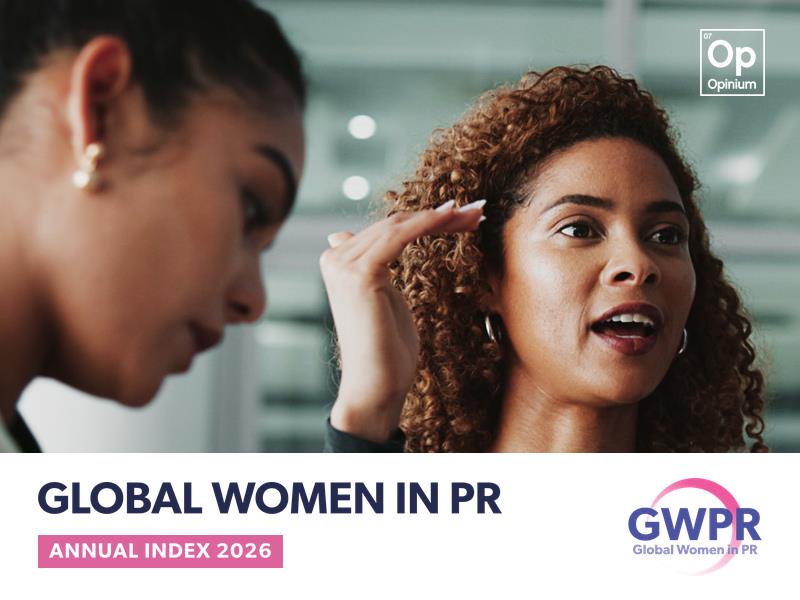
The full findings are available in the Global Women in PR Annual Index 2026.

Legal Disclaimer:
MENAFN provides the
information “as is” without warranty of any kind. We do not accept any
responsibility or liability for the accuracy, content, images, videos,
licenses, completeness, legality, or reliability of the information
contained in this article. If you have any complaints or copyright issues
related to this article, kindly contact the provider above.


Comments
No comment