


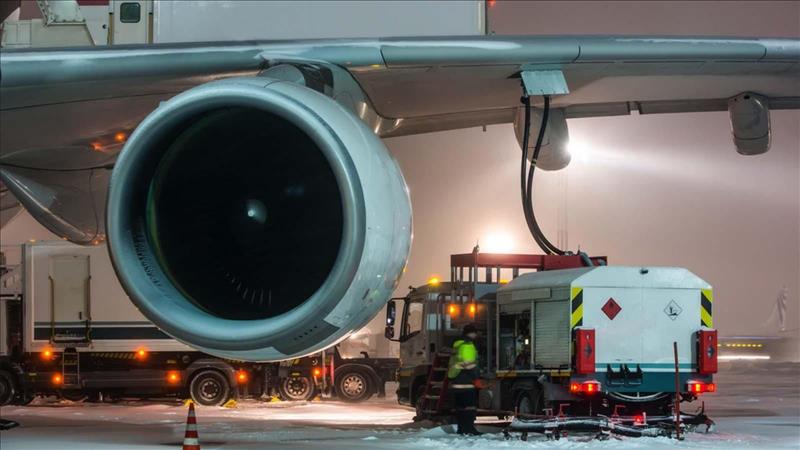
Global Jet Fuel Prices Face Renewed Surge In 2027


Global jet fuel prices could rise sharply again in 2027 as declining inventories, limited spare refining capacity and persistent geopolitical tensions threaten to tighten supplies, according to energy market experts.
The warning emerged during a panel discussion at the International Air Transport Association (IATA) Energy Forum in Guangzhou, China, as reported by S&P Global Energy.
Despite some grounds for short-term optimism, analysts cautioned that unresolved supply disruptions involving the Middle East and Russia could push the aviation fuel market back into a deficit next year.
Rob MacLeod, Global Head of Commodity Risk Solutions at Hartree Partners, said worldwide jet fuel inventories had fallen to exceptionally low levels, leaving the market increasingly vulnerable to unexpected disruptions.
He warned that a hurricane affecting the US Gulf Coast could expose the shortage of spare refining capacity and trigger another increase in fuel prices.
Jet fuel inventories decline as refiners prioritise diesel
According to S&P Global Energy CERA's November forecast, global jet fuel inventories continued to decline in October as demand exceeded supply and refineries increasingly prioritised diesel production.
The competition between diesel and aviation fuel has emerged as a major factor shaping market conditions. Both products belong to the middle-distillates category and rely heavily on the same refining capacity.
S&P Global Energy estimates that a sharp reduction in exports from the Middle East, combined with prolonged restrictions on Russian diesel exports, has contributed to a significant shortage in the diesel market.
As refiners seek to maximise diesel production, the availability of jet fuel for domestic consumption and international trade has become increasingly constrained.
The average global jet fuel crack spread - the difference between the value of refined jet fuel and its underlying crude oil benchmark - stood at $72 per barrel in September.
Analysts expect the indicator to rise to $74 per barrel in the fourth quarter of 2026 before declining to $51 in the first quarter of 2027 and $40 in the second quarter.
However, the projected easing of refining margins does not necessarily indicate a return to stable market conditions.
S&P Global Energy forecasts that global jet fuel demand will increase by 1.17 million barrels per day in 2027, following an estimated decline of 255,000 barrels per day in 2026.
James Simpson, Global Head of Aviation Market Research at S&P Global Energy, said he did not expect price stability to return next year.
Asian markets face mounting pressure ahead of winter
Supply constraints are particularly evident in Asia, where seasonal demand for heating fuels and competition for middle distillates have supported higher refining margins.
In October, Singapore's jet fuel and kerosene crack spread against Dubai crude rose by $10.40 per barrel to $66.20.
Meanwhile, the discount of jet fuel relative to diesel widened to $8.30 per barrel, reflecting the stronger market for diesel.
Analysts expect Asian crack spreads to remain elevated through November and December as winter heating demand coincides with constrained middle-distillate supplies.
According to Platts assessments, the jet fuel and kerosene crack spread against Dubai crude stood at $59.55 per barrel on an FOB Singapore basis on November 11.
The figures illustrate the pressure on aviation fuel markets despite expectations that refining margins could moderate during the first half of 2027.
Europe's reliance on long-distance fuel shipments raises costs
The geographical redistribution of refining capacity towards Asia and the Middle East is creating additional challenges for regions increasingly dependent on imported petroleum products.
As refining operations become more concentrated, importing countries face greater exposure to long-distance shipping, freight costs and geopolitical disruptions.
Simpson cited jet fuel shipments from South Korea to Europe as an example of how far international supply chains must extend to meet regional demand.
Platts data showed that the price differential between jet fuel and kerosene cargoes delivered to Northwest Europe on a CIF basis and those sold FOB Singapore reached $30.33 per barrel on November 11, up from $26.10 a day earlier.
The widening differential highlights the costs associated with moving aviation fuel between major regional markets.
Higher transportation expenses also pose risks for Australian airlines purchasing fuel against Singapore-based price benchmarks.
For European buyers, dependence on distant refining centres means that supply disruptions, shipping bottlenecks or export restrictions can quickly affect fuel availability and costs.
Long-term refinery closures could intensify competition for fuel
Beyond the immediate supply outlook, experts warned that structural changes in global energy consumption could create further challenges for aviation fuel markets.
The electrification of road transport is expected to reduce gasoline demand over the longer term, potentially leading to the closure of some oil refineries.
However, demand for diesel in freight transport, mining and agriculture, as well as demand for aviation fuel, is expected to remain comparatively resilient.
This imbalance could intensify competition for refining capacity as overall production infrastructure contracts.
Analysts noted that preserving operational refining capacity in Europe, diversifying supply sources and maintaining spare production capacity could help reduce risks to energy security.
Nevertheless, proximity to refineries does not guarantee uninterrupted supplies, as unexpected shutdowns, industrial accidents and export restrictions can still disrupt distribution.

Legal Disclaimer:
MENAFN provides the
information “as is” without warranty of any kind. We do not accept any
responsibility or liability for the accuracy, content, images, videos,
licenses, completeness, legality, or reliability of the information
contained in this article. If you have any complaints or copyright issues
related to this article, kindly contact the provider above.


Comments
No comment