


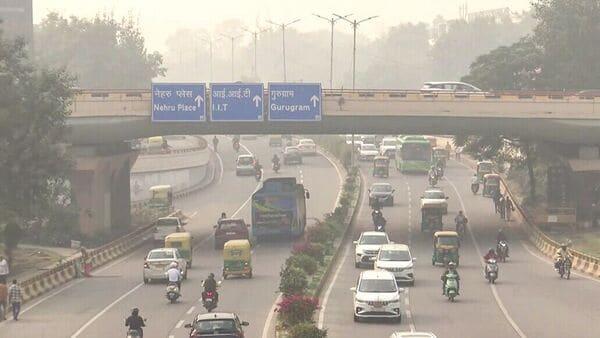
Ballabhgarh Tops Pollution Chart With AQI Of 419, Delhi Second At 403


Ghaziabad was the third most polluted city, recording an AQI of 379, followed by Noida at 368 and Khora in Uttar Pradesh at 358. Greater Noida registered an AQI of 356, while Gurugram and Manesar recorded readings of 351 and 350, respectively.
Panchgaon in Haryana recorded an AQI of 346, while Bahadurgarh reported the lowest reading among the 10 cities, at 323.
The readings indicate that air pollution remained very poor to severe across several parts of the National Capital Region, with all 10 cities recording AQI levels above 300.
Also Read | CAQM imposes GRAP-III in Delhi-NCR ahead of Diwali: Here's what's allowed Severe readingsUnder India's AQI classification, readings between 301 and 400 fall in the 'very poor' category, while levels above 400 are classified as 'severe'. Thus, Ballabhgarh and Delhi were in the severe category, while the remaining eight cities recorded very poor air quality.
Several air quality monitoring stations across Delhi also recorded AQI levels above 400 at 7:05 am on Friday, indicating severe air quality.
The areas with high pollution levels included Anand Vihar (419), Ashok Vihar (404), Aya Nagar (433), Badarpur (403), Bawana (413), Burari Crossing (456), Chandni Chowk (479), Chhawla (425), Commonwealth Sports Complex (451), CRRI Mathura Road (457), Dr Karni Singh Shooting Range (404), DTU Delhi (443), IGI Airport (403), IIT Delhi (488), ITO Delhi (451), Jahangirpuri (430), JNU (451), Mundka (435), Nehru Nagar (414), NIH Narela (445), North Campus, Delhi University (478), NSUT Jaffarpur (459), Punjabi Bagh (456), Pusa (469), Rohini (413), Sirifort (418), Sonia Vihar (409), Talkatora Garden (436), Tikri Kalan (402), Vasundhara Enclave (431), Vivek Vihar (424) and Wazirpur (427).
The concentration of highly polluted cities across Haryana, Uttar Pradesh and Delhi highlights the growing air quality challenge in northern India. The rise in pollution levels has renewed concerns over the region's air quality and the need for stricter enforcement of pollution-control measures.
Understanding AQIAccording to the CPCB classification, an AQI between 0 and 50 falls under the 'good' category, indicating minimal health impact. A reading between 51 and 100 is classified as 'satisfactory', while an AQI of 101-200 falls under the 'moderate' category.
An AQI between 201 and 300 is categorised as 'poor', which may cause breathing discomfort to people with prolonged exposure, particularly those with respiratory conditions. The next category, 'very poor', covers readings between 301 and 400 and is associated with respiratory illness on prolonged exposure, even among healthy people.
Also Read | Delhi's AQI nears 500; severe pollution, dense fog reduce visibilityThe highest category, 'severe', applies to AQI levels between 401 and 500. At these pollution levels, even healthy people may experience respiratory effects, while those with existing health conditions may face more serious impacts.
GRAP restrictionsStage 3 of the Graded Response Action Plan (GRAP) is currently in force across Delhi-NCR, with additional vehicle restrictions and dust-control measures implemented from 1 November 2026. GRAP is a set of emergency measures aimed at preventing further deterioration in air quality. Restrictions are imposed in phases based on specified pollution levels and prevailing air quality.
Under Stage 3, the movement of light motor vehicles (LMVs), including four-wheelers, conforming to BS-III petrol and BS-IV diesel emission standards or below has been prohibited in Delhi and the NCR districts of Gurugram, Faridabad, Sonipat, Ghaziabad and Gautam Buddha Nagar.
Also Read | GRAP Stage III invoked in Delhi: Which vehicles are allowed on roads today?The restrictions also include a ban on dust-generating construction and demolition (C&D) activities across the entire NCR. In addition, BS-IV and older Delhi-registered diesel medium goods vehicles are barred from operating, while similar medium and light goods vehicles registered outside Delhi are prohibited from entering the national capital.

Legal Disclaimer:
MENAFN provides the
information “as is” without warranty of any kind. We do not accept any
responsibility or liability for the accuracy, content, images, videos,
licenses, completeness, legality, or reliability of the information
contained in this article. If you have any complaints or copyright issues
related to this article, kindly contact the provider above.


Comments
No comment