


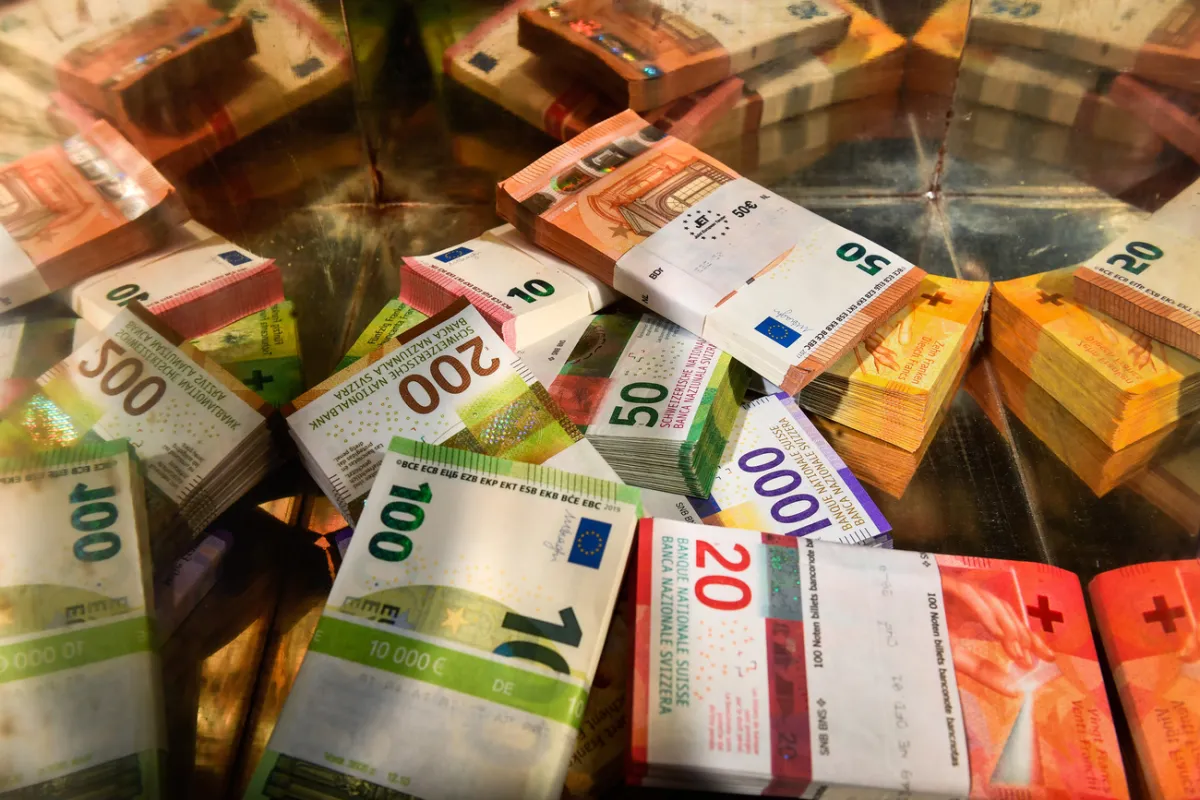
Swiss Franc Carry Trade Squeeze Adds Fuel To Haven Rally


The franc, which is used as haven by investors during times of uncertainty in Europe, rallied in October amid violent protests and political turbulence in France. That move has eaten into the returns generated by so-called carry trades, when investors take advantage of low Swiss borrowing costs to invest in currencies where rates are higher.
Year-to-date returns from selling the franc and buying the euro shrank to as little as 0.1% last week from 3.4% at the end of September. While the dimming appeal of the trade has seen asset managers cut back on their bearish franc positions, according to CFTC data, leveraged funds remain heavily net short for now – and a reversal could spur further gains.
“If risk aversion persists, that residual position is a potential source of additional franc demand,” said Gregor Hirt, global chief investment officer for multi asset at Allianz Global Investors.
The franc's advance took it to the strongest level versus the common currency since May at 0.91376 per euro at the end of last week, though it has weakened slightly since.
Any break below 0.90 would be“uncomfortable for policymakers, especially if the franc gains were rapid,” Shaun Osborne, chief foreign-exchange strategist at Scotiabank, said. He forecasts a level of 0.93 by year-end.
Swiss National Bank (SNB) officials told the government in a meeting Wednesday that the institution is prepared to act in currency markets if needed. JPMorgan strategists expect the SNB to smooth sharp moves rather than“entirely stop or reverse franc appreciation.”
'Structural Demand'Besides the more speculative demand for the currency, the strong Swiss economy and low government debt levels mean there is“structural demand” for the franc from investors, according to Florian Ielpo, head of macro at Lombard Odier Investment Managers. That's especially true at a time when European politics are fraught.
And after Swiss inflation accelerated to 1.5% in October from 1% a month earlier, the Swiss central bank may be more tolerant of franc strength, Scotiabank's Osborne said.
Van Luu, head of currency and fixed-income strategy at Russell Investments, said he prefers to short the franc against the yen, rather than the euro. Because the Japanese currency is also viewed as a haven, there's less risk political turbulence will trigger currency moves that spoil returns.
In addition, the yen is about 50% cheaper than it should be against the dollar, while the Swiss franc looks around 20% overvalued versus the United States currency, he said.
With European political risk lingering, and discussions over France's budget continuing, it's difficult for real-money investors to meaningfully return to wagers on a weaker franc, Allianz's Hirt said.
“For European target assets in particular, franc funding currently amounts to being short the regional haven against regional risk,” he said.“We would be cautious there while French spreads remain elevated.”
–With assistance from Naomi Tajitsu.
©2026 Bloomberg L.P.
Related Stories Popular Stories N Prefer Swissinfo on GoogleSee more Swissinfo articles in your Google results. Learn
In compliance with the JTI standards
More: SWI swissinfo certified by the Journalism Trust Initiati
You can find an overview of ongoing debates with our journalists here. Please join us!
If you want to start a conversation about a topic raised in this article or want to report factual errors, email us at ....

Legal Disclaimer:
MENAFN provides the
information “as is” without warranty of any kind. We do not accept any
responsibility or liability for the accuracy, content, images, videos,
licenses, completeness, legality, or reliability of the information
contained in this article. If you have any complaints or copyright issues
related to this article, kindly contact the provider above.


Comments
No comment