


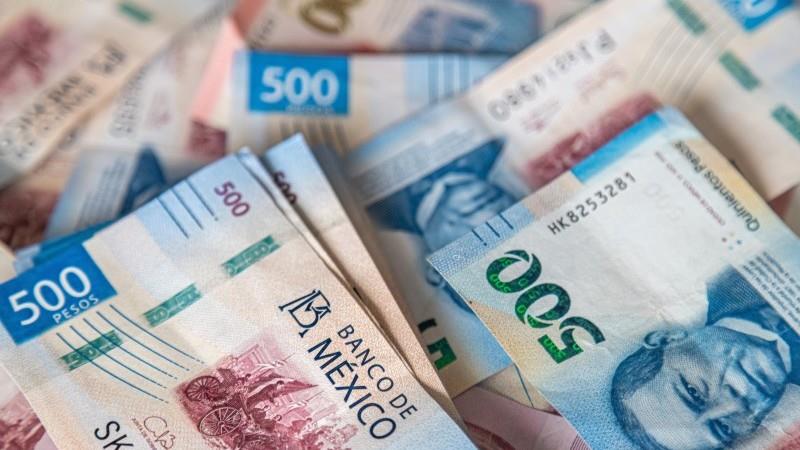
Latam FX Outlook 2027: Banxico Abandons The Peso


| Spot | Year ahead bias | 4Q26 | 1Q27 | 2Q27 | 3Q27 | 4Q27 | |
|---|---|---|---|---|---|---|---|
| USD/BRL | 5.57 | Bearish | 5.35 | 5.25 | 5.00 | 5.00 | 5.00 |
Lula enjoys an unexpected fourth term: In a major surprise, incumbent President Luiz Inácio Lula da Silva defeated Flávio Bolsonaro in a run-off to win another four-year term – Lula's fourth. Brazil's real saw a huge 12% sell-off on the outcome on the assumption that Bolsonaro's policy mandate of fiscal reform and deregulation would never see the light of day. Financial markets are now waiting to see who Lula picks to be in his government. Very much in focus will be the Finance Ministry, where Geraldo Alckmin and Rafael Fonteles have been linked to the top job of Finance Minister. Alckmin might be preferred by the markets given that he is a known quantity. Limiting the fiscal fallout in Brazil, however, remains the independent central bank. Central bank governor Gabriel Galípolo's term ends in December 2028. Markets now rule out any chance of easier monetary policy and look for rates to be hiked 125bp to 15.00% by the end of 2027.
Energy story is positive for Brazil: Huge uncertainty about the future path of energy prices is slightly less of a concern for Brazil. The country is an oil exporter and impressively generates more than 80% of its electricity from renewables. Brazil's leadership in hydroelectric power is now being complemented by strong growth in solar and wind. That ability to produce cheap electricity through renewables is now attracting the attention of large US data centre providers. President Lula has also tried to alter tax structures to make these inward investments more attractive. A few years ago, foreign direct investment (FDI) inflows into Mexico on the back of nearshoring were a hot market topic. FDI into Brazil on the US data centre story – even if only to support Brazil's huge domestic market – would be welcome news for the real.
Can Brazil survive a debt sell-off? Consensus expects around 2% GDP growth for Brazil next year, with CPI stabilising in the 4.0-4.5% area. This would still be above the 3% inflation target. The fiscal side remains Brazil's Achilles' heel, where a net budget deficit of around 8% of GDP and gross government debt close to 100% of GDP leave Brazil vulnerable if external conditions deteriorate further. The slight saving grace for Brazil is that deep local markets mean that only around 4% of government debt is FX-linked and that Brazil has relatively large FX reserves covering around 10 months of imports. We think the central bank has the tools to manage any more extreme pressure on the real. Assuming the new government maintains fiscal discipline, continued high carry and some energy advantages can see USD/BRL break below 5.00 next spring.
USD/MXN: Banxico happy with a weaker peso| Spot | Year ahead bias | 4Q26 | 1Q27 | 2Q27 | 3Q27 | 4Q27 | |
|---|---|---|---|---|---|---|---|
| USD/MXN | 18.61 | Mildly Bearish | 19.00 | 18.75 | 18.50 | 18.25 | 18.00 |
Banxico focuses on its negative output gap: Having been the second-best-performing EM currency in the year to August, things fell apart for the peso in September. The 10% USD/MXN rally that month was entirely down to Banxico. Having cut the policy rate spread with the US to a record low of 275bp earlier in the year, Banxico's decision not to follow the Fed's hike in September left the peso sorely exposed. A Banxico cut to 6.25% in November has not helped. Banxico has gone out of its way to highlight the slack in the domestic economy and how it will not mechanically follow Fed policy into tighter territory. The International Monetary Fund (IMF) agrees with Banxico's view of domestic economic slack and forecasts a negative output gap of 0.4% of GDP in 2027. Banxico looks unlikely to follow the Fed with an expected rate hike in December and plans to keep rates on hold at 6.25% for a good while.
Trade uncertainty doesn't help: The decision made by the US to review the terms of the United States-Mexico-Canada Agreement (USMCA) annually rather than every six years has introduced uncertainty into Mexico's investment proposition. What US President Donald Trump plans to do with trade in his final two years in office remains to be seen. But the fear will be that he wants to tighten the screws on the rules of origin in key sectors such as autos and minimise China's use of Mexico as a back door into the US market. Having been a major beneficiary of nearshoring trends since 2020, concerns are rising that new investment is slowing. While inward investment into Mexico in the first half of 2026 was strong, the breakdown shows that nearly 90% of it was retained earnings rather than new investment. There are also concerns that a real-term decline in remittance flows into Mexico from the US is weighing on domestic demand. By some estimates, remittance flows have fallen 20% in 18 months.
Lower carry, higher volatility to hold peso back: It seems clear that Banxico is less concerned about inflation than many central banks. And the policy rate spread at 225bp could keep the peso on the soft side. Consensus looks too conservative on peso weakness over the next three to six months. Interestingly, Mexican local bond yields have shown some of the highest EM correlations with US Treasury yields this year. A further rise in energy prices and a US bond market sell-off, presumably accompanied by increased volatility, would spell trouble for the peso. This is especially the case since Banxico has been touting the peso's strong carry-to-volatility credentials. Yet foreign ownership of Mexico's local bond market is a paltry 11% and way below the 30% level seen before the pandemic. And barring a US financial crisis, which would see EM currencies crater around the world, we suspect there will be good buyers of the peso above 19 in USD/MXN.
USD/CLP: Kast revs up the economy| Spot | Year ahead bias | 4Q26 | 1Q27 | 2Q27 | 3Q27 | 4Q27 | |
|---|---|---|---|---|---|---|---|
| USD/CLP | 985.00 | Bearish | 1000.00 | 1000.00 | 975.00 | 950.00 | 925.00 |
Chile's pro-investment tax reform: Having suffered another year of sub-trend growth in 2026 (0.7%), expectations are that Chile will bounce back next year. Part of that optimism is based on the recently passed National Reconstruction Act, which combines modest government spending to address previous wildfire damage with a major, pro-business tax reform. Here, the corporate tax is set to be cut from the current 27% to 23% by 2029, while capital gains tax and other business rates will be made less onerous. The plan is to provide a stable and attractive environment for business investment over the coming years. President Kast's success in getting this bill through parliament and the fact that the next election is not until 2029 are pluses. Consensus expects growth to bounce back to 2.8% next year, with some looking for 3% or more. Stronger domestic demand has the normally dovish central bank sounding more hawkish. The market prices 50bp of rate hikes to 5.00% next year.
Authorities are peso buyers and sellers: In a slightly strange set-up, Chilean authorities are both buyers and sellers of USD/CLP. The central bank is buying USD/CLP, having announced in 2025 that it would buy $25m per day, targeting $18bn of purchases by 2028 to build FX reserves and pay down a foreign currency credit line. The Finance Ministry is selling USD/CLP, going into the market to sell Eurobond proceeds and buy pesos. This year, it has sold close to $5bn worth of euros, dollars and, most recently, Swiss francs. All this activity is regularly reviewed and should USD/CLP sustain a break above 1,000 in the near term, we suspect the central bank would scale back its FX buying. These amounts are relatively small compared with the $24bn of daily turnover in the peso (2025 BIS data) but can be influential in thin markets.
Oil and weak copper production pose challenges: Like other currencies, Chile's peso has suffered from higher energy prices, higher US rates and a stronger dollar. Any further rise in energy prices could undermine Chile's position as a net fuel importer, with fossil fuels still comprising around two-thirds of the country's energy demand. While high copper prices should be offsetting some of those higher energy costs, Chile has struggled here too. Copper exports are down around 15% year-on-year due to a variety of factors, and an investigation into mines overreporting copper exports is not helping matters either. We look for USD/CLP to trade around the 1,000 area over the coming months, but if energy prices avoid going too much higher and US rates can edge a little lower, Chile's better domestic demand story can drive some healthy peso gains in 2027.

Legal Disclaimer:
MENAFN provides the
information “as is” without warranty of any kind. We do not accept any
responsibility or liability for the accuracy, content, images, videos,
licenses, completeness, legality, or reliability of the information
contained in this article. If you have any complaints or copyright issues
related to this article, kindly contact the provider above.


Comments
No comment