


EMEA FX Outlook 2027: Restrictive Policy Remains The Key FX Anchor


| Spot | Year ahead bias | 4Q26 | 1Q27 | 2Q27 | 3Q27 | 4Q27 | |
|---|---|---|---|---|---|---|---|
| EUR/PLN | 4.40 | Mildly Bearish | 4.39 | 4.36 | 4.34 | 4.33 | 4.31 |
We are shifting our view on the zloty from neutral to mildly negative: The latest weakening of the zloty was driven mainly by global factors: a hawkish Fed, high US Treasury yields, a stronger dollar and concerns over French public finances. Rate hikes by both the Fed and the ECB have also narrowed Poland's interest rate advantage, eroding PLN's carry appeal. Solid fundamentals should nonetheless prevent a disorderly depreciation: Poland remains one of the fastest-growing EU economies, its external position is sound, significant inflows from the Recovery and Resilience Facility (RRF) and the Security Action for Europe (SAFE) defence programme are still ahead, and foreign investors' exposure to Polish bonds is light. Moreover, the National Bank of Poland (NBP) may tighten monetary policy in early 2027. However, many of these factors are already priced in.
Risks to the zloty are primarily domestic and geopolitical: Several downside risks for PLN have intensified. Public finances remain the key vulnerability: the fiscal deficit is the largest in the EU, public debt is rising and approaching statutory thresholds, and no meaningful consolidation is planned before the 2027 parliamentary elections. Tense cohabitation between the government and the President limits the scope for fiscal repair, while the escalating dispute over the Constitutional Tribunal adds to the risk premium. Rating pressure is mounting, with one rating downgrade already delivered this year and the second outlook revised to negative. Geopolitically, high energy prices linked to the Middle East conflict, escalation of the war in Ukraine and hybrid attacks on Europe remain the main threats .
We expect EUR/PLN to remain in a 4.32-4.45 range over the coming months: In the near term, risks are skewed towards a weaker zloty, as a negative rating action or an escalation of domestic political tensions could push the pair towards the upper bound. A gradual recovery of the zloty in 2027 would require sustainably lower energy prices, lower global yields, a firmer stance from the NBP, and continued EU-fund inflows. Even then, loose fiscal policy ahead of the elections makes a return to the stronger levels seen in the first half of this year unlikely.
EUR/HUF: Rangebound, with a stronger-forint bias| Spot | Year ahead bias | 4Q26 | 1Q27 | 2Q27 | 3Q27 | 4Q27 | |
|---|---|---|---|---|---|---|---|
| EUR/HUF | 364.00 | Neutral | 360.00 | 365.00 | 365.00 | 360.00 | 360.00 |
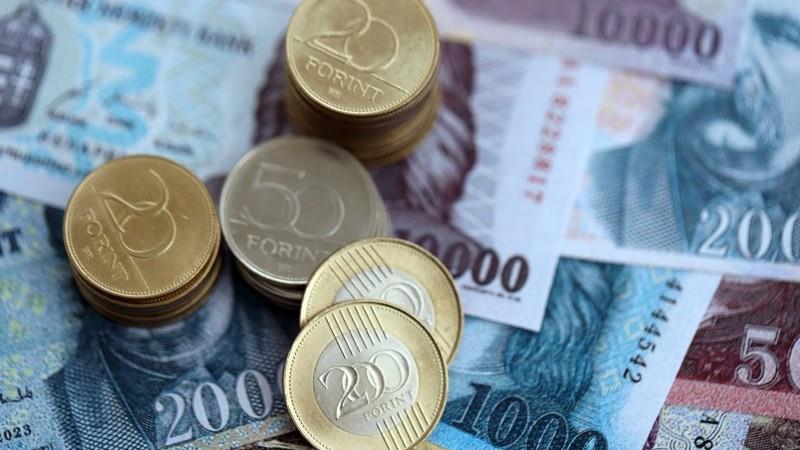
The forint remains a prisoner of global forces: With the fiscal consolidation plan presented and preparations for the EU's Exchange Rate Mechanism (ERM) II talks underway, there is no longer a single domestic event that can be circled as the next major market trigger. Instead, energy prices, geopolitics and global risk appetite are likely to dominate. The forint also remains an important part of the National Bank of Hungary's (NBH) inflation strategy, especially given the high degree of exchange rate pass-through. In this volatile environment, we expect rates to remain on hold for the next 9–12 months at 5.50%. Inflation may provide room for easing, but that room remains behind a closed door. Only a sustained and structural improvement in the risk environment is likely to provide the key.
EUR/HUF should remain contained within a 350-370 range: At the stronger end, 350 represents a natural line in the sand. A significant decline in Hungary's risk premium could take the pair towards this level, but the accompanying dovish repricing would make a sustained break lower difficult. Markets are likely to bring forward expectations of rate cuts, reflecting the Monetary Council's underlying dovish bias, a view we share. At the weaker end, the central bank's readiness to use the exchange rate channel should limit any disorderly sell-off. A non-linear move towards or beyond 370 could trigger verbal intervention and, if necessary, direct market action. We see an actual policy rate hike as a last resort, with the central bank likely to reach for other interest rate tools, including the FX swap rate, before touching the base rate. Credible intervention does not always require the central bank to pull the trigger; if markets believe the threat, they will do much of the heavy lifting themselves.
Domestic factors should keep the forint on the stronger side: Without a singular defining event, markets will closely monitor monthly budget execution, inflation developments, and progress in fiscal consolidation. Actual EU-fund inflows, an expected return of the current account to surplus and the possibility of positive sovereign rating actions should keep the forint closer to the stronger end of its range. A gradual grind lower in EUR/HUF could even bring 350 into view at moments of peak optimism. However, such strength would probably be followed by monetary easing, preventing a lasting appreciation beyond that level. We therefore see the forint primarily as a tactical market within a longer-term constructive story, supported by Hungary's potential path towards ERM II entry at the start of 2029.
EUR/CZK: Koruna holds up well in tough times| Spot | Year ahead bias | 4Q26 | 1Q27 | 2Q27 | 3Q27 | 4Q27 | |
|---|---|---|---|---|---|---|---|
| EUR/CZK | 24.38 | Neutral | 24.30 | 24.26 | 24.22 | 24.19 | 24.17 |
This is not a hiking cycle: The Czech National Bank (CNB) increased the policy rate to 4% in two steps yet stressed repeatedly that this doesn't represent the onset of another hiking cycle. Moreover, the tone of the latest press conferences was relatively dovish, while the meeting with analysts revealed that the country's dwindling economic performance is a growing concern for some board members. We saw few pushbacks against the idea that the equilibrium rate is likely higher than generally assumed. In turn, it seems we're in the process of searching for the right spot in a world of growing uncertainty. A weaker koruna contributing to rising import prices will be one of the key factors that the CNB will watch when it comes to maintaining price stability over the next year, but interest rates should remain the policy tool of choice. Stable rates are the most likely outcome if our forecast for next year's average inflation of 3.1% is right.
Constrained consumers: The second-round effects linked to the protracted Hormuz shock have started to materialise and will be felt in renewed annual increases in regulated prices and food prices. Large distributors are beginning to announce increases in energy and heating prices, while higher water charges will also play their part. With food prices also set to rise soon, there is little chance for any relaxation of the monetary policy stance, unless household consumption and economic performance prove weaker than expected. Indeed, disappointing real GDP figures could put a lid on a potential hiking spree. With real wage growth softening materially over the next year and borrowing costs rising, many households would be forced to reconsider their spending habits, especially when it comes to discretionary spending.
Koruna enjoys rate support: Still, we will continue to see a positive interest rate differential with the ECB in both nominal and real terms, which makes the koruna attractive. The domestic currency is set to remain stable in times of elevated uncertainty, while a gradual strengthening trajectory is likely once the global turmoil shows signs of settling down. Should oil prices recede further and remain lower for longer, we would see fresh wind in koruna's sails, as this would prepare the ground for the Czech economic expansion to accelerate. Real convergence would get back on track, and the more pronounced outperformance relative to the eurozone's real growth would once again work in koruna's favour. Moreover, the CNB is free to raise rates as it pleases should domestic or imported inflation get out of hand; we have some doubts about whether the ECB has the same room for manoeuvre, as it must, like it or not, keep one eye on French bond yields.
EUR/RON: No big changes expected ahead| Spot | Year ahead bias | 4Q26 | 1Q27 | 2Q27 | 3Q27 | 4Q27 | |
|---|---|---|---|---|---|---|---|
| EUR/RON | 5.35 | Neutral | 5.35 | 5.35 | 5.40 | 5.45 | 5.45 |
Monetary policy should remain the main near-term anchor for the leu: The National Bank of Romania (NBR) has continued to keep the policy rate at 6.50% throughout 2026, and our baseline remains for 50bp of easing in 2027, pending a smoother disinflation process. Weak activity and improving headline inflation would justify an early start, but sticky price pressures on the services front, potential episodes of political uncertainty and risk-off global events could delay the easing cycle. In this context, we think that liquidity management will remain an important part of NBR's balancing act. The liquidity surplus fell sharply through October, from around RON20.8bn to RON4.9bn, supporting tighter money market conditions during the recent period of intense FX pressures. However, FX-implied yields have since retreated from an early-October peak to more manageable levels, broadly in line with their one-year average. Acute pressure on the currency seems to have eased since mid-October, although it's not excluded that a smaller liquidity surplus going forward will continue to support monetary transmission and discourage renewed short positioning.
The domestic slowdown has yet to translate into a convincing correction of Romania's external imbalance: Retail sales have been contracting for more than a year, reflecting weaker household demand, fiscal consolidation and elevated inflation. Nevertheless, the January-September trade deficit remained visibly elevated at 6.3% of GDP in 2026, only marginally narrower than 6.5% in 2025 and 6.7% in 2024 for the same period. The investment cycle has also sustained imports despite weaker consumption. In particular, the final push to complete RRF-funded infrastructure, transport, energy and healthcare projects has generated strong demand for imported machinery, equipment and intermediate inputs. We think that Romania's potential growth currently sits at around 2.0%, but productive investment could lift it towards 2.4-2.7% in 2027-2029 through better infrastructure, connectivity and energy availability, which should favour the medium and long-term fundamentals for RON.
Our baseline is for further controlled depreciation in 2027, with fiscal credibility, political stability and capital flows as key factors to watch: Romania's investment-grade rating preservation has provided some relief, but the cautious approach of markets with regards to fiscal implementation and the delivery of a credible medium-term consolidation plan remains in place. In this context, uncertainties over Romania's capacity to absorb the remaining €6.4bn of RRF funds represents an additional short-term risk. Delays or lower-than-expected absorption would place greater pressure on domestic and market-based funding. We think that the NBR will continue to maintain a rather firm grip on the currency, discouraging one-sided positioning. We expect EUR/RON to remain around 5.35 by end-2026 and move gradually towards 5.45 by end-2027. Renewed episodes of political instability, fiscal slippage or weaker RRF absorption could produce a faster depreciation.
EUR/RSD: Stability is likely to prevail| Spot | Year ahead bias | 4Q26 | 1Q27 | 2Q27 | 3Q27 | 4Q27 | |
|---|---|---|---|---|---|---|---|
| EUR/RSD | 118.00 | Neutral | 117.50 | 117.40 | 117.30 | 117.30 | 117.20 |
Active FX management should remain the main anchor for the dinar: The National Bank of Serbia (NBS) surprised with a 25bp hike to 6.0% at the November meeting, seeking to contain second-round inflation effects from persistently high energy prices, while also leaning against the recent depreciation pressure on the dinar. Our baseline outlook forecasts no further hikes at this stage, and we expect 50bp of rate cuts in 2027 (likely through the second half of the year), taking the policy rate to 5.50% by end-2027. Nevertheless, we think that the balance tilts more towards upside risks for rates, rather than to the downside. Currency stability has been a key policy feature this year and is likely set to remain an integral part of the policy framework ahead; the NBS sold €475m between January and September, including substantial intervention in September, when it sold €380m as energy-related FX demand increased. In any case, reserves remain comfortable, giving the central bank ample capacity to contain volatility moving forwards.
A stronger domestic economy should support the dinar, although fiscal stimulus and investment-related imports create external and inflationary trade-offs: Serbia's GDP expanded by 4.0% year-on-year in 3Q26, accelerating from 3.8% in the second quarter and 3.2% in the first. Private consumption, a resilient labour market and the investment programme ahead of EXPO 2027 should continue to support activity ahead. However, the more expansionary fiscal stance, infrastructure spending and the import-intensive nature of the investment cycle could also act as catalysts for slightly stronger price pressures and trade deficits in the near term. That said, at around 43% of GDP, public debt remains manageable, while Serbia's macro fundamentals continue to remain robust.
We expect EUR/RSD to remain broadly stable around 117.4-117.5 through 2027, although domestic politics and the unresolved NIS transaction present near-term risks: The Student List won the 25 October parliamentary election, ending the previous governing bloc's longstanding dominance. While the result could support institutional reform and closer EU alignment, uncertainty around the political transition and future policy direction, alongside energy-related FX demand, likely contributed to the dinar's modest weakening towards 117.6. Meanwhile, 11 December is the target for completing negotiations under which Hungarian oil group MOL would acquire the Russian-controlled stake in Serbian oil company NIS, although a final purchase agreement and regulatory approvals remain outstanding. With substantial reserves and a demonstrated commitment to FX stability, the NBS should be able to absorb further temporary pressures and keep the currency close to its desired range.
USD/UAH: Orderly hryvnia depreciation| Spot | Year ahead bias | 4Q26 | 1Q27 | 2Q27 | 3Q27 | 4Q27 | |
|---|---|---|---|---|---|---|---|
| USD/UAH | 45.44 | Neutral | 45.20 | 45.30 | 45.40 | 45.50 | 45.50 |
Gradual UAH depreciation ahead: The hryvnia has weakened to record lows against the US dollar. Even so, we expect further gradual depreciation. Pressure stems from a firmer dollar on the back of a hawkish Fed and renewed tension in the Middle East as well as intensified Russian attacks on Ukraine's economy. The National Bank of Ukraine (NBU) continues its strategy of "managed flexibility": it tolerates an orderly slide but intervenes heavily in the FX market to prevent disorderly moves. Monetary policy has turned tighter, with a series of rate hikes since the summer reaching 150bp in total accompanied by guidance that rates will stay high well into 2027, as inflation has turned into double-digit territory recently.
FX reserves have declined: External financing remains the key anchor for the hryvnia. However, international reserves have fallen markedly from their record highs earlier in the year, as FX interventions and debt service outpaced inflows. On one hand, disbursements under the EU's Ukraine Support Loan have lagged behind plans because of delays in agreed reforms, and Brussels has made further funding conditional on their implementation. On the other hand, according to NBU data, the FX interventions at the end of October were the highest in history.
Focus on peace negotiations: The macroeconomic outlook has deteriorated significantly because of the Russian war, but direct technical peace talks between Ukraine and Russia with US participation offer some hope of an end to the war. Intensified attacks on industry, energy and logistics, together with the blockade of seaports, have pushed the economy back into contraction this year, while renewed inflationary pressure is eroding real incomes. Labour shortages linked to mobilisation and rising production costs continue to weigh on competitiveness, and any recovery in 2027 is likely to be slow. Against this backdrop, we expect USD/UAH to drift gradually higher, towards the 46.0 area in the coming months, at a pace the NBU appears willing to accept as long as it remains orderly. Timely EU and IMF disbursements are the main upside factor, while a ceasefire with Russia, which would change the picture materially, does not look imminent despite intensified US diplomatic efforts.
USD/KZT: Carry can cushion external risks| Spot | Year ahead bias | 4Q26 | 1Q27 | 2Q27 | 3Q27 | 4Q27 | |
|---|---|---|---|---|---|---|---|
| USD/KZT | 443.00 | Bullish | 450.00 | 440.00 | 450.00 | 465.00 | 485.00 |
High real rates should survive NBK easing cycle: The tenge enters 2027 with monetary policy still favouring portfolio inflows. The National Bank of the Republic of Kazakhstan (NBK) started cutting rates in 2026 to 15.75% currently, as inflation moderated to 9.2% YoY and the currency strengthened, but the policy stance remained cautious, with cuts lagging the actual CPI slowdown. We expect the easing cycle to remain gradual, leaving real rates high by regional and EM standards. This matters increasingly for KZT as foreign participation in Kazakhstan's local debt has been a key driver of the tenge's strength this year. The main risk to our constructive view would be a faster easing cycle than we expect, particularly if inflation proves stickier and reduces the real-rate cushion. Conversely, sustained disinflation accompanied by cautious rate cuts should preserve attractive carry and keep monetary policy an important source of support for KZT.
Capital flows are a new strength, but also a new sensitivity: One of the biggest changes in the KZT story over the last 12 months has been the growing role of foreign portfolio flows. Progress towards Euroclear connectivity, positive sovereign rating momentum, increased domestic debt issuance and high real yields have helped attract foreign investors into KZT government bonds. At the same time, regular state-related FX sales have fallen sharply. This makes the tenge more market-driven, but also more exposed to changes in global rates and risk appetite. After its strong rally, we see limited room for another large appreciation. However, downside risks are also cushioned: a $2.2bn backlog of National Fund-related FX sales accumulated between June and October gives the authorities a potentially significant supply buffer should private inflows reverse. We therefore expect KZT to remain resilient in 2027 even if global portfolio flows become less supportive.
Resilience does not equal structural appreciation: Higher core yields or a broader global risk-off episode, AI-led or otherwise, could weaken foreign demand for KZT assets and put pressure on the currency. This is increasingly relevant as carry-driven flows become a bigger part of the KZT story. But we would not expect an indiscriminate sell-off; still-high real rates and the accumulated backlog of state FX sales provide meaningful buffers against a reversal in private inflows, while the role of oil should not be overestimated as export constraints, growing imports and large dividend outflows prevented the tenge from benefitting materially from the recent oil price rally. Our constructive 2027 view should therefore not be confused with a structurally bullish view on KZT. Kazakhstan's persistent current account deficit remains consistent with gradual depreciation over the longer term. For 2027, however, we expect domestic buffers to keep any depreciation contained even under a less supportive global backdrop.
USD/UZS: Domestic buffers should keep the soum resilient| Spot | Year ahead bias | 4Q26 | 1Q27 | 2Q27 | 3Q27 | 4Q27 | |
|---|---|---|---|---|---|---|---|
| USD/UZS | 11974.00 | Neutral | 11770.00 | 11828.00 | 11887.00 | 11946.00 | 12005.00 |
High real rates are here to stay: Uzbekistan enters 2027 with monetary policy providing a substantial buffer against global volatility. The Central Bank of Uzbekistan (CBU) kept its policy rate at 14.00% in November and turned more cautious on inflation, raising its year-end forecast to around 7% amid strong domestic demand, utility tariff increases and external food and energy risks. This makes near-term easing unlikely, but we still see scope for cautious cuts in 2027 if fiscal restraint continues and inflation pressures subside. Crucially for the soum, easing should not require sacrificing the sizeable real-rate cushion. This should help retain carry support even if global rates remain elevated. The main risk would be a combination of sticky inflation and weaker FX, which would leave the central bank with less room to cut and potentially require real rates to remain higher for longer.
Gold export backlog provides an additional buffer if capital flows weaken: The soum's resilience this year is particularly notable because it has received relatively little help from Uzbekistan's traditional source of FX support. Only 18 tonnes of gold were exported in January-September 2026, compared with 85 tonnes during the same period of 2025, despite much stronger gold prices. Instead, the soum's strength appears to have been driven largely by capital inflows. That creates both a vulnerability and a potential buffer for 2027. Higher global yields or a broader risk-off episode could weaken carry-driven flows, but a recovery in physical gold shipments towards Uzbekistan's historical 80-120 tonne annual range would bring additional FX supply into the market. Combined with still-high real rates and continued reform-related capital inflows, this should limit the soum's vulnerability to a deterioration in global sentiment.
It is too early to consider the old depreciation trend defeated: We therefore remain constructive on UZS for 2027, but like KZT, would distinguish resilience from a permanently stronger currency. Continued fiscal consolidation is helpful, with the deficit having fallen from 4.7% of GDP in 2023 to below 2% currently, but Uzbekistan continues to run twin deficits and somewhat elevated inflation risks. Higher core yields or a global risk-off episode could still weaken carry support and put depreciation pressure on UZS, although high real rates and catch-up gold exports provide meaningful buffers against a large adjustment. Over the longer term, we would therefore remain cautious about extrapolating recent soum strength. For 2027, however, the combination of restrictive real rates, fiscal restraint and potentially stronger gold-related FX inflows should keep depreciation contained even under a less supportive global backdrop.
USD/TRY: Controlled lira depreciation to continue| Spot | Year ahead bias | 4Q26 | 1Q27 | 2Q27 | 3Q27 | 4Q27 | |
|---|---|---|---|---|---|---|---|
| USD/TRY | 50.26 | Bullish | 51.50 | 54.30 | 57.10 | 59.80 | 62.50 |
Inflation path delayed in 2027: October inflation in Turkey came in slightly above expectations, interrupting the recent downtrend. Even so, we see annual inflation finishing the year below 30%. In the near term, uncertainty around oil prices remains a key risk to the outlook. Prolonged US-Iran tensions could quickly intensify price pressures, particularly as the sliding scale mechanism continues to unwind. The latest Medium-Term Programme raised the 2027 forecast to 21%, up from 9% in the previous plan. Although revised higher, this projection remains optimistic compared with the 23.3% expectation reflected in the Market Participants Survey. The upward adjustment mainly reflects both the carry-over effect of stronger-than-anticipated inflation this year on next year's starting point and the influence of global economic conditions. Overall, the new forecast suggests that the disinflation process under the stabilisation programme launched in mid-2023 has been pushed further out. We forecast 26% next year, with risks to the upside.
CBT signals gradual easing: In its latest MPC statement, the Central Bank of Turkey (CBT) adjusted its language, shifting attention from“monetary policy decisions” to the scale and timing of future policy actions. This change suggests that, unless the factors behind the current easing cycle change materially, the Bank is likely to continue lowering rates in December. From this perspective, October inflation is unlikely to significantly alter the policy outlook. The main risks for policy remain developments in the Middle East and any deterioration in the disinflation trend. At the same time, the Bank is expected to keep a close watch on domestic demand, international reserve dynamics, and depositor behaviour when assessing future policy moves. Maintaining sufficiently attractive real interest rates is likely to remain important in limiting pressure on foreign exchange reserves. Against this backdrop, we continue to expect the easing cycle to move forward gradually, with the policy rate reaching 30% by end-2027.
Reserve accumulation resumes in early November: Investment fund volatility has had only a limited effect on dollarisation across deposits and mutual funds, although lira-denominated funds experienced outflows as some investors appeared to reduce money market fund positions. At the same time, growth in TRY deposits and repo accounts indicates that dollarization pressures have remained contained. After accumulating more than $30bn through net foreign exchange purchases between June and August, the CBT saw both its gross reserves and net FX position excluding swaps decline in September and October, largely reflecting turbulence in investment funds. However, the Bank's net FX position rose sharply in early November, pointing to a return of non-resident inflows alongside subdued foreign currency demand from residents. Additionally, although the CBT increased the pace of FX depreciation lately, this appears to be a technical adjustment rather than a change in exchange rate policy, a stance likely to persist ahead of the 2028 election period.
USD/ZAR: Hawkish SARB and key reforms in focus| Spot | Year ahead bias | 4Q26 | 1Q27 | 2Q27 | 3Q27 | 4Q27 | |
|---|---|---|---|---|---|---|---|
| USD/ZAR | 16.66 | Mildly Bearish | 16.50 | 16.50 | 16.25 | 16.00 | 16.00 |
South African Reserve Bank stays hawkish: Having adopted a 3% inflation target in 2025, the SARB has already hiked twice this year. With fuel prices looking like they will stay high, the SARB is expecting headline inflation to stay above 5% and is also concerned about inflation expectations becoming unanchored. The risk of higher food prices from El Niño drought conditions later this year is not helping either. But even with growth contracting in the second quarter, the SARB is clearly taking no chances with inflation. The market now expects another 75bp of tightening (to 8.00%) over the next 12 months and policy to remain firmly in restrictive territory. High implied yields and relatively (by the rand's standards) low volatility have made the rand one of the better EMFX performers this year.
2027 will be a big year for reforms: Increasingly, we are hearing about the need for legislated reforms to be implemented. These largely focus on the energy and freight sectors. On the former, Eskom's ability to avoid further load-shedding, increase generation, improve its finances and integrate the private sector will be key. On the latter, whether 11 private train companies can start using Transnet infrastructure to dramatically increase freight volumes will be a key test. The good news is that the Government for National Unity (GNU) seems to be finding a way through thorny issues – e.g., finally passing the 2025 budget – and the next national elections are not due until 2029. Consensus currently expects South African growth in the 1.5-2.0% area.
Local assets have withstood external pressure well: Local asset markets seem to have withstood the strong dollar and the US Treasury sell-off relatively well. One-month USD/ZAR traded option prices have been happy to trade at low, sub-10% levels since the summer. And South Africa's credit default swap remains relatively calm near +130bp, perhaps because of the country's primary fiscal surplus and a more manageable current account deficit of less than 2% of GDP. Additionally, despite the flows into South Africa last year after the SARB adopted the 3% inflation target, foreigners only hold 25% of available South African government bonds. This compares with a peak of 43% back in 2018. Overall, we expect a hawkish SARB to limit the rand's downside, while some improvement in the external environment next year, plus some progress on implementing key reforms, should allow the rand to continue to perform well.
USD/ILS: Bank of Israel gets what it wants| Spot | Year ahead bias | 4Q26 | 1Q27 | 2Q27 | 3Q27 | 4Q27 | |
|---|---|---|---|---|---|---|---|
| USD/ILS | 3.18 | Mildly Bearish | 3.15 | 3.15 | 3.05 | 3.05 | 3.05 |
Bank of Israel fights shekel strength: Having traded as low as 2.80 in late May, USD/ILS looks to be heading into year-end well above 3.00. Yes, the strong dollar has played a role here, but so has the Bank of Israel (BoI). This year, it has cut rates by 100bp to 3.25% and also intervened to buy USD/ILS back in May. The BoI's dovish position has been justified by CPI continuing to surprise on the downside. CPI has been below the middle of the BoI's target range (1-3%) all year. Yet we suspect the BoI is more worried about the strong shekel from a growth perspective. Here, the real, trade-weighted shekel remains 30% above its 20-year average and will prove to be a headwind to Israeli exporters. While Washington may want trading partners to step back from FX intervention against local currency strength, it may see Israel as a special case.
Shekel joined at the hip with tech: Part of the recent shekel weakness may reflect weakness in the US tech sector. Strength there normally helps the shekel via two channels: investment flows and hedging. On the former, a tougher IPO environment may well be weighing on flows into Israel. During good times, these flows can be worth as much as $5bn per quarter through the Israeli current account. On the latter, a big fall in tech can see Israeli investors reduce their hedges on falling overseas portfolios. For example, in the second quarter, Israeli pension funds and insurers sold $18bn of FX against the shekel as they increased FX hedges on booming tech portfolios. The reverse may be happening now and leaves the shekel a little vulnerable if the US tech story has further to correct.
Good-quality credit and current account surplus help: While the BoI may not want USD/ILS to go too much below 3.00, that does not mean USD/ILS needs to rally a lot either. Israel is seen as a solid A- sovereign credit and has very strong FX reserve coverage of short-term debt and imports. Its budget deficit of 4-5% of GDP is seen as manageable, and its perennial current account surplus of 1-2% of GDP normally provides good natural demand for the shekel. We suspect there will be good interest for the shekel over the coming months in the 3.20/3.40 area. Any improvement in geopolitics would also be a positive for the shekel both on the budgetary and labour market sides, with scarce labour resources curtailing Israel's potential growth rate.

Legal Disclaimer:
MENAFN provides the
information “as is” without warranty of any kind. We do not accept any
responsibility or liability for the accuracy, content, images, videos,
licenses, completeness, legality, or reliability of the information
contained in this article. If you have any complaints or copyright issues
related to this article, kindly contact the provider above.


Comments
No comment