


One Year In ASEAN, Timor-Leste Shifts Focus To Jobs, Skills And Market Access


By Linda Khoo & Nabilah Saleh
KUALA LUMPUR, Nov 12 (NNN) -- A year after joining ASEAN, Timor-Leste is shifting its focus from accession to delivering tangible benefits for its people through job creation, skills development and greater access to regional markets.
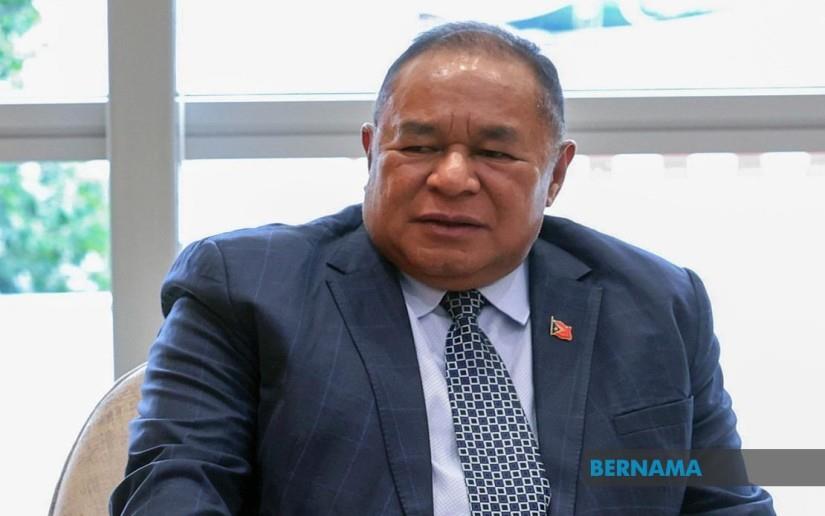
For Timor-Leste, the shift marks the next chapter in its ASEAN journey after 14 years of preparation culminated in full membership, which Foreign Affairs and Cooperation Minister Bendito dos Santos Freitas described as the country's most significant achievement of the past year.
“As we enter our second year in ASEAN, our focus is shifting from accession to implementation and from participation to tangible results,” he said in a written interview with Bernama.
Freitas credited ASEAN partners, particularly Malaysia under Prime Minister Datuk Seri Anwar Ibrahim's stewardship, with helping Timor-Leste join the bloc in Kuala Lumpur on Oct 26 last year.
“For me, the success of ASEAN membership will not be measured simply by how many meetings we attend or agreements we sign, but by how many opportunities we create for our people,” he said.
Under the Initiative for ASEAN Integration, Timor-Leste was developing proposals to train teachers in digital skills and provide skills training for young people, he said.
Freitas said ASEAN membership also opened up opportunities for Timor-Leste's farmers and entrepreneurs to access a regional market of about 680 million people.
He said the government was working to help local businesses improve their products, obtain financing and build regional partnerships, particularly in agriculture, coffee production and sustainable tourism, with support from a newly established National Development Bank with US$30 million in initial capital to expand financing for productive sectors.
Freitas said one of Timor-Leste's biggest challenges was strengthening its institutions and preparing officials to fulfil ASEAN commitments, including aligning national laws and procedures with regional requirements on trade, investment, customs and technical standards.
Before joining ASEAN, Timor-Leste had become party to most of the 66 priority legal instruments identified in the first phase of its accession roadmap. It had since worked with the ASEAN Secretariat to identify which economic commitments still needed to be implemented.
“We see ASEAN integration not simply as an obligation to meet regional standards, but as an opportunity to modernise our institutions, strengthen governance and accelerate national development,” he said.
In October, Timor-Leste approved the National Roadmap for the Implementation of ASEAN Economic Commitments 2026–2030, backed by 19 sectoral action plans to coordinate reforms across government institutions, he said.
Freitas said Timor-Leste welcomed continued support from ASEAN members and the ASEAN Secretariat to train officials, implement economic and regulatory reforms and carry out development programmes.
Under the Initiative for ASEAN Integration, Timor-Leste had developed six initial project concepts in areas including education, skills development, tourism and agriculture, with three finalised and submitted to the ASEAN Secretariat, he said.
Freitas said Timor-Leste's priorities in its second year of membership included strengthening institutions, fulfilling ASEAN commitments, expanding economic opportunities and preparing to assume the ASEAN chairmanship in 2029.
He said closer ASEAN integration could help Timor-Leste achieve its national targets of six per cent annual non-oil GDP growth by 2030 and 5,000 to 7,000 new formal private-sector jobs a year under its National Mid-Term Plan 2027–2030.
To prepare for the 2029 chairmanship, Freitas said the government had established a national organising committee in February under Prime Minister Kay Rala Xanana Gusmão, supported by an executive committee which he heads.
Freitas said the preparations covered staffing, infrastructure, security, communications and financial coordination and would help build the institutions Timor-Leste needed to serve the bloc effectively.
“Timor-Leste joined ASEAN not only to secure a better future for our people, but also to contribute to a better future for our region,” he said.
--NNN

Legal Disclaimer:
MENAFN provides the
information “as is” without warranty of any kind. We do not accept any
responsibility or liability for the accuracy, content, images, videos,
licenses, completeness, legality, or reliability of the information
contained in this article. If you have any complaints or copyright issues
related to this article, kindly contact the provider above.


Comments
No comment