


Amir's Participation In Leaders' Summit In Turkiye Reflects Qatar's Vision That Addressing Climate Change Requires Shared International Responsibility


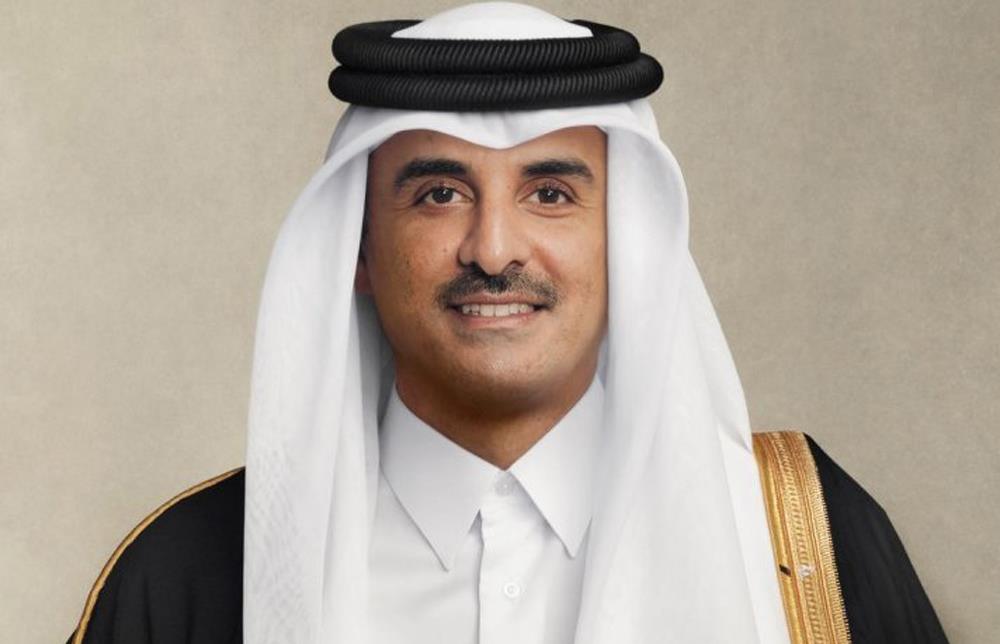
Doha, Qatar: The Amir HH Sheikh Tamim bin Hamad Al-Thani will participate in the World Leaders Summit, held on Nov. 11-12 in Antalya, Turkiye, as part of the 31st session of the Conference of the Parties to the United Nations Framework Convention on Climate Change (COP31), under the auspices of President of the Republic of Turkiye HE Recep Tayyip Erdogan.
HH the Amir's participation in the summit reflects the State of Qatar's commitment to its vision that addressing climate change is a shared responsibility, one that requires effective international cooperation, a focus on implementation, and transforming pledges into practical outcomes that support sustainable development for present and future generations.
HH the Amir's participation in the summit also provides an opportunity to highlight national efforts and initiatives in the fields of sustainability and climate action, foster the exchange of expertise with other nations and international organizations, and explore solutions that enhance the capacity of communities and vital sectors to adapt to the impacts of climate change.
The Leaders' Summit holds particular significance as a political milestone for renewing the international commitment to addressing climate change and advancing efforts to translate pledges into practical action, all amid a growing recognition that protecting the climate is inextricably linked to food and water security, economic stability, human health, and the future of generations to come.
The participation of HH the Amir in international summits and conferences on climate change has marked significant milestones in Qatar's engagement with global climate action. These contributions reflect His Highness's commitment to fostering international cooperation to address climate challenges, protect natural resources, and strike a balance between economic development and environmental conservation.
One of the early milestones along this path was HH the Amir's participation in the United Nations Climate Change Summit, held in New York on Sept. 23, 2014, under the theme "Catalyzing Action." The summit brought together heads of state and government at a time when international efforts were focused on building a consensus to pave the way for a new global climate agreement.
HH the Amir attended the opening session of the summit at the United Nations headquarters, underscoring the Qatari leadership's commitment to participating in multilateral efforts aimed at addressing global warming and fostering international cooperation. This participation came two years after Doha hosted the 18th Conference of the Parties (COP18) in 2012, which resulted in the adoption of the Doha Amendment to the Kyoto Protocol.
On Nov. 15, 2016, HH the Amir participated in the opening session of the 22nd Conference of the Parties (COP22) in Marrakech, Morocco. The conference took place following the entry into force of the Paris Agreement on Nov. 4, 2016, marking one of the initial milestones in the transition from international consensus on principles to the discussion of mechanisms for practical implementation and the fulfillment of commitments. HH the Amir's participation in the conference reflected Qatar's keen interest in keeping pace with developments within the international climate action regime.
Among the key instances of HH the Amir's participation in climate action conferences was his attendance at the Climate Action Summit - convened by UN Secretary-General Antonio Guterres in New York on Sept. 23, 2019, which took place alongside the meetings of the United Nations General Assembly.
His Highness participated in a session on the Climate Finance and Carbon Pricing Coalition, alongside French President Emmanuel Macron and Jamaican Prime Minister Andrew Holness. During the session, His Highness delivered a speech addressing the gravity of climate change, including its economic, social, and environmental repercussions, and emphasized the need to strengthen shared international responsibility.
HH the Amir emphasized that climate change represents one of the grave challenges facing the world, and that its repercussions extend to all aspects of human life as well as economic and social development - a reality that necessitates redoubled international efforts and a commitment by nations to fulfill their responsibilities and pledges.
During the summit, His Highness announced a contribution of USD 100 million from Qatar to support Small Island Developing States and Least Developed Countries, helping them address climate change, natural hazards, and environmental challenges, while strengthening their adaptive capacity.
This announcement represented one of the key Qatari initiatives directly linked to the Amiri participation in an international climate summit. It shifted the commitment to climate cooperation from mere political posturing to a pledge of a specific financial contribution, targeted at countries most vulnerable to climate risks.
His Highness also showcased Qatar's initiatives within the framework of the Qatar National Vision 2030, which include developing clean technologies, improving the efficiency of water and energy use, encouraging recycling, expanding green spaces, and implementing planned increases in solar-powered electricity generation.
His Highness addressed the role of the Qatar Investment Authority in supporting sustainable investments, as well as its participation in the One Planet Sovereign Wealth Funds (OPSWF) initiative, which aims to encourage investments that account for climate-related risks and support the transition toward a low-emission economy.
On Nov. 1, 2021, HH the Amir participated in the opening session of the 26th UN Climate Change Conference (COP26) in Glasgow, Scotland, United Kingdom.
On the sidelines of the conference, and during a meeting with the then-British Prime Minister Boris Johnson, Qatar Foundation and Rolls-Royce announced a long-term partnership to establish a global center for innovation in climate technology.
This move underscored the importance of international partnerships in supporting scientific research, technological innovation, and the development of new solutions in the fields of clean energy and sustainability, while also highlighting the role of Qatari scientific institutions in fostering the transition toward environmental sustainability.
On Dec. 1, 2023, HH the Amir participated in the opening session of the 28th Conference of the Parties (COP28) at Expo City Dubai. This underscored Qatar's continued engagement in forums addressing the future of climate policy, energy, and sustainable development, a period during which the nation was actively implementing solar energy projects, developing emission-reduction technologies, and bolstering investments in sustainability.
The State of Qatar places great importance on addressing climate change by implementing numerous projects and initiatives that contribute to reducing air pollutants, lowering carbon dioxide emissions, and increasing reliance on renewable energy sources.
The State of Qatar, represented by the Ministry of Environment and Climate Change, plays a significant role in cooperating with international organizations and bodies concerned with environmental and climate change issues. It was among the first nations to join the United Nations Framework Convention on Climate Change (UNFCCC) in 1996, the Kyoto Protocol in 2005, and the Paris Agreement in 2016, formally ratifying the latter in 2017. Furthermore, Qatar hosted the 18th Conference of the Parties (COP18) to the UNFCCC in 2012, a milestone in global climate change negotiations that contributed to the eventual reaching of the Paris Agreement.
The Qatari position emphasizes the importance of maintaining a balance between pathways for emissions reduction, adaptation to the impacts of climate change, and means of implementation, including finance, technology development and transfer, and capacity building, while underscoring the necessity for developed nations to fulfill their responsibilities in providing the essential support required by developing countries.
The State of Qatar remains committed to maintaining the balance established by the Paris Agreement, while upholding the principles and provisions set forth in the UNFCCC. It further emphasizes that the outcomes of negotiations should account for the national circumstances and development priorities of individual countries and take into consideration their varying capacities and needs.
The State of Qatar believes that emissions can be reduced through various solutions and technologies, without requiring the abandonment of specific fuel sources, while taking into account energy security and the national circumstances of individual countries, and striking a balance between the requirements for economic development and climate action goals.
Technology and innovation are key components of the State of Qatar's approach to climate action. This includes developing carbon capture and storage technologies, expanding the use of solar energy, enhancing the efficiency of electricity and water production, promoting electric and sustainable modes of transport, and developing systems for the measurement, reporting, and verification of emissions.
The State of Qatar's approach is based on linking climate action with sustainable development priorities, in line with the Qatar National Vision 2030. It highlights national initiatives aimed at reducing emissions, enhancing resource efficiency, and expanding the use of clean energy, alongside strengthening efforts to adapt to the impacts of climate change.
The State of Qatar aims to implement emission-mitigation measures equivalent to a reduction of 42 million tons of carbon dioxide by 2040, as part of its national efforts to achieve its climate goals.
The priorities of the State of Qatar encompass the sectors of water, biodiversity, agriculture, food security, public health, infrastructure, coastal resilience, energy, and industry. Furthermore, they include a focus on protecting marine and coastal ecosystems, as well as enhancing the capacity of vital sectors to address climate-related risks, such as rising temperatures, water scarcity, and sea-level rise.

Legal Disclaimer:
MENAFN provides the
information “as is” without warranty of any kind. We do not accept any
responsibility or liability for the accuracy, content, images, videos,
licenses, completeness, legality, or reliability of the information
contained in this article. If you have any complaints or copyright issues
related to this article, kindly contact the provider above.


Comments
No comment