


Trade Survives, But The Battle For Control Intensifies: 3 Calls For Global Trade


Global goods trade continues to weather geopolitical shocks. Over the past few years, trade has proved far more resilient than global headlines suggest. We expect that resilience to continue into 2027. Disruptions in global shipping, shifting tariff regimes and recurring geopolitical tensions have repeatedly altered trade routes without derailing trade itself.
Strong demand for AI-related investment and infrastructure should continue to support trade flows, particularly across Asia, while selective US-China decoupling is likely to benefit third countries that attract production and investment. For 2027, we expect global goods trade to remain positive, expanding about 3% year-on-year. In short, trade survives politics in 2027 because companies can still adapt faster than governments can restrict them.
Our risky call: Ownership matters more than tradeTariffs were only the first step. By 2027, the real battleground shifts to capital, technology and ownership. As companies invest behind tariff walls, governments stop merely screening new investment and begin requiring companies to restructure, separate sensitive operations or divest existing strategic assets.
A foreign-owned battery plant, semiconductor facility, or data centre once supported for bringing local investment and jobs is now treated as a national-security risk. Companies that once navigated geopolitical tensions through diversification find themselves forced to choose sides. The question is no longer who exports the most, but who controls the productive capacity on which economies depend. Trade would continue, but the corporate structures that have kept it moving would start to fracture as governments alter trade flows. This could potentially cause global goods trade growth to stall or even contract in 2027.
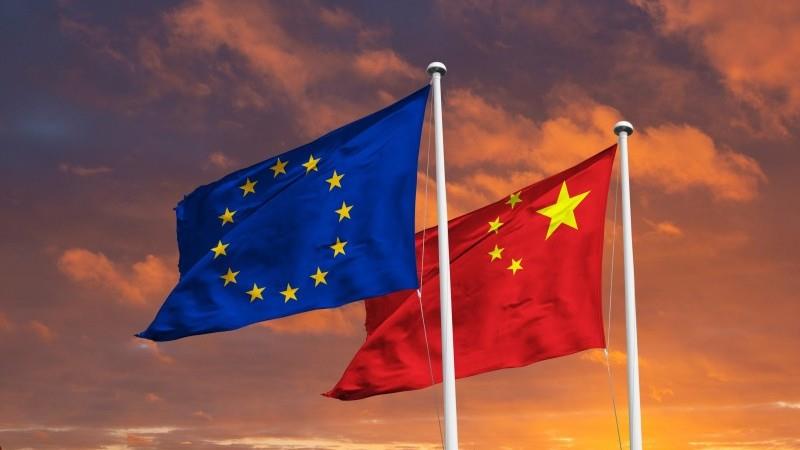
Our bold call: EU-China trade warThe EU and China enter an outright trade conflict. Europe abandons its largely open-market approach and increasingly applies reciprocity principles to market access and investment. Chinese firms investing in strategic sectors face mandatory 50:50 joint ventures, local ownership requirements and growing restrictions on acquisitions.
At the same time, the EU imposes broad tariffs on Chinese imports, with rates reaching 50% in politically sensitive sectors such as vehicles, chemicals, machinery and electronics. China retaliates with measures of similar scale.
The consequences are significant. China accounts for roughly 15% of global goods trade, while the EU accounts for around 13.5%. Together they represent almost 30% of world goods trade. With the EU being China's largest trading partner in goods and China being the EU's second-largest trading partner in goods, a full-scale trade conflict would rank among the most consequential economic conflicts of the modern era.

Legal Disclaimer:
MENAFN provides the
information “as is” without warranty of any kind. We do not accept any
responsibility or liability for the accuracy, content, images, videos,
licenses, completeness, legality, or reliability of the information
contained in this article. If you have any complaints or copyright issues
related to this article, kindly contact the provider above.


Comments
No comment