


Azerbaijan Highlights Smart City Development At UN Geneva Roundtable


By Alimat Aliyeva
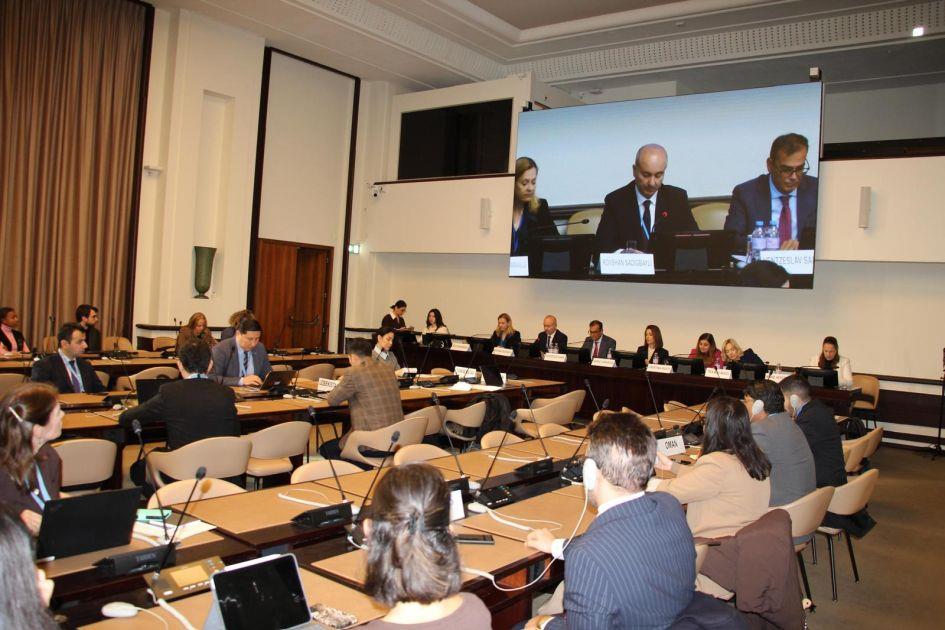
Azerbaijan has hosted a high-level roundtable at the United Nations Office in Geneva (UNOG) dedicated to Victory Day, exploring the evolution of human settlements from prehistoric shelters to modern smart cities and sustainable communities.
Titled From Early Shelters to Modern Smart Cities: The Evolution of Human Settlements, the event was initiated by Azerbaijan's Permanent Mission to the UN Office in Geneva and other international organisations. It was organised in partnership with the State Committee on Urban Planning and Architecture, UNOG, the United Nations Economic Commission for Europe (UNECE) and UN-Habitat, with support from Azerbaijan's National Commission for UNESCO and the Ministry of Culture.
The discussions brought together diplomats, representatives of international organisations and urban development experts. Participants reviewed the outcomes of the 13th session of the World Urban Forum (WUF13), held in Baku from May 17 to 22, and explored ways to implement its outcome document, the Baku Call to Action, at global, national and local levels.
Opening the event, Azerbaijan's Permanent Representative and Ambassador, Rovshan Sadigbayli, highlighted the importance of WUF13 and emphasised the role of people-centred urban development, reliable institutions, transparent governance and modern technologies in building sustainable communities.
He traced the historical development of settlements in Azerbaijan, from the ancient Azykh and Taghlar caves to contemporary smart cities and villages. He noted that although technologies and living conditions have evolved over centuries, people's fundamental needs for security, community and a sense of belonging have remained unchanged.
The ambassador also presented Azerbaijan's Great Return Programme as an example of innovative and people-centred reconstruction in liberated territories. He highlighted ongoing development projects in Agali village and the cities of Fuzuli, Aghdam, Zangilan and Lachin, while drawing attention to the international significance of Azerbaijan's ASAN service model.
Speaking at the opening session, Charlotte Lindberg Warakaulle, Director of the UN Library and Archives in Geneva, and Azerbaijani Ambassador Nargiz Gurbanova, Director of the Department for Multilateral Economic Affairs at the Ministry of Foreign Affairs, also addressed participants.
Gurbanova highlighted large-scale reconstruction efforts under the Great Return Programme, the importance of humanitarian demining and Azerbaijan's cooperation with UN-Habitat. She noted that Azerbaijan had identified demining as its 18th national Sustainable Development Goal.
She also discussed cooperation with UN-Habitat on integrated settlement planning in Eastern Zangazur and presented the Smart and Sustainable Settlements for Safe Return Package, introduced during WUF13. Azerbaijan's urban climate initiatives under its COP29 Presidency and its contribution to regional urban cooperation through the UN Special Programme for the Economies of Central Asia (SPECA) were also highlighted.
A dedicated session on WUF13 featured online contributions from Gulshan Rzayeva of the State Committee on Urban Planning and Architecture and Anna Soave, Head of the UN-Habitat Country Office in Azerbaijan. Discussions focused on the global housing crisis, affordable housing, inclusive urban planning and international cooperation in implementing the Baku Call to Action.
Further presentations examined the practical implementation of the outcome document. Representatives of UNECE, the International Telecommunication Union and the United Nations Environment Programme highlighted the importance of strengthening local governance, responsibly applying artificial intelligence and digital technologies, improving climate resilience and promoting environmental solutions.
The discussions were moderated by Ventzeslav Sabev, Deputy Director of the University of Geneva's Global Studies Institute's Observatory on Security, and included an interactive exchange involving diplomatic representatives from Uzbekistan and Türkiye.
Alongside the roundtable, participants visited a photo exhibition tracing Azerbaijan's settlement history from prehistoric Azykh and Taghlar caves and the ancient rock shelters of Gobustan to modern smart cities and villages. The exhibition also showcased reconstruction projects in liberated territories and highlighted efforts to provide returning residents with safe, sustainable and modern living environments following the restoration of Azerbaijan's territorial integrity and sovereignty.
A promotional video dedicated to WUF13 was also screened. The exhibition will remain open to visitors at the UN Office in Geneva until November 13.
The event concluded with a presentation of traditional Azerbaijani sweets, offering guests an opportunity to experience the country's cultural heritage alongside discussions on its urban development priorities.

Legal Disclaimer:
MENAFN provides the
information “as is” without warranty of any kind. We do not accept any
responsibility or liability for the accuracy, content, images, videos,
licenses, completeness, legality, or reliability of the information
contained in this article. If you have any complaints or copyright issues
related to this article, kindly contact the provider above.


Comments
No comment