


Global Media Leaders Gather To Discuss AI's Future In Journalism


7th World Media Summit in China adopts Beijing Consensus on AI development
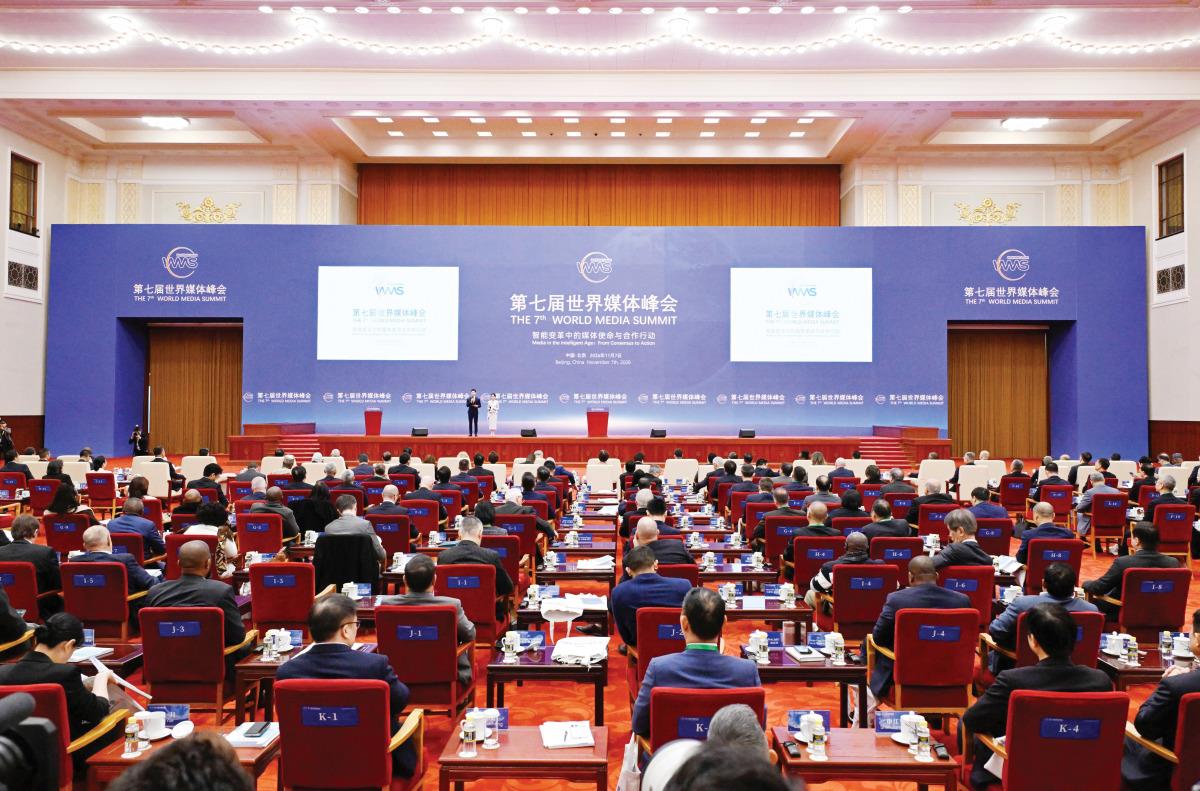
Beijing, China: Beijing hosted the opening ceremony of the 7th World Media Summit on Saturday (November 7), with global media leaders and representatives gathering to discuss the evolving role of the media in the age of artificial intelligence. This year's summit is themed“Media in the Intelligent Age: From Consensus to Action.”
Co-organized by Xinhua News Agency and the Beijing municipal government, the five-day event brought together nearly 500 participants representing about 330 mainstream media organizations, think tanks and government institutions from 112 countries and regions. Representatives from the United Nations and other international organisations also took part.
The World Media Summit was initiated in 2009 and is now a major global platform for media exchange and cooperation. The last summit was held in Urumqi, the capital city of northwest China's Xinjiang Uygur Autonomous Region, in 2024. Li Shulei, a member of the Political Bureau of the Communist Party of China (CPC) Central Committee and head of the Publicity Department of the CPC Central Committee, delivered a keynote speech at the opening ceremony.
Yin Li, a member of the Political Bureau of the CPC Central Committee and secretary of the CPC Beijing Municipal Committee, also addressed the ceremony.
At the summit, delegates discussed the role of the media in the age of artificial intelligence (AI) and how the industry should respond to the challenges it poses. They called for closer cooperation to broaden access to advanced technologies and help media organizations worldwide develop together, while urging concrete steps to uphold journalistic ethics and safeguard the authenticity of news content as AI use expands.
The 7th World Media Summit Beijing Consensus was adopted at the ceremony. It calls for joint efforts to advance the transformation and development of the global media industry in the AI era.
Read Also-
Prime Minister, US President hold meeting
Qatar launches regulatory guide for private schools, kindergartens
Angola seeks stronger technology, investment ties with Qatar: Minister
Recognizing AI's growing role in media development, the consensus commits to advancing the inclusive and responsible application of AI in the media sector so that advances in AI benefit media organizations at all stages of development and in every country.
The summit also released the Global Media Initiative for the Joint Development of AI Application Standards. Launched by Xinhua, the initiative brings together major media outlets and other professional organizations to safeguard the authenticity of information, protect data security, and uphold media ethics, thereby maintaining public trust in the media.
The first 22 participants also include Russia's TASS News Agency, the Malaysian National News Agency (Bernama), South Africa's Independent Media, and China's People's Daily and China Media Group.
Under the initiative, participants plan to work together for about two years to develop a set of standards that address different media uses of AI and are validated by media outlets. The initiative also calls for a global database of AI applications.
Addressing the opening ceremony, Fu Hua, president of Xinhua News Agency, called on media professionals to share new technologies and applications, exchange experience in using them, and close gaps in AI research, development and understanding.“We should lead the way in ensuring that all media professionals have a fair chance to benefit from AI,” he said.
AFP Chairman Fabrice Fries also stressed the need for inclusive AI development at the summit.“The benefits of this technological revolution should extend far beyond a small number of companies or countries,” he said. Fries called on media organizations, governments, businesses and universities to work together to ensure that AI helps build a healthier, more diverse global information ecosystem. In particular, AI models must be trained on datasets that reflect the diversity of human societies and perspectives, he said.
For participants from Global South countries, the summit is particularly important in helping their media organizations adapt to the digital era and narrow development gaps.
“As AI is reshaping the entire chain of news production at an unprecedented speed, it has brought opportunities but also risks and challenges to the media industry, such as ethical lapses in the use of technology and the proliferation of false information,” Lyu Yansong, editor-in-chief of Xinhua, said at the Summit.
“We should take the initiative to share technological expertise, open-source models and training resources, and work together to strengthen our capacity to address risks arising from AI,” he said.

Legal Disclaimer:
MENAFN provides the
information “as is” without warranty of any kind. We do not accept any
responsibility or liability for the accuracy, content, images, videos,
licenses, completeness, legality, or reliability of the information
contained in this article. If you have any complaints or copyright issues
related to this article, kindly contact the provider above.


Comments
No comment