


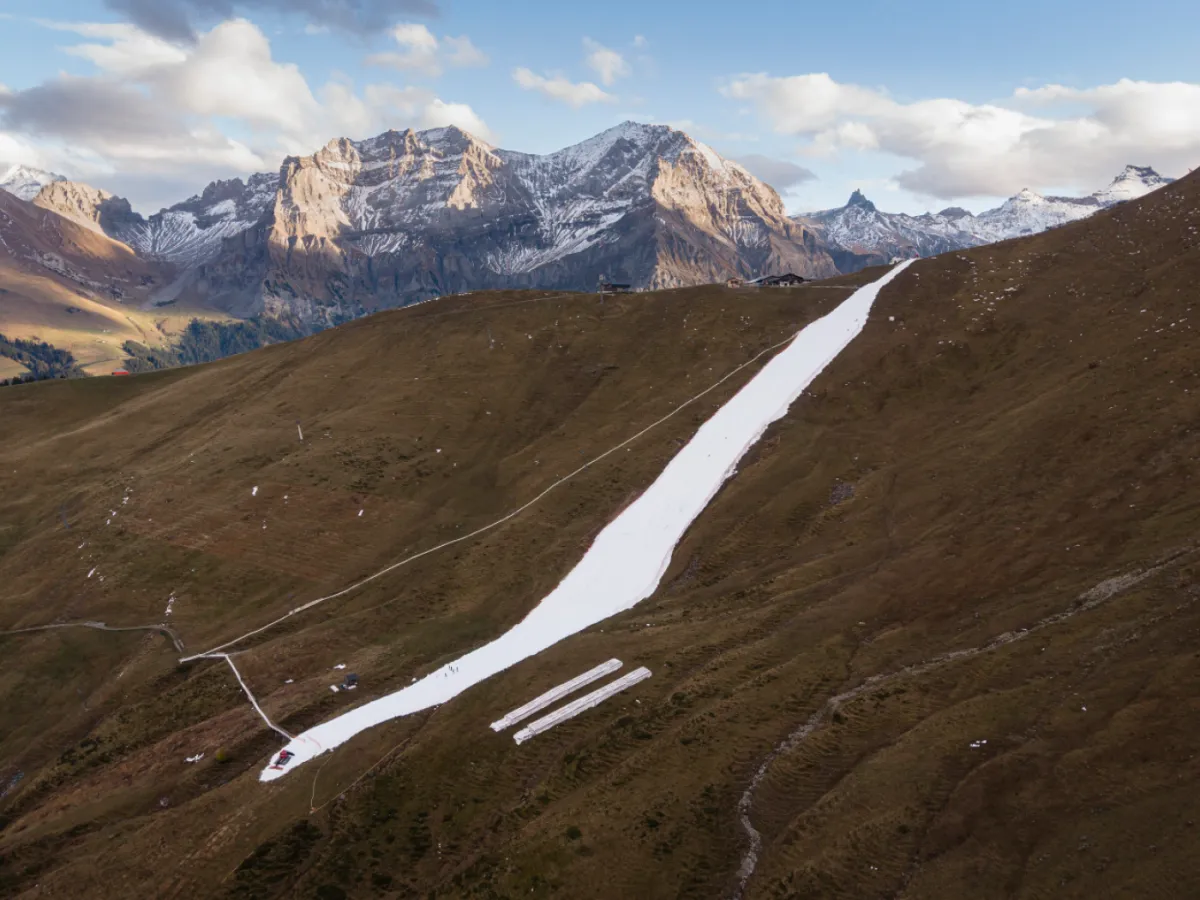
Early Snowfall After Scorching Summer Poses Risks To Mountain Regions


-
Français
fr
Après l'été extrême, les risques de neige précoce sur un sol chaud
Original
Read more: Après l'été extrême, les risques de neige précoce sur un sol
A thick, early snowpack insulates the ground and prevents it from cooling further, stated the WSL Institute for Snow and Avalanche Research (SLF), located in Davos. As a result, the snow remains wet on its underside.
“On a smooth surface, such as grass or rocky outcrops, the entire snowpack can then slide suddenly,” said Alec van Herwijnen, head of the Avalanche Formation and Dynamics research group at the SLF. Following extreme summers, this phenomenon can also occur on high-altitude north-facing slopes, which are usually less affected.
Long-term risksThe timing of snowfall also plays a key role in high-altitude permafrost – that is, soil that remains permanently frozen above an altitude of around 2,500 metres. If the snowpack becomes continuous early in the autumn, heat is then stored in the ground and can continue to penetrate deeper.
More More Climate solutions How climate change is threatening permafrost's delicate balanceThis content was published on Mar 10, 2025 Permafrost is the hidden frozen“glue” – a layer formed by ice, rock and soil – that holds icy northern landscapes together.
Read more: How climate change is threatening permafrost's delicate ba
Legal Disclaimer:
MENAFN provides the
information “as is” without warranty of any kind. We do not accept any
responsibility or liability for the accuracy, content, images, videos,
licenses, completeness, legality, or reliability of the information
contained in this article. If you have any complaints or copyright issues
related to this article, kindly contact the provider above.


Comments
No comment