


Baku Turns Geopolitical Balancing Into Economic And Diplomatic Advantage


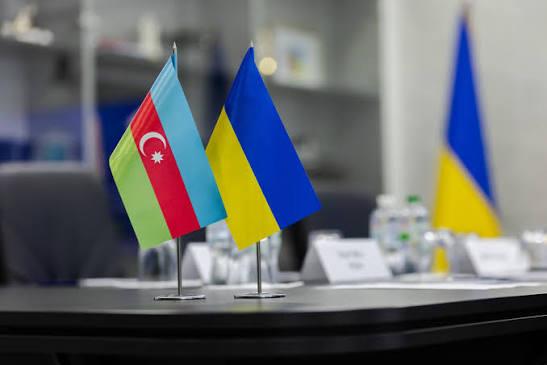
In Uzhhorod, a western Ukrainian town closer to the EU border than to the battles on its eastern front, diplomacy during the week focused on an unusually pragmatic agenda of electricity equipment, industrial parks, and deals that could endure a war. Azerbaijan was trying out how much of an economic collaboration it could have with Kyiv while not breaking ties with Moscow. Parviz Shahbazov, Azerbaijan's energy minister, met Ukraine's first deputy prime minister and energy minister, Denys Shmyhal, on November 5 for the 14th session of their intergovernmental economic commission. It was the commission's first meeting on Ukrainian soil since Russia's war against Ukraine in 2022. They signed a meeting protocol and adopted a 2026–27 action plan covering 14 areas, from energy and transport to technology and tourism. In the course of the meeting, both countries signed the meeting protocol and formulated the 2026–2027 action plan, which included 14 sectors, such as energy, transport, technology, and tourism.
Economic numbers
Despite the country facing daily missile attacks, there have been notable signs of stability within the business relationship. Trade between the two nations grew by 10.5 per cent compared to the same period last year in the first eight months of 2026, whereas trade between Azerbaijan and Ukraine climbed by 17 per cent. Cumulative investment reached $513.5 million, with 290 firms with Ukrainian investments operating in Azerbaijan. According to Shahbazov, bilateral trade exceeded $500 million on an annual basis, but that figure must not be confused with the cumulative investment amount.
These are practical numbers rather than any sign of an economic breakthrough. The infrastructure for production and transportation is still vulnerable to attack from Russia, and insurance companies, banks and investors are forced to calculate risks which do not normally arise in cross-border business. Nevertheless, sustaining trade through a protracted conflict allows both nations to achieve one thing which summit agreements alone cannot deliver – a vested interest in keeping things working.
The political groundwork had been laid in earlier months of the year. In April, Volodymyr Zelensky visited Azerbaijan, holding talks with President Ilham Aliyev in Gabala, where six bilateral agreements were signed, among them one related to defence industry cooperation. The presidents have stressed the importance of territorial integrity for each other. The Uzhhorod summit moves the presidents' relations toward institutional and corporate cooperation.
Reconstruction starts before the war ends
For Ukraine, perhaps, the next priority is ensuring the operation of its existing infrastructure, for a good reason, which is not to create another distant energy corridor. Azerbaijan says it has delivered more than 10 aid packages for energy purposes, with equipment intended to fix Ukraine's destroyed infrastructure. Azerbaijan's humanitarian, rehabilitation and reconstruction efforts since the beginning of the invasion amounted to about $52 million. Azerbaijan also helped restore social facilities in Irpin and implemented rehabilitation programs for Ukrainian children.
According to an assessment conducted in February by the World Bank, the Ukrainian government, the European Commission, and the United Nations, Ukraine's needs for reconstruction and recovery amounted to nearly $588 billion over ten years, of which $91 billion was allocated to the energy sector alone. Damage to energy facilities had increased by approximately 21 percent compared to the previous estimate. Azerbaijan cannot guarantee a recovery program at this level of costs, yet, it can participate in efforts in areas where it has expertise, equipment, or financial partners.
That is why the talks ranged from renewables and energy storage to heat pumps, energy efficiency, food processing and construction materials. The Ukrainian delegation went to a wind-turbine production factory and ATEF at Khust industrial park. Shmyhal offered Azerbaijani firms the opportunity to take part in the reconstruction process despite the risks. The question is how to turn such visits into profitable and feasible projects with the appropriate procurement procedure, security measures, and return on investment.
Baku authorities have suggested that the Alat Free Economic Zone, with its industrial parks, would be an appropriate location for joint manufacturing to be sold to third markets. Such projects could diversify the Ukrainian industry from vulnerable plants within the country's borders, while the Azerbaijani partners would get access to Ukraine's engineering and industrial potential in order to establish businesses beyond the oil and gas sector. However, no specific locations for the plants, investments, or orders have yet been announced by either side to make this suggestion a reality.
Baku seems eager for its green corridor initiative
The ministerial statement also noted the Caspian-Black Sea-Europe Green Energy Corridor, meant for transmitting electric energy from Azerbaijan into Europe. The confirmed members of this project are Azerbaijan, Georgia, Romania, and Hungary. Ukraine is not part of these four members that have signed the agreement. This is a significant point, since referring to a regional program does not guarantee that the Ukrainian connection has been finalised. However, it is truly commendable to see Baku so eager to establish non-oil and green energy initiatives, fully committed to the ideas expressed during COP29.
We made a hefty amount of analysis and articles on the project itself; the numbers have been changing from time to time, but now Baku confidently says a feasibility study supports the roughly 4-gigawatt corridor, with a final investment decision targeted for 2029 and phased commissioning envisaged from 2032. These long-term targets cannot be compared with the current need for transformers, network rehabilitation, and flexible generation in Ukraine. It can be argued that there exists some complementarity in these two countries' situations, although it is less extensive than the above discussion may imply.
Baku's strategic balancing act
Azerbaijan has supported Ukraine's sovereignty and supplied humanitarian aid, but it has also kept economic and diplomatic channels open to Russia and declined to join Western sanctions against Moscow. In July, after what Baku described as a Russian drone attack on a SOCAR filling station in Ukraine's Mykolaiv region, Azerbaijan summoned Russia's ambassador. Earlier strikes had also damaged Azerbaijani energy assets in Ukraine. Both sides try hard not to create an impression of dispute. Relations with Russia soured considerably following the crash of an Azerbaijan Airways plane over Russian territory in December 2024. It is Russia's displeasure with Azerbaijan's position on Ukraine's territorial integrity, despite claims by the Kremlin that it should not affect bilateral relations. President Ilham Aliyev believes that the matter has been settled. This past month, during the Russian Energy Week event in Moscow, SOCAR announced its desire to resume purchasing gas from Gazprom and to exchange gas with it.
This is more the approach of a nation that makes its living through selling energy to any country that may require it. For instance, Azerbaijan provides gas to 12 European nations, ten of which are members of the European Union. Statistically speaking, gas sales to the EU have increased by 65% since the invasion.
Baku's position has traditionally been defined by the protection of its economic interests and the maintenance of balance in its foreign policy. This approach has enabled Azerbaijan to make independent decisions without becoming aligned with any political bloc, while preserving its diplomatic autonomy and maintaining relations with different sides without favouring one over another. Against this backdrop, it would be inaccurate to portray Baku as being fully aligned either with Kyiv's position or with Moscow's perspective in the current developments. Rather, this reflects the most pragmatic diplomatic course available to an independent state seeking to safeguard its national interests and preserve its strategic autonomy amid competing geopolitical pressures.

Legal Disclaimer:
MENAFN provides the
information “as is” without warranty of any kind. We do not accept any
responsibility or liability for the accuracy, content, images, videos,
licenses, completeness, legality, or reliability of the information
contained in this article. If you have any complaints or copyright issues
related to this article, kindly contact the provider above.


Comments
No comment