


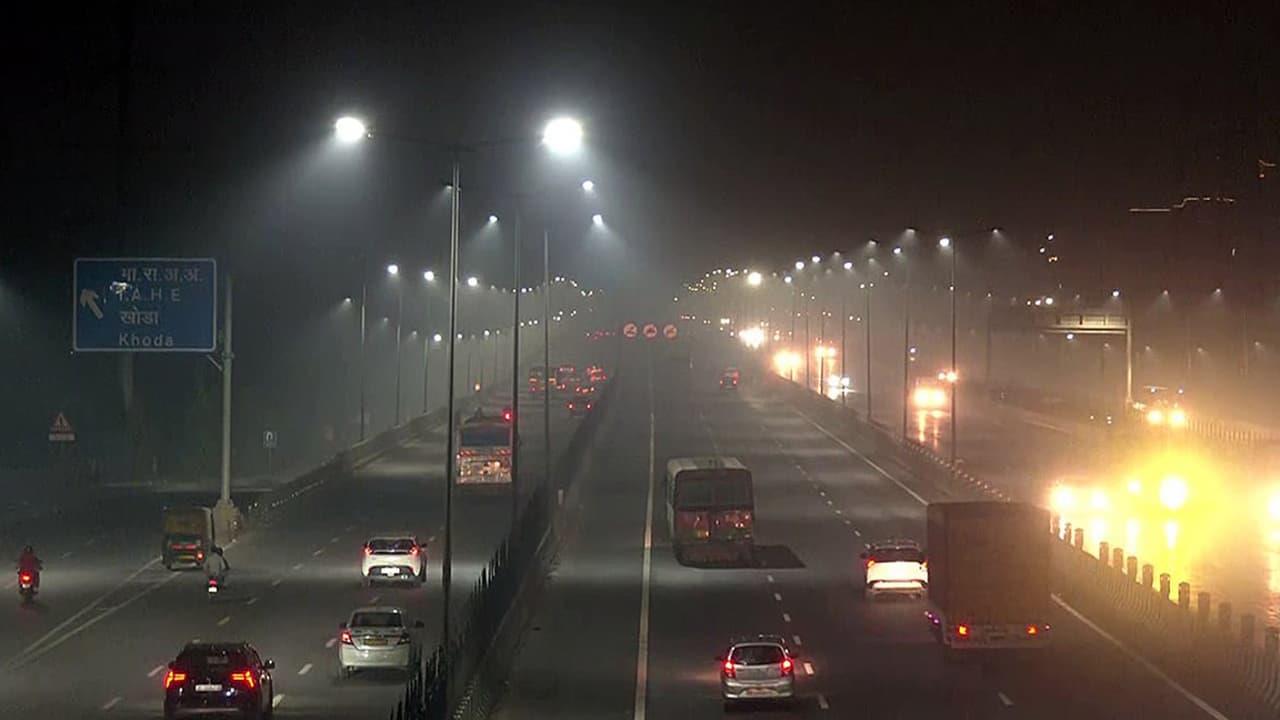
Delhi AQI Today: Air Quality Improves Slightly, But Remains 'Very Poor' Check IMD Forecast


Delhi AQI Today: Delhi's air quality showed marginal improvement on November 10, but pollution levels remained in the 'very poor' category after Diwali. With fog expected over the next six days, residents may have little relief
Delhi's air quality recorded a slight improvement on Tuesday morning, November 10, following the sharp deterioration witnessed after Diwali celebrations. However, the marginal decline in pollution levels has done little to improve the overall situation, with the national capital continuing to breathe heavily polluted air.
According to data from the Central Pollution Control Board (CPCB), Delhi's overall Air Quality Index (AQI) stood at 304 around 7:15 am on Tuesday. Although this was lower than Monday's readings, the air quality remained firmly in the 'very poor' category.
Several monitoring stations across the city continued to report alarmingly high pollution levels. Meanwhile, the India Meteorological Department (IMD) has forecast moderate fog over the coming days, with no immediate weather warnings for the national capital.
Delhi recorded an overall AQI of 304 at around 7:15 am on November 10, indicating a marginal improvement in air quality after the post-Diwali pollution spike.
However, several locations continued to experience extremely poor atmospheric conditions. Pusa and Chandni Chowk recorded the highest AQI readings of 395 each, followed by NSUT Jaffarpur at 382 and the Commonwealth Sports Complex at 380.
Other monitoring stations also reported elevated pollution levels. Talkatora Garden and North Campus, Delhi University, recorded an AQI of 372 each, while Sirifort registered 371. CRRI Mathura Road and JNU reported readings of 369, while IIT Delhi recorded 364.
According to the Delhi government's AQI monitoring portal, the city's overall reading was 307 at the same time.
The slight improvement on Tuesday comes after Delhi experienced one of its most polluted Diwali celebrations in recent years.
On November 8, the national capital recorded an average AQI of 376, the highest reading for Diwali in five years. The situation worsened the following morning, with the overall AQI reaching 371 by 10 am on November 9.
Of the 51 monitoring stations that reported data on Monday, 14 recorded air quality in the 'severe' category, while 33 remained in the 'very poor' category. The remaining four stations reported 'poor' air quality. Delhi Technological University recorded the highest reading at 439.
The Commission for Air Quality Management (CAQM) has continued implementing Stage III restrictions under the Graded Response Action Plan (GRAP). The measures include tighter pollution-control enforcement and additional directions to agencies to prevent further deterioration.
The emergency framework covers Delhi and adjoining areas of Haryana, Uttar Pradesh and Rajasthan. Authorities use pollution forecasts and meteorological assessments to introduce restrictions before air quality reaches dangerously high levels.
While pollution levels remain a concern, the IMD has predicted moderate fog during morning hours across Delhi from November 10 to November 15.
The maximum temperature is likely to remain between 28 and 29 degrees Celsius, while minimum temperatures are expected to hover between 15 and 16 degrees Celsius during this period. No weather warnings have been issued for the national capital.
Here is the day-wise Delhi weather forecast:
November 10: Maximum temperature of 28°C and minimum of 15°C, with moderate fog.
November 11: Temperatures likely to range between 15°C and 28°C, accompanied by moderate fog.
November 12: Maximum temperature of 28°C and minimum of 16°C, with moderate fog.
November 13: Temperatures expected to remain between 16°C and 29°C, with moderate fog.
November 14: Maximum temperature of 29°C and minimum of 16°C, with moderate fog.
November 15: Temperatures likely to range between 15°C and 29°C, with moderate fog.
Despite the marginal improvement in air quality, Delhi residents continue to face elevated pollution levels. With morning fog expected to persist and GRAP Stage III measures remaining in force, the coming days will be crucial in determining whether the capital can achieve a more substantial improvement in air quality.

Legal Disclaimer:
MENAFN provides the
information “as is” without warranty of any kind. We do not accept any
responsibility or liability for the accuracy, content, images, videos,
licenses, completeness, legality, or reliability of the information
contained in this article. If you have any complaints or copyright issues
related to this article, kindly contact the provider above.


Comments
No comment