


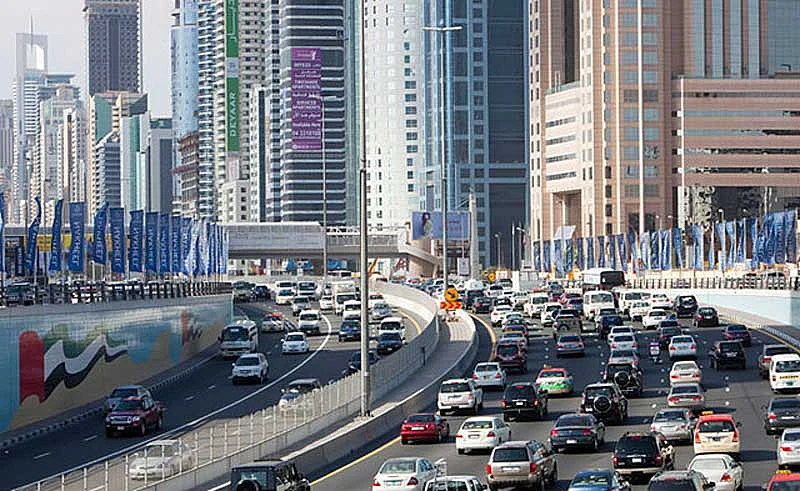
New UAE Traffic Rules For 2027: What Changes For Drivers, E-Scooter Riders


Cabinet Decision No. 174 of 2026, the executive regulation of Federal Decree-Law No. 14 of 2024, also requires theory and practical tests for renewing licences expired for more than 10 years. Some provisions add to the federal framework; others retain or revise existing rules.
Recommended For You Saudi-led coalition targets Houthi missile launchers used in attempted Riyadh attackArticle 59 provides three-year permits for electric scooters, electric bicycles and small motorised bikes, with a minimum applicant age of 15. Meanwhile, Article 6 requires the prescribed permit before riding. This is an application age, not a stated riding age for every personal-mobility category; ordinary pedal bicycles are classified separately and are not among Article 59's three permit types.
Stay up to date with the latest news. Follow KT on WhatsApp Channels.
Dubai's existing RTA scheme requires applicants to be at least 16 and issues permits without expiry. The federal regulation does not explicitly explain how it will interact with that age condition or how existing permits will be treated.
Article 6 requires device registration under the relevant licensing or traffic-control authority's procedures, but specifies neither a registration fee nor an application platform.
Riders must follow authority-designated routes and speed limits and must not ride on roads designated for vehicle traffic. Safety requirements cover private use and commercial rentals.
No nationwide numerical e-scooter riding speed is specified. Article 3's 45 km/h figure forms part of the small-motorised-bike definition, not an e-scooter riding limit.
Equipment and traffic signalsArticle 4's technical requirements include a headlight for night-time road illumination, a rear light, red brake-linked lighting, a handlebar-mounted audible warning device and braking on at least the rear wheel. Tyres must be securely fitted and roadworthy; components must be secured and safe. Licensing authorities may add requirements.
Under Article 50, pedestrians and personal-mobility users must not cross on red and may cross on green. When green flashes, they must not begin crossing, but anyone who started during the permitted period may finish.
Nine hours of driving within 24 hoursArticle 7(2) limits driving to nine hours within 24 hours, without naming a specific driver category, such as truck drivers or professional motorists. The Federal Traffic Council may amend the limit.
It separately prohibits driving when fatigue or exhaustion affects safe driving, even before nine hours are reached.
The clause does not describe nine consecutive hours, specify how time will be recorded or prescribe rest breaks. The fatigue prohibition already existed,the numerical ceiling is additional.
Licences expired for more than 10 yearsArticle 76 requires theory and practical tests, determined by the licensing authority, when renewing a licence unrenewed for more than 10 years from expiry not first issue.
Other renewal conditions still apply, and the Federal Traffic Council may set minimum tests. The article prescribes neither a full beginner course nor mandatory training hours.
Dubai already requires an evaluation test for licences expired more than 10 years ago. RTA guidance does not establish that this assessment is identical to Article 76's theory and practical tests.
Learner permits of up to six monthsArticle 82 requires a licensing-authority learner permit, renewable and valid for no more than six months, compared with three months under the previous federal regulation. It does not state that every permit will last six months or that existing permits will be extended automatically.
Instructors need the appropriate permit and authorisation. Only the learner and instructor may occupy the vehicle during instruction; learners may drive on roads in populated areas only when the instructor is satisfied they can control the vehicle.
Speed limits, fines and exceptionsArticle 14 bases speeding-fine amounts on posted speeds and requires licensing and traffic-control authorities to coordinate road limits and violation-detection speeds. Fine calculation and detection thresholds are separate provisions no numerical enforcement buffer or abolition of existing emirate buffers is specified.
Article 8 retains a maximum prescribed speed of 40 km/h in internal residential areas, indicated by clear signs and guidance boards not a blanket limit for every school or hospital road.
Article 15 retains a speed-limit exception for emergency vehicles performing an urgent service and drivers carrying an injured or ill person in a serious condition.
Exceeding the limit must not endanger others, and necessary light and warning signals must be used not unrestricted permission to speed in any emergency. Drivers must adjust speed to road, traffic and visibility conditions and be able to stop safely within their field of vision.
Child seats and front-seat eligibilityArticle 11 requires rear child safety seats for children aged four and under, suited to their weight and height and compliant with UAE standards. The age-based duty already existed. Vehicles without rear seats require a rear-facing child seat in front, with the airbag disabled.
A medical exception applies when a health condition prevents safety-seat use, supported by a certificate attested by the competent UAE medical authority, with a companion accompanying the child in the rear.
The unchanged federal front-seat provision allows a child who is over ten or has reached 145 cm to sit in front.
New rules for delivery ridersArticle 10 prohibits backpacks for delivering orders, requires approved loading methods and bans a passenger behind the rider during deliveries on a motorcycle licensed for that purpose not all motorcycle passengers.
Professional drivers and delivery-vehicle drivers must carry valid professional permits, show them to authorities on request and not work without a valid permit or with an expired one. Article 57 provides two-year professional permits, including motorcycle-delivery permits.
Overtaking and pedestrian crossingsArticles 20–21 require a clear, safe overtaking path. Overtaking is prohibited with inadequate or unclear visibility, when oncoming traffic prevents safe completion, or at intersections, roundabouts and squares.
The ban also covers groups stopped by traffic obstructions or stop signals; bends, rises, descents and slippery roads; areas near pedestrian crossings; lanes marked with continuous longitudinal lines; and places where traffic instructions, signals or signs prohibit it. These restrictions largely retain earlier rules.
Article 12 requires drivers approaching marked crossings to slow down and be ready to stop for pedestrian safety. At uncontrolled crossings, they must stop completely for pedestrians who have begun crossing and let them finish.
At controlled crossings, they must let those pedestrians clear even after vehicles may move. These duties largely existed previously.
The decision replaces Ministerial Decision No. 130 of 1997 and its implementing decisions. Article 131 specifies commencement on January 1, 2027.
ALSO READ- New UAE traffic rules 2027: E-scooter permits mandatory, minimum age set at 15 4 new UAE traffic rules from January 2027: How they could make roads safer UAE to postpone limit on number of licensed vehicles per resident under new traffic law Fresh tests needed to renew UAE driving licence expired over 10 years ago

Legal Disclaimer:
MENAFN provides the
information “as is” without warranty of any kind. We do not accept any
responsibility or liability for the accuracy, content, images, videos,
licenses, completeness, legality, or reliability of the information
contained in this article. If you have any complaints or copyright issues
related to this article, kindly contact the provider above.


Comments
No comment