


India's Wildest Diwali? Why Two Groups Pelt Stones At Each Other A Day After Festival In Himachal: Know About Tradition


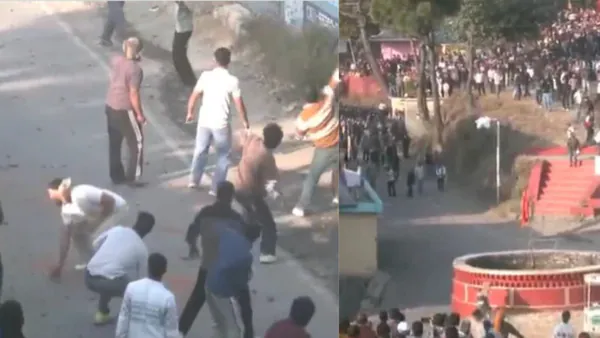
On Monday, a day after Diwali was celebrated on Sunday, hundreds of people gathered at Halog village in Dhami, near Shimla, to witness the traditional 'Pathar Mela' or 'Patharon Ka Khel'. The unusual annual event involves two groups throwing stones at each other, with the ritual ending only when a participant sustains an injury and blood is drawn.
The blood is then used to apply a ceremonial tilak to Goddess Bhadrakali, according to the local religious tradition. The practice, which is believed to be around 300 to 400 years old, is associated with the erstwhile princely state of Dhami and its royal family.
Why do two groups throw stones at each other in Himachal Pradesh?The unusual ritual is rooted in a local belief that it evolved as an alternative to human sacrifice, which was reportedly practised in the erstwhile Dhami princely state to appease the goddess.
According to a popular local legend, a queen of Dhami wanted to end the practice of human sacrifice. She is believed to have introduced the stone-pelting ritual as an alternative, under which the blood of an injured participant would be offered to the goddess instead.
Also Read | What was Delhi air quality on Deepavali night? Check Diwali AQI dataThe Shimla district administration's official website also mentions the historical belief behind the fair, stating that human sacrifice was once offered to Goddess Kali at the spot where the event is now held. It records the tradition of collecting blood from injuries sustained during the stone-throwing contest and offering it to the deity.
However, the story of the queen and the transition from human sacrifice to the present-day ritual is based on local folklore and religious beliefs rather than independently established historical evidence.
Which two groups participate in the stone-pelting tradition?The ritual traditionally involves two groups known as Jamogi and Katedu. The Katedu group is associated with the Dhami royal family and includes people from Tundu, Dhagoi and Bathmana, among other villages. The Jamogi group comprises residents of Jamogi, Janiya, Plania, Kothi, Chaiyan and Okhru, according to a report by Live Hindustan.
The ceremony begins with traditional prayers and religious observances. The participants take positions on opposite sides of the designated ground before the stone-throwing contest begins.
Also Read | Diwali 2026: Celebrations aboard! Nifty gains in 12 out of 15 Muhurat sessionsThe proceedings also reportedly involve worship at the Narasimha Maharaj temple and other local religious rituals before the procession moves towards the designated ground.
How did the 2026 Pathar Mela conclude?According to the report, the stone-pelting ritual continued for approximately 25 minutes.
The contest ended after Mahesh Verma, a member of the Jamogi group, sustained an injury to his cheek. His blood was subsequently used for the traditional tilak ceremony at the Goddess Bhadrakali temple.
Verma received primary medical treatment after the ritual was completed, the report noted. Thousands of people reportedly gathered to witness the annual event.
Also Read | From Diwali 2025 to 2026: How Sensex, Nifty, rupee and oil fared - Outlook aheadThe conclusion of the ritual is considered significant because the drawing of blood fulfils the traditional religious requirement. Once the tilak ceremony is completed, the stone-pelting stops.
What happens after the stone-pelting ritual?The atmosphere at the venue changes after the conclusion of the contest. Traditional music, drums, dancing and celebrations follow the ritual, bringing together participants, villagers and visitors.
The fair is not just a religious observance but also an occasion for people from neighbouring villages and other parts of Shimla to come together and preserve a tradition passed down through generations.
Despite its cultural and religious significance for local residents, the practice has also raised concerns over participant safety and the use of human blood in religious rituals. In October 2014, more than a dozen people sustained injuries during the Pathar Mela, with one participant seriously injured, according to a PTI report. The district administration had made arrangements to prevent any major mishap.
However, participants and organisers have defended the tradition. In a 2025 report, The Tribune quoted an injured participant, Subhash, as saying, "The mela is a symbol of our faith and we don't care if we have to shed our blood to carry the forward tradition."

Legal Disclaimer:
MENAFN provides the
information “as is” without warranty of any kind. We do not accept any
responsibility or liability for the accuracy, content, images, videos,
licenses, completeness, legality, or reliability of the information
contained in this article. If you have any complaints or copyright issues
related to this article, kindly contact the provider above.


Comments
No comment