


Bhai Dooj 2026 Date & Time: Check Shubh Muhurat, History, Significance & More


While the Dwitiya Tithi officially begins on the afternoon of November 10, the festival aligns with the Udaya Tithi and the specific afternoon period required for the central rituals, pushing the primary celebration to November 11.
Also Read | Bhai Dooj 2026: 6 financial gifts a brother can give his sister What is Bhai Dooj?Bhai Dooj, also revered as Yama Dwitiya, is a traditional Hindu festival dedicated to honouring the bond between siblings.
Quick answers to key questions
.5 QUESTIONS1When is Bhai Dooj in 2026?⌵Bhai Dooj will be celebrated on Wednesday, November 11, 2026. Although the Dwitiya Tithi begins on November 10, the main celebration falls on November 11.
2What is the Bhai Dooj tilak muhurat in 2026?⌵The tilak shubh muhurat is from 1:10 PM to 3:20 PM on November 11, 2026. The Dwitiya Tithi ends at 3:53 PM that day.
3Why is Bhai Dooj celebrated?⌵Bhai Dooj honours the bond between brothers and sisters. In the legend of Yama and Yamuna, Yama blesses brothers who receive a tilak from their sisters with long life and protection from untimely death.
4What do sisters do during the Bhai Dooj puja?⌵Sisters apply tilak to their brothers, perform aarti and offer sweets, praying for their health, prosperity and longevity. The puja thali traditionally includes a diya, sweets, fruits and tilak paste.
5What are meaningful financial gifts for a sister on Bhai Dooj 2026?⌵The article suggests gifts such as contributing to an emergency fund, helping start a mutual fund SIP, supporting a PPF account or paying for suitable health insurance. The choice should reflect her needs and financial goals.
According to Hindu mythology, the festival's origins are tied to Lord Yama, the god of death, and his sister, Goddess Yamuna. After a long separation, Yama visited Yamuna on this day. She welcomed him warmly, applying a tilak to his forehead, performing an aarti, and preparing a lavish feast. Moved by her hospitality, Yama granted a boon, declaring that any brother who receives a tilak from his sister on this day will be blessed with a long life and protected from untimely death.
A second popular legend involves Lord Krishna. Following his victory over the demon Narakasura, Krishna visited his sister Subhadra. She welcomed him with a traditional aarti, applied a tilak to his forehead, and celebrated his safe return, establishing a custom that sisters continue to follow today.
Also Read | Delhi AQI after Diwali: ITO hits 406 as 20 stations turn 'severe' Regional names and variationsThe festival is observed across the subcontinent with distinct regional flavours and names:
- In North India, it is widely known as Bhaiya Dooj. In West Bengal, it is celebrated as Bhai Phonta, where sisters apply a tilak made of sandalwood paste, ghee, and kajal. In Maharashtra, Gujarat, and Goa, it is referred to as Bhau Beej. In Nepal, it is celebrated as Bhai Tika-the most important festival after Dashain-in which sisters apply a unique seven-coloured tilak on their brothers' foreheads.
Sisters traditionally perform the main rituals during the Aparahna Kaal, the most auspicious afternoon window. Here are the precise timings for the 2026 celebrations:
Bhai Dooj Date: Wednesday, November 11
Dwitiya Tithi Begins: 2:00 PM on November 10
Dwitiya Tithi Ends: 3:53 PM on November 11
Tilak Shubh Muhurat: 1:10 PM to 3:20 PM on November 11
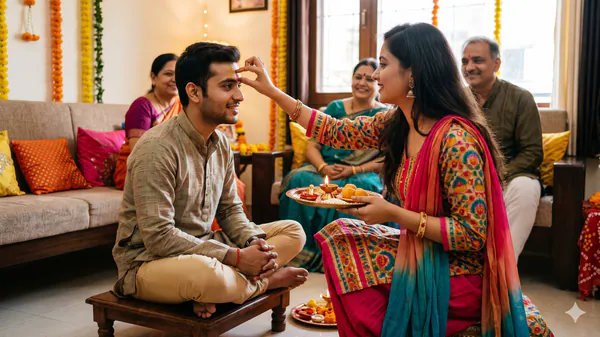
Also Read | Ramayana nears magic figures on Diwali; 23.54 lakh tickets sold on Day 4 Rituals and CelebrationsThe central custom requires sisters to prepare a traditional puja thali containing a lit ghee diya, traditional sweets, fruits, and a tilak paste crafted from vermilion (roli), sandalwood, and unbroken rice grains (akshat). The brother is seated on a wooden pedestal, typically facing east or north.
Sisters apply the tilak to their brothers' foreheads, perform a circular aarti with the diya to ward off negative energies, and offer sweets. Through these actions, sisters pray for their brother's health, prosperity, and longevity.
In many regions, sisters observe a fast until this tilak ceremony is completed. Brothers participate by pledging lifelong support and protection, traditionally reciprocating with gifts and clothing before the family gathers for a shared festive meal.

Legal Disclaimer:
MENAFN provides the
information “as is” without warranty of any kind. We do not accept any
responsibility or liability for the accuracy, content, images, videos,
licenses, completeness, legality, or reliability of the information
contained in this article. If you have any complaints or copyright issues
related to this article, kindly contact the provider above.


Comments
No comment