


MSME Ministry Plans To Amend Coir Industry Act 1953 To Modernise Infra, Ease Compliance Burden


The Micro, Small, and Medium Enterprises (MSME) ministry wants to broaden the Act's definitions to cover a wider range of products and reduce the delays and paperwork firms face, the people said. Shipments rose 52% to ₹6,614 crore in FY26 from ₹4,343 crore in FY25.
“The work on some amendments to the Coir Industry Act has begun. Some discussions have happened on this, and the broad direction for this exercise is to modernise and rationalis,” said one of the people, a government official who requested anonymity.
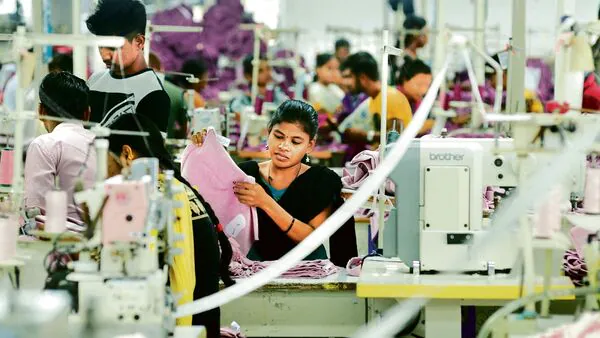
Also Read | MSME ministry seeks ₹6,000 crore to sustain khadi, village industriesThe industry is concentrated in southern India, and about 80% of workers in fibre extraction and spinning are women.
The amendment exercise would also re-examine the existing definitions under the Act, with the aim of making these terms fulfil modern requirements, the first person said.
Queries emailed to the MSME ministry and the Coir Board on 5 November remained unanswered.
Also Read | Large businesses must help MSMEs upgrade, build competitiveness: MSME secyIndian coir products such as mats, pots, coir fibre, and handicrafts have found key export markets such as the US, China, the Netherlands, and Spain, among others, according to the MSME ministry's FY26 annual report, as these products are commonly biodegradable.
Supporting industryExperts say that coir, a natural fibre, can be an alternative to synthetic fibres.
“It has the potential to fetch a high premium in the replacement of products using synthetic fibres, such as mattresses, for instance. Similarly, coir ropes have an edge over synthetic ropes, as they hold their knots more reliably than plastic knots, which easily come loose,” said Gurudas Nulkar, professor and director of the Centre for Sustainable Development at the Gokhale Institute of Politics and Economics.
Nulkar said that besides coir, coconut shells also make good industrial substitutes.“Coconut shells are used to activate carbon, a crucial part of household water filtration systems. Another upcoming use of this is that it can be converted to biochar, which is eligible for carbon credits,” he said.
Also Read | Centre plans to triple raw material assistance for small businesses by FY30While exports are rising, it is important to understand that profits from exports mostly benefit traders, but putting more money in the hands of coir farmers and workers is essential to building a local market for coir products, Nulkar added.
Lobby groups say the sector would gain from covering newer coir products and easing compliance.
Vinod Kumar, president of the India SME Forum, which represents nearly 100,000 MSMEs, said the law should“explicitly recognise the full range of commercially relevant coconut husk products, including coir pith, cocopeat, husk chips, growing media, geo-textiles and composites”. Reform must go beyond adding names, he said, by“removing ambiguity around newer materials and applications and ensuring that eligible enterprises can access development support”.
“Compliance should become simpler through a single digital interface, and fewer repetitive submission,” he said. Modernisation also needs shared facilities for processing, drying, grading, testing and water treatment, plus husk storage, affordable working capital and stronger buyer links, he added.
Export disruptions hurt artisans too, Kumar said, citing a March 2026 pile-up of export-ready products worth ₹200 crore.“Even an artisan who never exports directly can be affected when an overseas buyer postpones an order,” he said.
Key Takeaways- Coir exports jumped 52% to a record ₹6,614 crore in FY26. The Centre is weighing changes to the 1953 coir law's product definitions. Coir employs 753,886 people; women make up about 80% of spinning workers.

Legal Disclaimer:
MENAFN provides the
information “as is” without warranty of any kind. We do not accept any
responsibility or liability for the accuracy, content, images, videos,
licenses, completeness, legality, or reliability of the information
contained in this article. If you have any complaints or copyright issues
related to this article, kindly contact the provider above.


Comments
No comment