


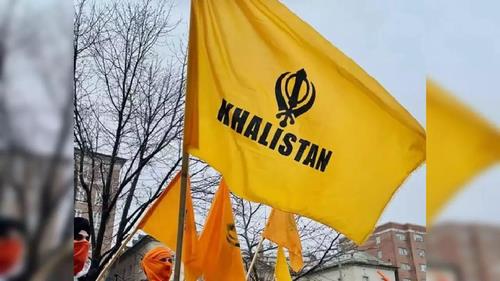
Khalistani Separatists Face Mounting Public Backlash In Canada


It noted that in areas such as Surrey and Brampton, such activities have unfolded against a backdrop of vandalism at Hindu temples, threats directed at Indian diplomats and escalating security concerns, with police even issuing formal warnings that the lives of certain activists could be at risk.
The 2023 killing of pro-Khalistan terrorist Hardeep Singh Nijjar triggered a prolonged diplomatic crisis between Ottawa and New Delhi.
Although relations are now being gradually restored under Canadian Prime Minister Mark Carney, driven by pragmatic considerations such as trade, energy cooperation and a proposed Comprehensive Economic Partnership Agreement, the tensions generated during the earlier period have not entirely subsided, according to a report in Khalsa Vox.
“Canadians are not obliged to host, or indefinitely tolerate, a foreign political project that imports India's internal security problems onto their soil. The majority of Sikhs in Canada are not separatists; the movement has long been a vocal minority. Treating that minority as politically untouchable, or allowing its most aggressive elements to set the terms of Canada-India relations, has costs. Those costs include strained bilateral ties with a major Indo-Pacific partner, repeated security incidents, and the quiet resentment of ordinary Canadians who watch foreign flags and secessionist slogans dominate local streets while being told that objecting is somehow beyond the pale,” it detailed.
The report cited a Leger survey from early 2025, which found that only a small section of Canadian Sikhs support Khalistani separatist activities. It noted that as many as 54 per cent opposed them, while 72 per cent backed stricter measures to stop foreign separatist agendas from being organised in Canada. Thirty-seven per cent expressed strong opposition to the movement.
“These are not the numbers of a society still open to treating an overseas secessionist campaign as a harmless exercise in diaspora free speech,” it added
Highlighting the growing public frustration with separatist activities on Canadian soil, the report said,“At the same time, the polling data and the pattern of incidents make a broader point that Canadian governments have been slow to acknowledge: large numbers of their citizens have simply had enough of this particular nonsense. They do not want their communities used as a stage for someone else's unresolved conflict, nor do they wish to see foreign policy subordinated to the loudest diaspora faction.”

Legal Disclaimer:
MENAFN provides the
information “as is” without warranty of any kind. We do not accept
any responsibility or liability for the accuracy, content, images,
videos, licenses, completeness, legality, or reliability of the information
contained in this article. If you have any complaints or copyright
issues related to this article, kindly contact the provider above.


Comments
No comment