


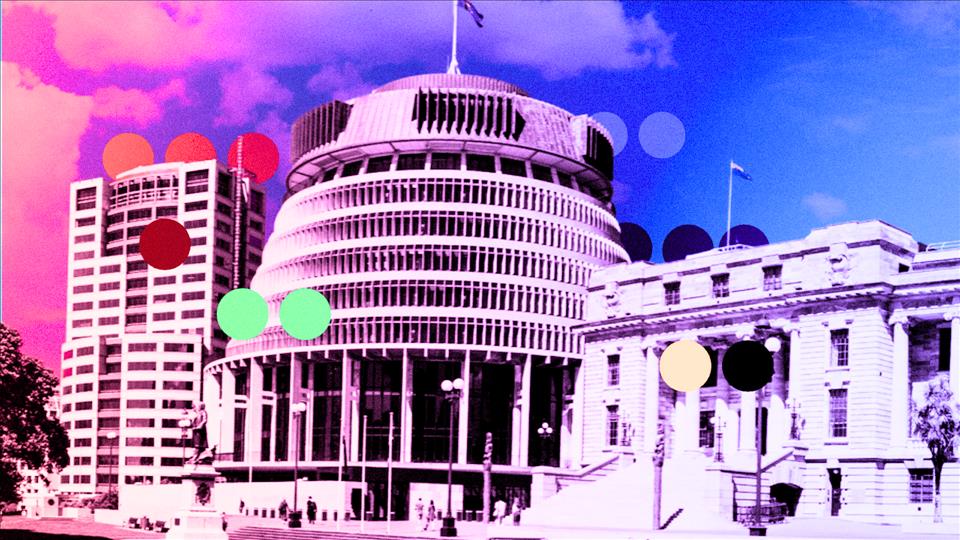
NZ's Next Government Hangs In The Balance: 2026 Election Results At A Glance


That means a parliamentary majority requires 65 or 66 seats, which the right bloc has on the provisional results. Even with the Opportunity Party's provisional seven seats, the left would still not have the numbers.
However, the results are finely poised, and special votes may change the picture once the final count is confirmed on November 27. In the meantime, the overhang means National has lost senior list-only MPs, including former finance minister Nicola Willis.
The Opportunity factorThe Opportunity Party has secured 6% of the party vote, provisionally winning seven seats in parliament and potentially holding the balance of power between the left and right blocs.
The result puts Qiulae Wong's party a percentage point above the crucial 5% threshold for entering parliament, after polling as high as 7% earlier in the campaign. Its final share, however, remains subject to special votes, which will be included in the official results on November 27.
Opportunity's position could prove decisive in negotiations over the next government. National leader Christopher Luxon had ruled out working with the party during the campaign, while Wong has indicated she is open to discussions with either side.
Wong has maintained she would negotiate with the party with the most votes first. But the decision about any coalition and confidence and supply agreements will not be up to Opportunity's elected MPs because the party operates under a constitutional rule requiring a 75% sign-off from its board.
Māori electoratesTe Pāti Māori has won five of the seven Māori electorates, with Labour taking two, in a result that could have significant implications for the size and make-up of the next parliament.
Among the clearest victories were Te Pāti Māori's Hana-Rawhiti Maipi-Clarke in Hauraki-Waikato, Debbie Ngarewa-Packer in Te Tai Hauāuru and Oriini Kaipara in Tāmaki Makaurau. The contest in Te Tai Tokerau was considerably tighter, with Aperahama Edwards facing a strong challenge from the Greens' Hūhana Lyndon.
Across the Māori electorates, there was a notable contrast between electorate and party votes, with Labour and the Greens attracting strong party-vote support even in seats won by Te Pāti Māori candidates.
Strong advance votingAdvance voting opened 12 days before election day and at 1.91 million, the number of people voting early was almost as high as during the 2020 election (1.98 million), which was marked by the COVID pandemic.
According to the Electoral Commission, a total of 913,762 votes were cast during the first five days of the advance-voting period, which represents a 28% jump compared with the same period during the 2023 election.
Read more: A knife-edge result, 3 possible outcomes: what comes next after NZ's election?


Legal Disclaimer:
MENAFN provides the
information “as is” without warranty of any kind. We do not accept
any responsibility or liability for the accuracy, content, images,
videos, licenses, completeness, legality, or reliability of the information
contained in this article. If you have any complaints or copyright
issues related to this article, kindly contact the provider above.


Comments
No comment