


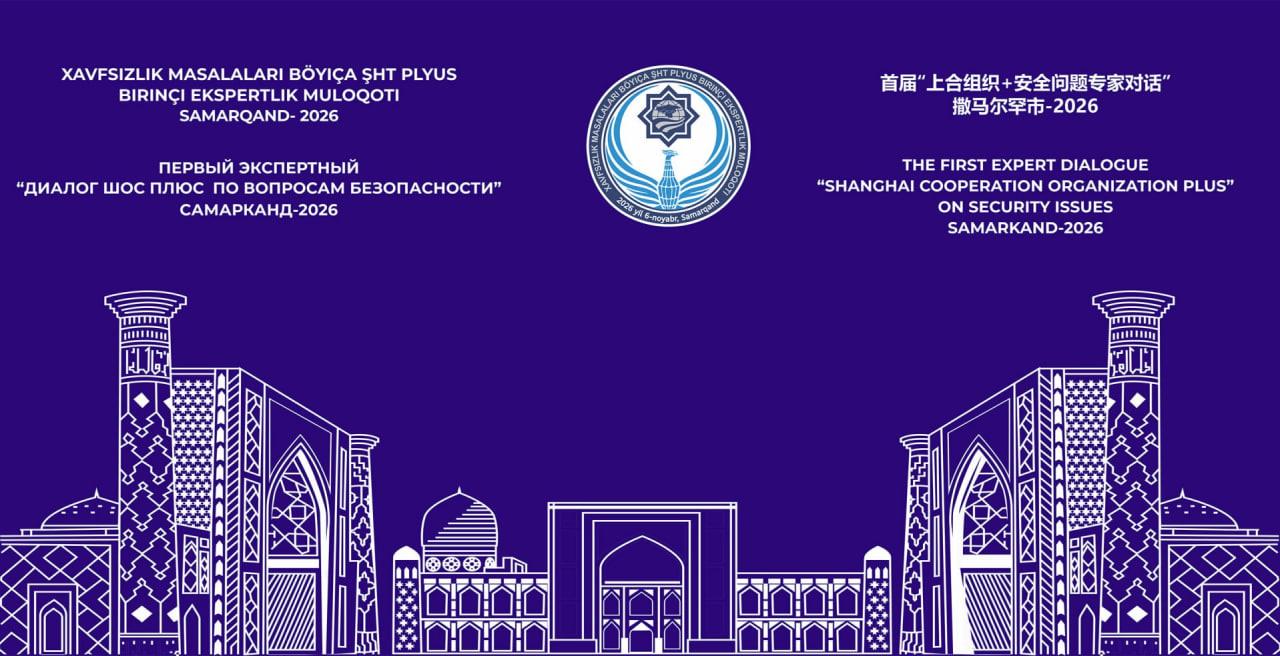
Samarkand Hosts First SCO Plus Expert Dialogue on Security: Addressing the Challenges of the Digital Age


(MENAFN- National News Agency of Uzbekistan) The inaugural expert dialogue in Uzbekistan brings together representatives of 24 countries and five international organizations to discuss counterterrorism, extremism and the security implications of emerging technologies.
Samarkand, one of the historic centers of international exchange along the ancient Silk Road, has become a venue for a new chapter in multilateral security cooperation. On November 5–6, 2026, the city is hosting the First Shanghai Cooperation Organization (SCO) Plus Expert Dialogue on Security Issues, bringing together representatives of security agencies from 24 countries and five international organizations.
Held under the theme “Security in the Era of Digital Transformation: Countering Terrorism and Extremism in Light of New Technological Developments,” the meeting reflects growing international recognition that technological progress is fundamentally changing the nature of security challenges. The dialogue is chaired by Colonel General B. Kurbanov, Head of the State Security Service of the Republic of Uzbekistan.
According to Uzbekistan’s National News Agency (UzA), the event has attracted 33 delegations representing SCO member states, observer states and dialogue partners, alongside international organizations and invited participants. At the opening ceremony, V. Makhmudov, Secretary of the Security Council under the President of Uzbekistan, read out an address from President Shavkat Mirziyoyev to the participants.
The initiative to establish this expert dialogue format was put forward by President Mirziyoyev and first announced at the SCO Summit in Astana in 2024. Subsequently, at the 2025 meeting of the SCO Council of Heads of State in Tianjin, China, it was proposed that the inaugural dialogue be held in Samarkand. The November meeting therefore represents the practical implementation of an initiative developed through the Organization’s high-level political consultations.
Security cooperation in a rapidly changing technological environment
The choice of theme highlights one of the most pressing issues facing governments and international security institutions: the growing impact of digital technologies on terrorism and extremism.
Artificial intelligence, online communication platforms, encrypted messaging services, unmanned aerial vehicles and other emerging technologies are creating new opportunities for economic and social development. At the same time, they can be exploited by terrorist networks and extremist groups for propaganda, recruitment, financing, coordination and the dissemination of radical content.
These developments are making security threats increasingly transnational and technologically complex. Information can cross borders almost instantly, while digital tools can allow individuals and groups to coordinate activities without maintaining a conventional physical presence. As a result, national security agencies face the challenge of adapting their methods, strengthening technical capabilities and improving cooperation with international partners.
Artificial intelligence adds another dimension to this challenge. Its rapid development raises questions about the use of automated systems for identifying threats, detecting suspicious digital activity and analyzing large volumes of information. However, the same technologies can also be misused to generate deceptive content, manipulate public opinion, impersonate individuals and facilitate the spread of extremist narratives.
In this environment, effective counterterrorism efforts require not only technological capacity but also timely information exchange, professional expertise and coordinated international responses. These issues form an important part of the agenda of the Samarkand dialogue.
The SCO framework and the importance of coordinated action
Established in 2001, the Shanghai Cooperation Organization has developed a broad framework for cooperation among its member states, covering security, political dialogue, economic relations and humanitarian interaction. Combating terrorism, separatism and extremism has remained among its central areas of activity.
An important institutional mechanism in this field is the SCO Regional Anti-Terrorist Structure (RATS), which facilitates cooperation among the competent authorities of member states. Its activities include coordination, information exchange and the development of practical cooperation against the so-called “three forces” of terrorism, separatism and extremism.
The SCO Plus format provides an opportunity to extend dialogue beyond the Organization’s membership by involving observer states, dialogue partners and international institutions. This broader participation is particularly relevant to contemporary security challenges, which rarely remain confined to national or regional boundaries.
The involvement of international organizations also creates opportunities to connect regional security mechanisms with wider international efforts. Cooperation between the SCO and the United Nations, for example, is important in promoting coordination, exchanging expertise and supporting the implementation of international counterterrorism commitments.
For the Samarkand meeting, the central task is to translate the exchange of views into practical priorities. According to the announced agenda, the heads of delegations are expected to identify specific tasks and areas of cooperation in countering international terrorism and extremism under conditions of digital transformation.
Uzbekistan’s contribution to regional and international security dialogue
The organization of the first SCO Plus expert dialogue in Samarkand highlights Uzbekistan’s continued engagement in shaping regional security cooperation.
In recent years, Uzbekistan has consistently emphasized the importance of political dialogue, good-neighborly relations and coordinated approaches to regional challenges. The country’s initiatives within the SCO reflect an approach that views security as closely connected with stability, sustainable development and constructive international engagement.
By proposing a dedicated expert dialogue on security issues, Uzbekistan has helped place the technological dimension of counterterrorism higher on the Organization’s cooperation agenda. The initiative also creates an additional platform for direct professional contacts among security institutions, allowing participants to discuss emerging risks and identify areas where joint action may be required.
The fact that the inaugural meeting is being held in Samarkand adds a wider diplomatic dimension to the event. The city has long served as a meeting point for different civilizations, cultures and trade routes. Today, it continues to host international forums and discussions on issues affecting regional and global development.
The participation of 33 delegations from 24 countries and five international organizations demonstrates the broad geographical reach of the dialogue. It also underlines the relevance of the issues being discussed to countries with different security environments and institutional experiences.
From expert discussions to practical cooperation
The significance of the Samarkand dialogue will ultimately depend on how effectively its discussions contribute to practical cooperation.
Several areas are likely to remain particularly important: improving the exchange of information on emerging terrorist threats, strengthening cooperation in monitoring the online activities of extremist networks, developing expertise in identifying the misuse of artificial intelligence, and addressing the security risks associated with unmanned technologies.
Equally important is the need to ensure that counterterrorism measures are implemented in accordance with national legislation and international obligations, including respect for human rights and fundamental freedoms. The development of new technological capabilities makes transparency, accountability and appropriate safeguards increasingly relevant to the work of security institutions.
No single country can address the full range of threats arising from digital transformation independently. Effective responses depend on trust, professional communication, compatible approaches and the willingness of states to coordinate their efforts.
The First SCO Plus Expert Dialogue on Security Issues in Samarkand provides a platform for advancing this cooperation. By bringing together security representatives from a wide range of countries and international organizations, Uzbekistan is contributing to a broader discussion on how regional and international institutions can respond to the evolving security landscape.
As digital technologies continue to transform societies, the ability to anticipate and collectively address emerging threats will become an increasingly important measure of international security cooperation. The Samarkand dialogue is an opportunity to turn that shared understanding into a more coordinated and forward-looking approach.

Legal Disclaimer:
MENAFN provides the
information “as is” without warranty of any kind. We do not accept
any responsibility or liability for the accuracy, content, images,
videos, licenses, completeness, legality, or reliability of the information
contained in this article. If you have any complaints or copyright
issues related to this article, kindly contact the provider above.


Comments
No comment