


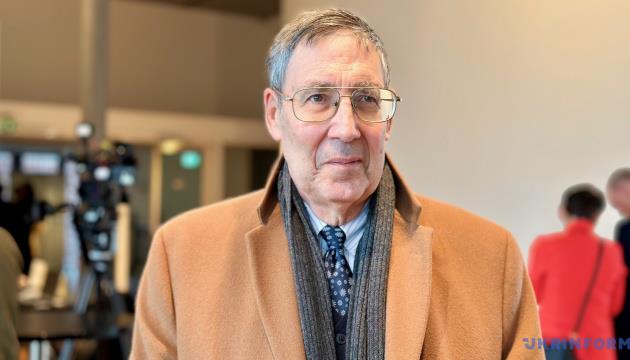
Herbst: Putin Wants Peace Talks, Not Peace


In his assessment, Putin's strategic goal in Ukraine remains unchanged: to establish political control over the country. His primary means of achieving this goal is to weaken Western support for Kyiv, particularly that of the United States.
The author recalls that since spring 2025, Donald Trump has put forward at least six initiatives to end or limit hostilities. Volodymyr Zelensky agreed to each of them, while Putin has deflected or rejected them all. This includes the most recent proposal, which US Special Envoy Steve Witkoff brought to Putin in Saint Petersburg in October.
In recent weeks, the Trump administration has also taken several steps that, in Herbst's view, make it easier for Russia to continue its aggression and harder for Ukraine to defend itself. These include a deal to resume Russian diesel shipments to the US in violation of US sanctions policy, waiving the sanctions in the recently passed Lindsey Graham sanctions bill, turning off the intelligence provided to Ukraine by the Starlink and Starshield satellite systems, and entertaining Putin's proposal for a three-way summit with Putin and Chinese President Xi Jinping.
"Not surprisingly, the Kremlin has greeted all these concessions with great enthusiasm," the author notes.
Read also: Budanov to lead Ukrainian delegation at talks in Abu DhabiAt the same time, he says, Putin has offered no concessions of his own that could bring lasting peace closer. Moscow's agreement to a trilateral meeting in Abu Dhabi was merely a procedural step, not a sign of readiness to change its position.
In Herbst's view, the composition of the Russian delegation, which will be led by former Minister of Culture Vladimir Medinsky, also indicates the limited prospects for the talks. Since March 2022, Medinsky has taken part in most of the negotiations with Ukraine, none of which produced results.
The former ambassador also draws attention to talks on a new European security architecture. According to him, the Trump administration has presented a plan that envisages an important role for NATO in providing security guarantees. US envoys Steve Witkoff and Jared Kushner discussed the plan with Ukraine and European partners during their visit to Brussels on Thursday.
However, the Kremlin continues to show no willingness to engage in serious negotiations. Putin's foreign policy aide Yuri Ushakov said that the new security system should provide for the withdrawal from NATO of former Warsaw Pact countries and the Baltic states.
"That is hardly a proposal that would serve US interests or provide stability in Europe," Herbst suggested.
He noted that without genuine pressure on Russia to make concessions, the talks in Abu Dhabi are unlikely to bring peace any closer.
"As long as the White House is satisfied with small gestures rather than actual concessions, Putin will not reverse course. The war will not end. It might even get worse," the Atlantic Council's Eurasia Center director believes.
As Ukrinform reported, First Deputy Head of the Office of the President of Ukraine Sergiy Kyslytsya said that the Ukrainian delegation would work towards de-escalation measures during the November 10–11 talks in Abu Dhabi and assess Russia's readiness for an energy ceasefire.

Legal Disclaimer:
MENAFN provides the
information “as is” without warranty of any kind. We do not accept
any responsibility or liability for the accuracy, content, images,
videos, licenses, completeness, legality, or reliability of the information
contained in this article. If you have any complaints or copyright
issues related to this article, kindly contact the provider above.


Comments
No comment