


CAQM Imposes GRAP-III In Delhi-NCR Ahead Of Diwali As AQI Soars To 382: Here's What's Allowed And Restricted


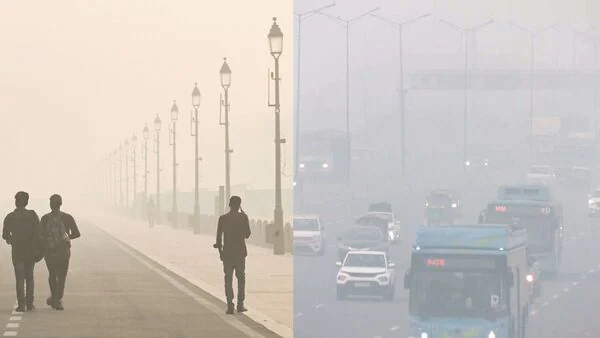
The air quality in the national capital moved closer to the 'severe' category on Friday, just two days before Diwali, as pollution levels rose and a layer of smog enveloped the city, reducing visibility.
Although Stage III is generally associated with the 'severe' AQI category, the CAQM invoked the measures as a precautionary step. The move comes amid forecasts that pollution levels in Delhi and the National Capital Region (NCR) could turn 'severe' from Saturday, with Diwali celebrations, vehicular emissions, and the peak stubble-burning season expected to add to the pollution burden.
Also Read | Delhi curbs: List to check before heading to office - what's banned/allowedThe restrictions under GRAP Stage III have been added to the measures already in force under Stages I and II.
What is GRAP?The Graded Response Action Plan (GRAP ) is a set of emergency measures implemented across Delhi and the NCR to control air pollution. It has four stages, with restrictions becoming progressively stricter as air quality deteriorates.
Stage I: Poor (AQI 201–300)
Stage II: Very Poor (AQI 301–400)
Stage III: Severe (AQI 401–450)
Stage IV: Severe Plus (AQI above 450)
GRAP III: What's allowed and what's not?Some of the key restrictions that have come into effect following the implementation of Stage III include:
Ban on non-essential construction and demolition activities
Restrictions on BS-III petrol and BS-IV diesel vehicles
Hybrid classes for students up to Class 5
Closure of polluting industries using non-approved fuels
Closure of stone crushers across Delhi-NCR
Suspension of mining and related activities across Delhi-NCR
Also Read | Delhi pollution: Rohini tops list as AQI nears severe mark What's allowed under GRAP Stage III?1. Public transport services: Metro and public bus services can continue operating as usual. Authorities may increase the frequency of Metro services and introduce additional buses to encourage public transport use and reduce dependence on private vehicles. Other vehicles not covered by the restrictions, including eligible BS-VI, CNG and electric vehicles, can continue to ply, subject to existing regulations.
2. Schools and offices: The CAQM order directs schools up to Class 5 in Delhi and the NCR districts of Gurugram, Faridabad, Ghaziabad and Gautam Buddha Nagar to conduct classes in hybrid mode, allowing students to attend either in person or online, wherever feasible. Other NCR districts may also consider adopting similar arrangements.
State governments and the Delhi government may decide whether public, municipal and private offices should operate with 50% of their staff physically present, while the remaining employees work from home. The Centre can take a separate decision regarding its employees. Private offices have also been advised to consider work-from-home or hybrid arrangements.
3. Construction projects: Construction work linked to essential infrastructure projects may continue, provided it follows the prescribed dust-control measures. Other activities that generate comparatively lower levels of dust or pollution may also be permitted, subject to compliance with applicable dust-mitigation and construction-waste management norms.
Also Read | Delhi AQI hits 331 on November 3: Which areas record 'severe' pollution? Delhi AQIOf the 58 air quality monitoring stations that recorded data, 26 reported AQI levels in the 'severe' category, while 31 recorded readings in the 'very poor' category. Only one station, Lodhi Road, reported 'poor' air quality.
Punjabi Bagh recorded the highest AQI at 453, followed by Jahangirpuri at 447 and Rohini at 444.
Delhi's average AQI rose to 382 on Friday from 369 a day earlier, moving closer to the 'severe' threshold of 401. Several monitoring stations across the city have already recorded AQI levels above 400, indicating a further deterioration in air quality.
According to the Air Quality Early Warning System for Delhi, the AQI is likely to remain in the 'severe' category between 7 and 9 November. The forecast for the subsequent six days also suggests that pollution levels are likely to fluctuate between the 'very poor' and 'severe' categories.
The Central Pollution Control Board (CPCB ) classifies AQI into six categories: 0–50 is 'good', 51–100 is 'satisfactory', 101–200 is 'moderate', 201–300 is 'poor', 301–400 is 'very poor', and 401–500 is 'severe'.
(with PTI inputs)

Legal Disclaimer:
MENAFN provides the
information “as is” without warranty of any kind. We do not accept
any responsibility or liability for the accuracy, content, images,
videos, licenses, completeness, legality, or reliability of the information
contained in this article. If you have any complaints or copyright
issues related to this article, kindly contact the provider above.


Comments
No comment