


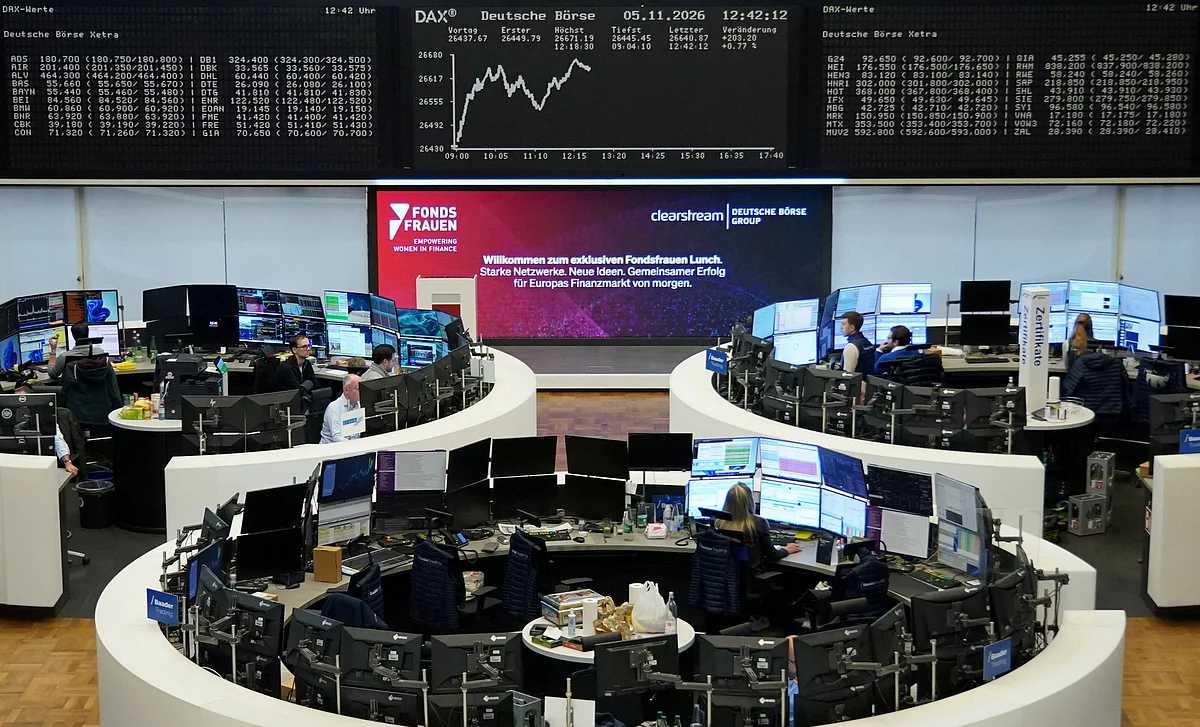
Explainer: Why Wall Street's Sell-Off Is Spreading To Europe And Worrying Gulf Investors


The latest market uncertainty comes amid growing doubts over high technology stock valuations and whether major investments in AI (artificial intelligence) will deliver the profits investors expect.
Recommended For YouUS employers added 165,000 jobs in October, significantly above economists' expectations of around 65,000, according to figures released by the US Bureau of Labor Statistics on Friday.
Stay up to date with the latest news. Follow KT on WhatsApp Channels.
The unemployment rate stood at 4.1 per cent, while average hourly earnings increased by 0.4 per cent during the month.
The figures suggest that the US labour market remains resilient, potentially giving the Federal Reserve more room to maintain a restrictive monetary policy as it continues to address inflation.
Daniela Hathorn, senior market analyst at Capital, said European markets were already facing pressure from Thursday's heavy losses on Wall Street.
She warned that the correction in US technology stocks could develop into a broader decline in investors' willingness to take risks.
Although Europe's relatively limited exposure to technology stocks has offered some protection, the latest selling pressure shows that European markets are not immune to developments in the US.
The main concern, according to Hathorn, is whether investors will simply move money away from American technology companies or begin reducing their exposure to stocks more broadly.
What does this mean for Gulf investors?The impact of US monetary policy extends beyond American and European financial markets. Most Gulf Cooperation Council currencies are pegged to the US dollar, meaning regional central banks generally follow changes in Federal Reserve interest rates closely.
Hathorn said a more aggressive US interest rate path could lead to tighter financing conditions across the Gulf. This could affect borrowing costs, bank lending and the property sector, where financing costs play an important role in investment decisions.
A stronger dollar and weaker global appetite for risk could also put pressure on oil prices and regional stock markets.
However, Gulf exchanges have considerably less direct exposure to the technology companies currently facing valuation concerns in the US. This means regional markets may experience the impact differently, depending on developments in oil prices, interest rates and global investor sentiment.
Why the US jobs report mattersBefore the employment figures were released, Hathorn warned that a stronger labour market could force investors to reconsider their expectations for US interest rates in 2027.
A stronger jobs report, particularly alongside firm wage growth, could increase expectations that the Federal Reserve will need to keep interest rates higher or raise them further.
Higher interest rates generally make borrowing more expensive for companies and consumers. They can also put pressure on technology shares, particularly companies whose valuations depend heavily on expectations of future earnings.
The October employment figures have strengthened those concerns, although the Federal Reserve's next decision will also depend on inflation and other economic developments.
Hathorn also highlighted uncertainty surrounding the profitability of artificial intelligence investments, with investors increasingly questioning whether the sector's high valuations can be sustained.
What should investors watch next?Hathorn described the current situation as a risk of a double repricing, with markets reassessing both the profitability of artificial intelligence investments and the outlook for interest rates.
The stronger US employment figures add another factor for investors to consider, particularly as the Federal Reserve weighs the strength of the economy against continuing inflation pressures.
For Gulf investors, the key developments to watch will be upcoming US inflation figures, signals from the Federal Reserve and whether the recent technology selloff spreads to other sectors.
While the market outlook remains uncertain, the latest developments show how changes in the US economy can influence borrowing costs and investment sentiment far beyond Wall Street.
ALSO READ- Post US elections: Investors question AI boom as global tech stocks tumble US midterms 2026: How gold, oil, US dollar and AI stocks could react UAE equities show resilience as rising oil prices reshape global investment outlook

Legal Disclaimer:
MENAFN provides the
information “as is” without warranty of any kind. We do not accept
any responsibility or liability for the accuracy, content, images,
videos, licenses, completeness, legality, or reliability of the information
contained in this article. If you have any complaints or copyright
issues related to this article, kindly contact the provider above.


Comments
No comment