


Are UAE Children Losing Their Handwriting Skills As Screens, AI Replace Pen And Paper?


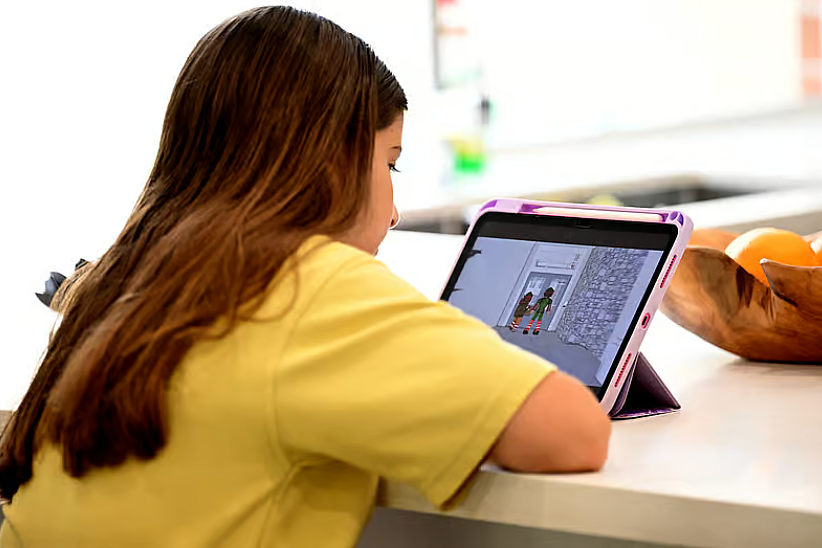
Children may be growing increasingly comfortable with keyboards and touchscreens, but the simple act of putting pen to paper appears to be losing some of its appeal.
Recommended For YouA new survey in the UK has highlighted a worrying decline in children's engagement with writing. According to the National Literacy Trust's 2025 Annual Literacy Survey, which covered 114,970 children and young people aged 5 to 18, just 26.6 per cent of children aged 8 to 18 said they enjoyed writing in their free time. This represents a fall of 20.2 percentage points since 2010, with only 10.4 per cent writing something in their free time every day.
While the findings are from the UK, they raise questions that resonate with parents and educators in the UAE, where digital devices, online learning platforms and artificial intelligence are increasingly part of children's everyday education
Stay up to date with the latest news. Follow KT on WhatsApp Channels.
Educators in the UAE highlight that handwriting remains an essential part of children's development, even as schools embrace digital learning. However, they also point to the need to deliberately preserve opportunities for children to practise writing, build fluency, and develop the stamina required to put their thoughts on paper.
Handwriting is more than putting letters on paperLeah Atkins, Deputy Head of Primary at Nord Anglia International School Abu Dhabi, believes schools have a responsibility to ensure that fundamental skills are not lost amid the growing use of technology.
“We have always been very clear that we will remain a school where children learn to write, use a pencil and develop the skills needed to become confident, fluent writers. We absolutely embrace technology, but we do not believe that everything needs to be completed on a device,” she said.
Rather than assuming children are losing these skills, Atkins believes schools must examine whether they are providing enough opportunities for children to develop and practise them.
She explained that handwriting involves several abilities working together, including coordination, muscle control, concentration and perseverance. These do not develop overnight, and writing stamina needs to be built progressively throughout primary education.
At the school, the foundations begin in the Early Years through activities that strengthen fine and gross motor skills, including finger exercises, manipulating tools, mark-making and larger physical movements.
Importantly, handwriting instruction continues well beyond the stage when children learn to form letters.
“Throughout Primary, we continue to explicitly teach handwriting and provide opportunities for children to write by hand, not just in English lessons but across the wider curriculum. As children get older, we focus increasingly on fluency, presentation, writing stamina and the ability to communicate more sophisticated ideas," Atkins said.
AI makes independent writing even more importantWith children increasingly exposed to artificial intelligence and digital tools, educators stress that developing the ability to think, formulate ideas and express them independently is becoming even more important.
Ola Laniyan, Deputy Head of Primary at Nord Anglia International School Abu Dhabi, said the school introduces laptops for everyday learning only from Year 5, allowing children to establish essential skills before digital tools take on a more prominent role.
“Even then, most lessons, particularly English, remain firmly pen-and-paper based. Children plan, draft and refine their own writing by hand, spell from memory and develop their vocabulary through reading, discussion and explicit teaching,” she said.
Laniyan believes these foundations are particularly important in an era when AI can assist children with generating and refining written content.
Children first need to learn to generate ideas, construct sentences and communicate their thinking independently before turning to digital tools for assistance.
Research also highlights the role of handwriting in literacy development, particularly in early letter and word learning. As children become more fluent, they no longer need to devote as much attention to forming individual letters, freeing up their capacity to focus on vocabulary, sentence construction, creativity and the quality of their writing.
Kathryn Kelly, PYP co-ordinator at Swiss International Scientific School Dubai, said the school was noticing a decline in handwriting fluency and stamina among some children, particularly as digital engagement increases.
“We are seeing a decline in handwriting fluency and stamina among some children, particularly as digital engagement increases. This reinforces the importance of developing strong fine motor foundations, explicit handwriting instruction, and regular opportunities for sustained writing,” she said.
At the school, systematic phonics, explicit literacy instruction, and daily writing opportunities are used to reinforce these skills across subjects.
Kelly believes handwriting and technology should complement rather than compete with each other.
“Handwriting supports cognitive processes linked to memory, concentration, and literacy development. I believe schools must be intentional in preserving these foundations while embracing digital innovation,” she said.
Are children writing less outside classroom?Not all educators believe that children are necessarily losing the ability to write. Some argue that what has changed is the frequency and duration of handwritten tasks in everyday life.
Rebecca Crean, Principal and CEO of GEMS FirstPoint School in Dubai, said the growing presence of technology in classrooms does not automatically mean children are typing more.
Much of their interaction with devices involves tapping, swiping, selecting, and searching rather than developing proper typing skills.
“I wouldn't say there has been a decline in handwriting skills. Children are still learning to form letters, spell and write clearly. What has changed is how often they need to write at length. Outside school, there are very few situations where a young person needs to write by hand for an extended period. Today, that is mainly needed for examinations, at least until exams move online,” she said.
Crean said this makes writing stamina particularly important as students approach GCSE and A-Level examinations, where they may be required to write fluently and legibly for two hours or more under timed conditions.
“Handwriting also remains important for younger children: forming letters by hand develops fine motor control and supports early reading and spelling. There is still a focus on handwriting in many schools; it is something that is still valued and needed.”
Crean said the choice between handwriting and technology should ultimately depend on the learning objective.
“When a task is about building core skills, such as spelling, sentence construction, vocabulary or putting an argument together, students need to do the thinking themselves first. Handwriting often works well here because it slows students down and stops them from relying on spellcheck or predictive text.”
Parents notice the difference
For some UAE parents, the change is not simply about handwriting that looks less neat. It is also about children's ability to write comfortably, legibly, and at length.
Moldovan expat Alexandra Rusu, whose son attends an International Baccalaureate school, said he does not necessarily struggle with handwriting, but his letter formation and overall writing skills are not at the level she remembers from her own school days.
“I wouldn't say he struggles with handwriting, but his level of writing and letter formation is nowhere close to what it was for me or my husband at his age. I feel our handwriting was much better. Of course, we didn't have devices back then. We regularly wrote exams and tests by hand, so we had much more practice,” she said.
Rusu said she had even bought cursive writing books for her son when he was younger in the hope of improving his handwriting.
However, the concern became more apparent during a parent-teacher meeting when his Spanish teacher pointed out that his handwriting was affecting his marks.
“When she asks him a question, he knows the answer, but his written work is still below par,” she said, adding that the teacher found his work difficult to read.
Indian expat Devyani Prasad shares similar concerns.“My children can type quickly on a phone or laptop, but when it comes to writing by hand, their speed, letter formation and even ability to express themselves on paper have noticeably declined," she said.
Prasad believes the growing reliance on digital tools and AI could also affect children's patience and willingness to practise.
“It is not just about neat writing; it is about developing a skill that we grew up taking for granted.”
ALSO READ- How to tell if your children are using AI to do their homework UAE schools brace for change as under-15 social media rules reshape classrooms

Legal Disclaimer:
MENAFN provides the
information “as is” without warranty of any kind. We do not accept
any responsibility or liability for the accuracy, content, images,
videos, licenses, completeness, legality, or reliability of the information
contained in this article. If you have any complaints or copyright
issues related to this article, kindly contact the provider above.


Comments
No comment