


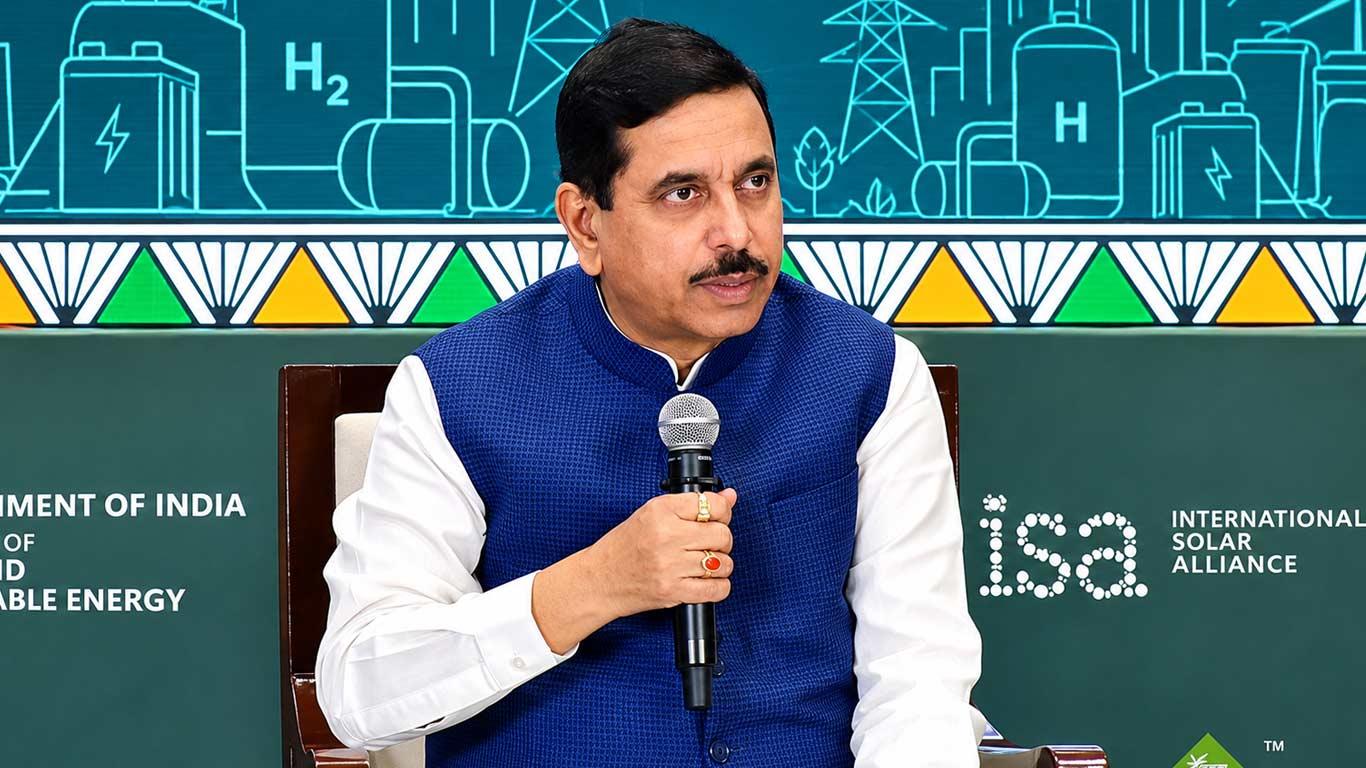
India Sees USD 400 Bn Renewable Energy Investment Interest, Nearly Double 2030 Target: Pralhad Joshi


The proposed investment opportunities are significantly higher than the government's target of attracting around USD 220 billion in the sector by 2030. Joshi noted that the ministry was compiling details of the discussions, including participating companies and their proposed investments.
The investment interest spans renewable energy, green hydrogen, battery storage and power transmission infrastructure. He said global investors continued to view India as an attractive investment destination despite geopolitical uncertainties.
Focus on Grid and Energy Storage Infrastructure
Highlighting the need to strengthen power infrastructure, Joshi noted that India had successfully managed peak electricity demand of around 270 GW and expressed confidence in the country's generation and transmission capabilities.
India aims to achieve 500 GW of non-fossil fuel energy capacity by 2030, with further expansion planned towards 2035 and 2047.
He also highlighted the role of battery storage in addressing renewable energy curtailment and improving grid stability.
Referring to the Cabinet's approval of Rs 14,500 crore in viability gap funding for grid-scale energy storage, Joshi said the initiative would help manage fluctuations in renewable power generation and improve electricity availability.
Solar Manufacturing and Rooftop Scheme
On domestic solar cell manufacturing, Joshi said installed capacity currently stood at around 47 GW and could increase to 70 GW by December 31, according to industry estimates.
The government will consult industry stakeholders before deciding whether to extend the existing relaxation in domestic solar cell manufacturing requirements beyond December 31. The minister said the industry had differing views on the proposed extension.
He also expressed confidence that the PM Surya Ghar: Muft Bijli Yojana would achieve its target of covering one crore households by March. Any further expansion would require consultations and Cabinet approval.
Joshi said some state governments were also examining decentralised battery storage for households to manage peak-hour electricity demand, clarifying that these were state-level proposals and not an announced central scheme.
(KNN Bureau)

Legal Disclaimer:
MENAFN provides the
information “as is” without warranty of any kind. We do not accept
any responsibility or liability for the accuracy, content, images,
videos, licenses, completeness, legality, or reliability of the information
contained in this article. If you have any complaints or copyright
issues related to this article, kindly contact the provider above.


Comments
No comment