


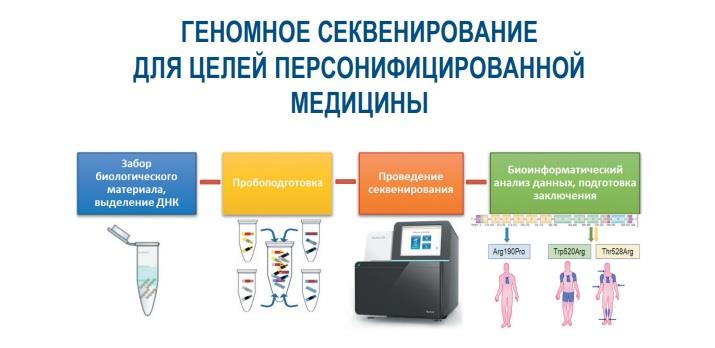
Genomic Sequencing For The Purposes Of Personalized Medicine


(MENAFN- RCTT)
The Institute of Genetics and Cytology offers a genomic sequencing methodology (technology) for personalized medicine under a commercial agreement with technical assistance and/or a license agreement and is looking for partners interested in the further development and implementation of this methodology under a technical cooperation agreement.
Description
Genomic sequencing is a key tool for the development of personalized medicine, which takes into account a patient's individual genetic characteristics.
The importance of genomic sequencing for personalized medicine:
1. Individualized approach to treatment:
- Genomic sequencing makes it possible to identify genetic mutations linked to disease susceptibility or responses to specific medications.
- This helps physicians prescribe the most effective treatment for a particular patient while minimizing side effects.
2. Early disease diagnosis:
- Genome sequencing allows for the detection of hereditary diseases (such as cystic fibrosis or Huntington's disease) even before symptoms appear.
- This enables the initiation of preventive treatment or medical monitoring at an early stage.
3. Disease risk assessment:
- Genetic analysis helps evaluate the risk of developing conditions such as cancer, diabetes, or cardiovascular diseases, facilitating timely prevention.
4. Development of new drugs:
- Genomic sequencing is used to study the molecular mechanisms of diseases, which accelerates the development of targeted therapies.
5. Oncology:
- In oncology, sequencing helps determine the genetic profile of a tumor, allowing for the selection of the most effective therapy (e.g., targeted drugs or immunotherapy).
Relevance of genomic sequencing for Belarus:
1. Development of the healthcare system:
- Integrating genomic sequencing into medical practice improves the quality of diagnosis and treatment, aligning with the goals of modernizing the healthcare system in Belarus.
2. Epidemiological trends:
- Like many other countries, Belarus is seeing an increase in the prevalence of chronic and oncological diseases. Genomic sequencing can assist in their early detection and treatment. 3. Scientific Research:
- The National Academy of Sciences of Belarus is actively developing biotechnology and genetic research. Genomic sequencing opens up new opportunities for scientific advancement in the field of biomedicine.
4. Economic Efficiency:
- Although genomic sequencing technology requires significant investment, its long-term use reduces treatment costs by enabling early diagnosis and the prevention of complications.
5. International Cooperation:
- Belarus has the potential to integrate into international genomics projects, facilitating the exchange of expertise and the application of cutting-edge developments in personalized medicine.
6. Education and Personnel Training:
- The implementation of genomic sequencing necessitates the training of specialists in genetics, bioinformatics, and molecular biology, which in turn stimulates the development of educational programs in Belarus.
At the Institute of Genetics and Cytology, genomic sequencing methodologies have been developed and mastered for the first time in the country. These techniques allow for the decoding of genetic information from various biological entities, including the complete human genome (as well as exomes and targeted gene panels).
Currently, many patients with genetic diseases remain undiagnosed. While approaches such as single-gene or gene-panel testing can sometimes identify the underlying cause of a condition, the rate at which genetic alterations are successfully detected through these methods remains quite limited. Analyzing non-coding DNA sequence variants provides critical information for diagnosing genetic disorders. Such an analysis is performed only once in a person's lifetime and serves as an effective, essential tool in modern genetics. In complex clinical cases, physicians may utilize genotyping to identify the cause of a disease, determine its likely progression, and implement targeted therapeutic interventions.
The information is included in the catalog "100 Best Developments of the National Academy of Sciences of Belarus for the National Economy (2022–2023)," 2024, pp. 206–207. Advantages and Innovations For the first time in the Belarus, genomic sequencing methodologies have been established. Whole-genome sequencing provides the most comprehensive information regarding both known and previously undocumented genetic alterations that may have contributed to the development of a disease. These newly developed and implemented techniques are used to identify pathogenic mutations, helping to determine the genetic components of socially significant diseases. Furthermore, the specific spectrum of mutations characteristic of Belarusian patients-covering cardiovascular, musculoskeletal, endocrine, autoimmune, and oncological conditions, among others-has been identified for the first time.
Benefits for Belarus:
- Improvement in the quality of medical services.
- Reduction in mortality rates from chronic and oncological diseases.
- Advancement of biotechnologies and scientific research.
- Potential for exporting technologies and services in the field of genomic medicine. Stage of development Already on the market Comments regarding stage of development The methodology has been refined and has a proven track record of successful use. Funding source State budged
Internal
IPR status Exclusive rights
Secret know-how
Comments regarding IPS status The Institute of Genetics and Cytology has completed R&D projects on the following topics:
“Molecular-genetic assessment of the risk of autoimmune diseases”;
“Development of a technology for identifying the risk of oncological diseases based on epigenetic and molecular-genetic markers”;
“Identification of DNA markers for the risk of non-coronary heart diseases”;
“Study of the spectrum and prevalence of mutations in the titin gene among Belarusian patients with hereditary monogenic myocardial diseases, and assessment of their diagnostic significance”;
“Genetic diversity and molecular mechanisms of pharmacoresistant epilepsy in children.”
The results of these research projects were used in the development of the Methodology. Sector group BioChemTech
Healthcare
Client information Type R&D institution Year established 1965 NACE keywords A.01.61 - Support activities for crop production
A.01.62 - Support activities for animal production
M.72.11 - Research and experimental development on biotechnology
M.74.90 - Other professional, scientific and technical activities n.e.c.
Q.86.90 - Other human health activities
Turnover (in EUR) 10-20M Already engaged in transnational cooperation Yes Additional comments The Institute of Genetics and Cytology of the National Academy of Sciences of Belarus is one of the leading research centers in the field of genetics and cytology, providing a wide range of professional services to clients and partners and specializing in high‐quality genetic and cytological research based on modern technologies and advanced methods.
Main areas of research:
– Studying the structural and functional organization of genomes of plants, animals, humans, and microorganisms;
– Studying issues in genetic and cellular engineering;
– Developing the genetic foundations for the selection of plants, animals, and microorganisms.
– Development of genomic technologies for agriculture, healthcare, sports, and environmental protection;
– Study of biosecurity issues;
– Providing services for DNA marking and DNA profiling of plants, animals, humans, and microorganisms;
– Study of the interaction between the genome and the microbiome;
– Bioinformatics;
– Collection and preservation of unique DNA samples as sources of valuable genetic information;
– Monitoring of the genetic resources of the Republic of Belarus, promoting access to genetic resources and the joint use of benefits.
– Provision of services for determining the content of genetically modified ingredients in food raw materials and foodstuffs.
International scientific partnership agreements have been concluded with the Medical Genetic Research Center (Russia), the Estonian Biocenter (Estonia), the Institute of Genetics and Animal Breeding of the Polish Academy of Sciences (Poland), the National Institute of Biology of the Republic of Slovenia (Slovenia, Institute of Plant Genetic Resources“K", Sadovo of Agricultural Academy (Bulgaria), The Center for Experimental Biomedicine named after Ivane Beritashvili (Georgia), the Institute of Molecular and Cellular Biology of the Siberian Branch of the Russian Academy of Sciences (Russia), and others.
Official website of the Institute of Genetics and Cytology. Languages spoken English
Russian
Information about partnership Type of partnership considered Commercial agreement with technical assistance
License agreement
Technical cooperation agreement
Type and role of partner sought Consumers interested in purchasing a genomic sequencing Methodology (Technology) for personalized medicine purposes under a commercial agreement with technical assistance and/or a license agreement.
Partners interested in the development and implementation of a genomic sequencing Methodology (Technology) for personalized medicine purposes under a technical cooperation agreement. Type and size of partner sought > 500
251-500
SME 51-250
SME 11-50
SME <= 10
R&D Institution
University

Legal Disclaimer:
MENAFN provides the
information “as is” without warranty of any kind. We do not accept
any responsibility or liability for the accuracy, content, images,
videos, licenses, completeness, legality, or reliability of the information
contained in this article. If you have any complaints or copyright
issues related to this article, kindly contact the provider above.


Comments
No comment