


Chocolate Industry Turns To Financial Markets To Pay For Cocoa


I cover food and agribusiness and have special interests in sustainable supply chains, food safety and quality, as well as covering the emerging players and trends in the food industry. A background in forestry and conservation biology brought me down the path of environmental advocacy. Journalism and Switzerland have made me a neutral observer holding companies accountable for their actions.
-
More from this aut
English Departm
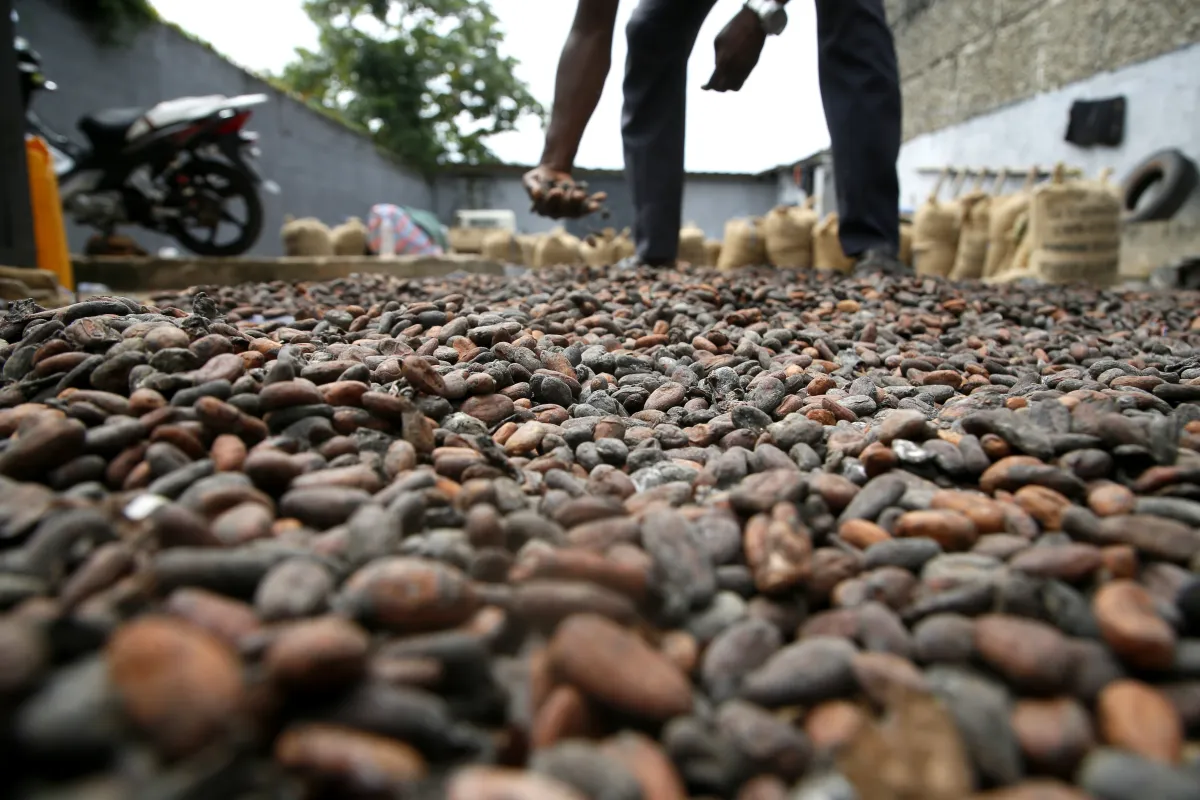
Ghana is the world's second-largest producer of cocoa. It is also the top source of beans for manufacturing Swiss chocolates. However, instead of benefiting from the record high cocoa prices in the last couple of years, Ghana's cocoa industry has been fighting for survival due to a lack of capital to pay farmers.
External ContentFor over three decades, Ghana's cocoa board COCOBOD had relied on a syndicated loan model to purchase cocoa from its nearly 800,000 cocoa farmers. A consortium of international banks would advance the money COCOBOD needed to buy cocoa from farmers or Licenced Buying Companies (LBCs). The loans were considered reasonably secure as they were backed by future cocoa exports earnings. However, a terrible harvest in 2023 (almost half of the projected 800,000 tonnes) meant lower export revenues to repay the loans. In 2024, the Ghanaian finance ministry had to step in with a $70 million (CHF57 million) bridge loan to prevent a default by COCOBOD. Suddenly, the syndicated loan model was not as secure and international lenders became less keen to participate, even at interest rates as high as 8%.
“This resulted in a loss of over $1 billion which would have gone to cocoa farmers and other stakeholders,” stated a COCOBOD press releaseExternal link from February detailing the extent of the crisis.
With the banks backing out, COCOBOD tried to get cocoa traders to advance money for future cocoa deliveries. But as the price advantage offered by older contacts over the market price diminished, the proposition became less attractive to traders and this model was abandoned.
“The current financing model was invented as a necessity after the syndicated loan failed, after 32 years of successful implementation, and it has proven not to be sustainable,” said COCOBOD.
More More How gold mining in Ghana is threatening Swiss chocolateThis content was published on Sep 10, 2022 As the world's second-largest cocoa producer loses swathes of farmland to illegal gold mining, chocolate makers are waking up to the threat.
Read more: How gold mining in Ghana is threatening Swiss choc
Legal Disclaimer:
MENAFN provides the
information “as is” without warranty of any kind. We do not accept
any responsibility or liability for the accuracy, content, images,
videos, licenses, completeness, legality, or reliability of the information
contained in this article. If you have any complaints or copyright
issues related to this article, kindly contact the provider above.


Comments
No comment