


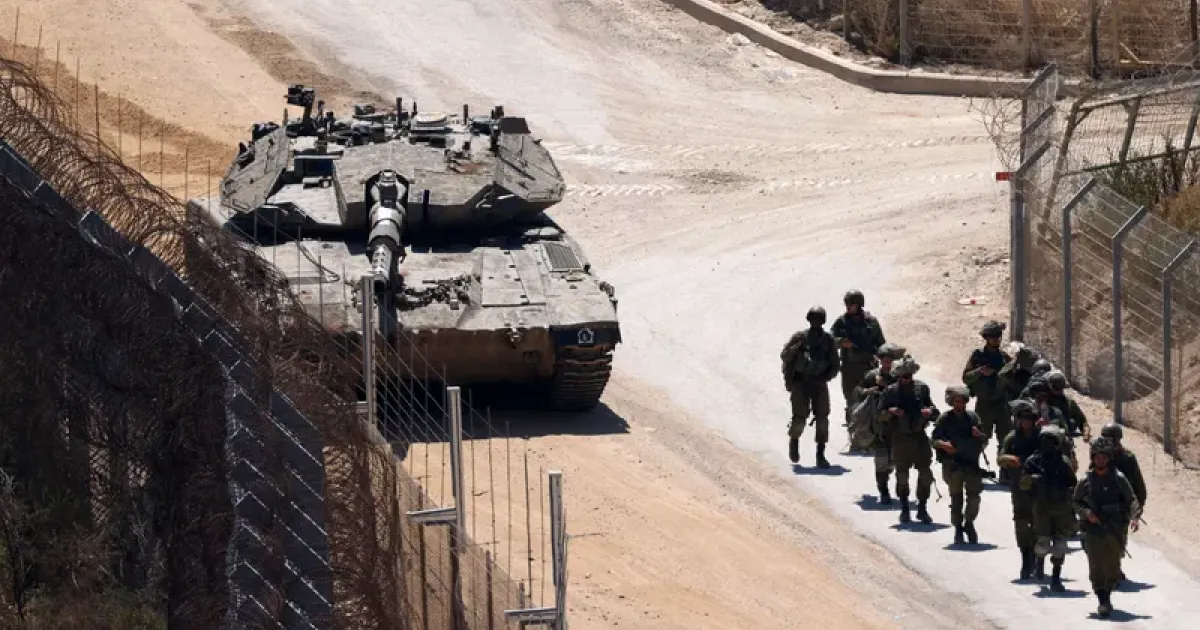
Southern Syria And The Scenario Of“Unconstructive Chaos”


Southern Syria has known little stability since the outbreak of the Syrian crisis 15 years ago. Like other parts of the country, it has become an arena for proxy wars and conflicts, as well as a target of relentless Israeli incursions and violations. These actions know virtually no limits, driven by the expansionist ambitions of the most extreme right-wing government in Tel Aviv.
The drug and arms smuggling business has flourished across the region, generating astronomical sums that far exceed the budget of the Syrian state itself. With such enormous revenues, this trade is likely to become a self-sustaining enterprise, largely independent of developments in Damascus. It crosses sectarian, ethnic, political and national boundaries.
The region has also become active ground for resistance groups and militias with different sectarian affiliations and political allegiances. For years, it has remained a source of threats to Jordan's national security, and continues to be so today. Names, labels and affiliations have changed, but the nature of the threat has not. If anything, it has escalated to unprecedented levels.
The South Under the“New Era”Two years after the fall of Bashar al-Assad's regime, Syria's new authorities have failed to establish state control over the southern governorates. Worse still, the authorities' policies have alienated a significant segment of the Druze community.
Rather than intensifying efforts to preserve the Arab and Syrian identity of the Druze in the occupied Syrian Golan, we have witnessed more than a doubling in the number of Syrians applying for Israeli citizenship, alongside growing participation in the 26th Knesset elections and voting for Likud, Yashar and Yisrael Beiteinu. This has helped facilitate efforts to integrate the Syrian Druze of the Golan into Israeli society and advance policies of Israelisation and Judaization, despite the fact that they resisted such policies for years and decades, paying a heavy price for their national and Arab positions.
We know that an Israel-oriented current exists within Druze circles in Sweida, drawing support from questionable religious authorities who have succeeded in presenting themselves as the voice of the province's Druze community. We also know that Tel Aviv will spare no effort to drag Syria's Druze into its own troubled orbit.
But we also know that the authorities' mishandling of the crisis, together with the role played by sectarian militias notorious for their hostility towards other communities, including a broad spectrum of Sunni Arabs, has made an already difficult situation considerably worse.
The result has been an unprecedentedly complicated landscape, strengthening Israeli claims that it must provide protection for the Druze. It has also silenced, at least for the time being, national and Arab voices within the community, while encouraging separatist tendencies and growing dependence on the Israeli state on a scale not seen before.
These are realities that cannot simply be ignored. Doing so would be like an ostrich burying its head in the sand, imagining that no one can see the rest of its body.
The new Syrian authorities also inherited a political and security landscape in which the region had already been transformed, through the so-called reconciliation agreements with the former regime under Russian sponsorship, into a collection of isolated enclaves. These areas were effectively administered by militias that had reconciled with the previous authorities.
Such militias do not appear entirely detached from the Salafi-jihadist component that grew and expanded in parts of the southern governorates. The principle of placing all weapons under state control has yet to reach them. They remain in constant need of financial support, and substantial amounts of it, both to satisfy their leaders' appetites and to finance their local armed formations.
The same applies to the forces affiliated with Sheikh Hikmat al-Hijri, including self-defence security groups, administrative structures and militias, which are also in urgent need of substantial funding.
For all these groups, drug production and trafficking have become an attractive source of income. This explains why the drug trade, including manufacturing and smuggling, expanded following the fall of the former regime and its allies, despite the fact that the previous government was widely accused of sponsoring and facilitating it.
Tom Barrack once remarked during one of his candid assessments that the area stretching from Sweida to Daraa had become the world's largest Captagon manufacturing centre and its largest supplier.
Added to all this are remnants of ISIS and Al-Qaeda. Some of these groups had previously been allies of formations associated with the current Syrian authorities when they were still militias, before reaching power.
Although these groups have suffered severe blows that dismantled their so-called state and its institutions, hard evidence suggests that they remain present and could expand again. They may exploit the prevailing climate of chaos and the state's weakened control, hoping to see a scenario of "unconstructive chaos" unfold across this part of Syria.
These organisations, as is well known, thrive in the absence of a functioning state and flourish amid disorder and local conflicts, whether political or social, particularly when such conflicts acquire a sectarian or religious dimension.
There are also actors deliberately exploiting the historically tense relationship between Sweida and its surrounding Bedouin tribes. These tribes are portrayed as an extension of Damascus and its spearhead, particularly now that Hay'at Tahrir al-Sham has come to power in the Syrian capital.
Israel is always present, invoking the pretext of protecting "our Druze brothers". Just recently, it bombed positions, villages and towns where these Bedouin tribes are based, claiming that they posed a threat to Sweida's population and alleging that forces affiliated with al-Sharaa were operating among them under the guise of Bedouin fighters.
We should also remember that, in recent years, this region attracted the attention of Iran and Hezbollah as part of a strategy to develop a form of "national and Islamic resistance" against Israel.
Groups and cells were established with potential future roles in activating the Golan front, which the former Syrian regime had refrained from opening throughout the genocidal war and the wider regional confrontation.
It is true that these forces have been weakened, but they have not disappeared. Targeting these cells is probably one of the priorities behind Israel's repeated attacks on villages around Quneitra and Daraa.
However, this is not necessarily Israel's primary objective. Expansion and occupation remain at the top of its agenda, particularly when it comes to strategic locations such as water sources and elevated terrain.
Jordan and the Sources of ThreatThe number of state and non-state actors operating in southern Syria has increased. Their alliances have shifted, and their positions and areas of influence have changed. Yet the threats directly affecting Jordan's national security remain largely unchanged. Indeed, they have intensified since the political transformation in Syria.
Previously, the Russian channel played an effective role in containing some of these threats and defusing successive sources of tension between Amman and Damascus. With that channel now absent, Amman and Damascus face a single viable option: activating direct bilateral cooperation to address these challenges and threats, away from political point-scoring, inflammatory rhetoric and mutual threats.
Jordan and Syria share an interest in curbing Israeli aggression. Israel no longer threatens only Jordan's entire western border. It has also been expanding towards its northern frontier, in areas of particular sensitivity for a country that ranks among the world's most water-scarce nations.
Jordan is watching with considerable concern the expansion of Israeli influence into Sweida. This is not merely because the Druze, particularly those of Syrian origin, form part of Jordan's social fabric, but also because Israel is implicated in the drug trade, including production and smuggling, partly to ensure supplies for militias aligned with it and as part of the ongoing pressure and blackmail it exerts against Amman.
The spread of chaos across Syria's southern governorates, the growing likelihood of local and civil conflicts, and the extension of Israel's reach deep into Jordan's northern border areas have placed southern Syria at the top of Jordan's national security priorities.
The last thing Amman wants to confront is a collection of fragmented and hostile entities stretching along its northern border.
The situation is made even more troubling by confirmed reports of intensive Israeli efforts, backed by heavy military attacks, to prevent Damascus from deploying its armed forces in the south. Israel appears intent on limiting the Syrian state's presence to a largely symbolic deployment at border crossings and international roads, mostly through police and security units.
At the same time, the role of sectarian, extremist and separatist militias is growing. Their numbers and military capabilities increasingly exceed the state's own capacity and presence in the region.
Israel makes little effort to conceal its intentions, either towards Damascus or southern Syria. What its official statements leave unsaid is made clear through its air, missile and artillery strikes, as well as intelligence operations involving killings, arrests, raids, explosions and road ambushes.
Israel is pursuing this course despite knowing that such conditions pose a direct threat to Jordan's security and stability, as developments before and after December 8, 2024, have demonstrated.
Yet despite the bleak picture in southern Syria, some positive signs remain on the horizon. The most significant are the open channels of communication between Amman and Damascus at various levels, and the willingness of both sides to engage in a strategic dialogue that would provide a framework for their relationship.
This should include defining the respective roles of both countries within the security order, or perhaps the security vacuum, that some seek to impose on southern Syria. This is an area where there is genuine room for cautious optimism.
The second positive development is the revival of the Arab nationalist current within the Druze community, led and symbolised by Walid Jumblatt and his Progressive Socialist Party, alongside a group of Druze religious leaders.
This movement reflects a commitment to the legacy of Kamal Jumblatt and that of the historic Syrian leader Sultan Pasha al-Atrash. It stands in contrast to the noisy and opportunistic voices that have increasingly revealed their true faces, openly seeking Israeli support and shamelessly presenting themselves, in their own delusion, as spokespeople for the Israeli occupation army's General Staff.
Unless Jordan intensifies cooperation and coordination with its northern neighbour, with the support of a significant group of Arab and regional countries, and unless the national and Arab nationalist current within the region's Druze community is actively supported and embraced, southern Syria, which is already sitting on the edge of a volcano, could be heading towards an explosion, God forbid, and that moment may not be far away.

Legal Disclaimer:
MENAFN provides the
information “as is” without warranty of any kind. We do not accept
any responsibility or liability for the accuracy, content, images,
videos, licenses, completeness, legality, or reliability of the information
contained in this article. If you have any complaints or copyright
issues related to this article, kindly contact the provider above.


Comments
No comment