


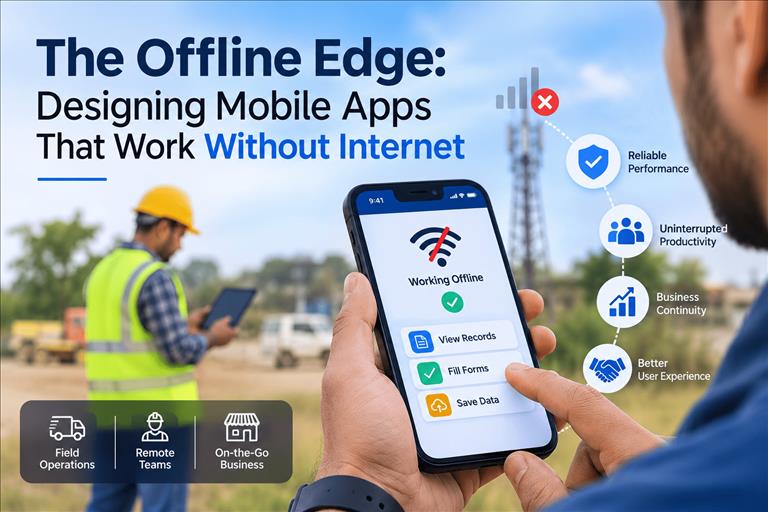
The Offline Edge: Designing Mobile Apps That Work Without Internet


(MENAFN- Fluper) Businesses are looking for mobile applications to handle daily work. The ability to work without a stable internet connection is receiving a lot of attention. Offline mobile app development is important for companies that want their teams, customers and service providers to access essential information even when network coverage is limited.
You can easily use mobile applications in places where the network can not be depended on. Delivery boys may face issues when they are traveling through areas with weak signals field technicians work at remote sites and sales representatives visit customers at different locations. In these situations, your applications cannot respond and an internet connection can delay important decisions.
Businesses need to explore offline app functionality to make mobile applications more dependable in daily working conditions. It''s treating internet access as a constant requirement, developers are creating applications that can store selected information locally, support essential activities offline and update records when connectivity returns.
Offline access addresses everyday business challenges
Internet access is available in large areas, but it is not equally reliable everywhere. Network issues may occur in a warehouse basement, a rural service location, or a crowded event venue can quickly become a difficult environment for applications because they fully depend on online servers.
These interruptions can have practical consequences for businesses. Employees may have to fill in the same information, customer experience may be delayed and field operations can become difficult to manage
Offline app development provides another way to approach these situations depending on the application''s purpose. Users can view previously downloaded records, fill out forms, save inspection reports, browse selected product details or record service requests without an active connection.
The mobile application saves this information on the device. until it can communicate with the server again. This arrangement allows the customer''s employees to continue tasks and wait for a network signal
Offline access requires proper planning. Developers need to decide which information should remain available and how much data should be stored and which actions can take place without service verification.
Businesses look beyond basic offline access
For companies that are thinking about adding features to their apps. The goal is not just to keep the app running when there is no internet. The important question is whether users can get work done in those situations.
A logistics company may need drivers to fill in delivery details and get customer signatures. A maintenance company could have technicians look up equipment instructions and record repairs they have finished.
A retail company might want to see inventory details while walking around a big store.
These need changes from one industry to another. An app for field inspection might need forms, pictures, time stamps and location data. An app that customers use might instead focus on saved content browsing history or access to information that was seen before.
This is where choice is made during development matters a lot. The offline experience should match the way people really use the app. Including the tasks they do when things are not perfect.
Also, companies have to think about device storage, permission settings, data safety and the chance that a phone could be lost or shared. Offline data can help. It needs protection.
A Practical Direction for Mobile Application Development
Offline capabilities are becoming important for businesses that can not handle every task depending on an internet connection. From field services and logistics to company operations, the ability to gather data locally can help teams continue working when the internet is not working.
At the time, making sure mobile app data stays in sync is still very important to ensure the work done offline is properly recorded and users get the most updated information when they connect again.
For companies that are building an app or making improvements to an existing one, these requirements should be thought about early, in the development process.
The best design will depend on the people using the app, the data being managed and what happens if updates are delayed or conflicting
As business activities keep separating with offices, customer place, storage facilities and faraway work areas offline features are no longer a nice extra for every situation for apps that help with every day task that can be a necessary part of the app.

Legal Disclaimer:
MENAFN provides the
information “as is” without warranty of any kind. We do not accept
any responsibility or liability for the accuracy, content, images,
videos, licenses, completeness, legality, or reliability of the information
contained in this article. If you have any complaints or copyright
issues related to this article, kindly contact the provider above.


Comments
No comment