


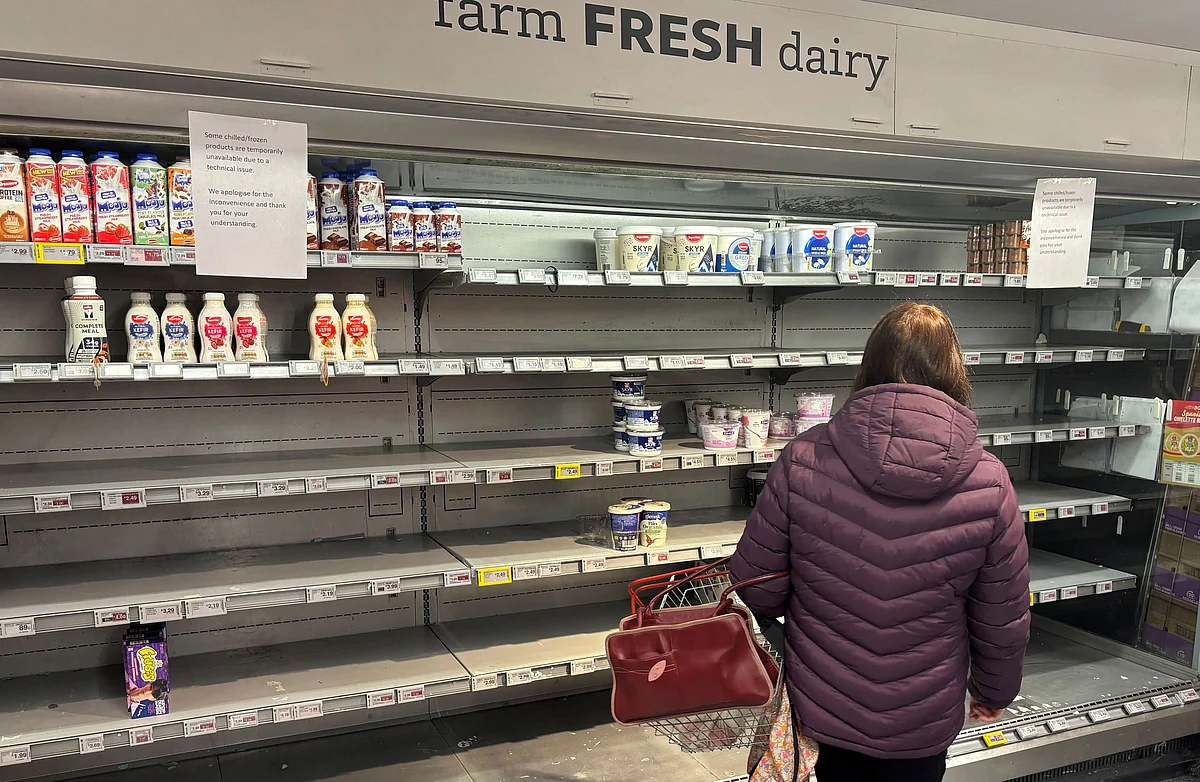
Watch: Hackers Target Supermarket Freezers As Europe Moves To Prevent Further Attacks


The incidents, reported across several European countries early this week, have raised concerns about how easily everyday equipment connected to the internet can become a target for cybercriminals.
Recommended For You Iran says in 'intensive' negotiations with US to avert war via mediatorsAccording to Reuters, retailers were working on Tuesday to update vulnerable systems and prevent further attacks, following a similar incident in France last month.
Stay up to date with the latest news. Follow KT on WhatsApp Channels. What happened to the refrigerators?
Unlike traditional cyberattacks that steal personal information or lock computer systems, these incidents disrupted the equipment used to keep food fresh.
Watch the video showing empty refrigerators at a supermarket in Europe:
In some supermarkets, refrigeration temperatures were reportedly raised to as high as 50°C, leaving frozen and chilled products unsafe for sale.
Stores in countries including Belgium, Sweden, Ireland, Luxembourg, Estonia and Finland reported problems, while other incidents were identified elsewhere in Europe.
Some retailers had to empty entire refrigerated sections and discard food that had spoiled or could no longer be safely sold.
In Sweden, supermarket chain ICA said 23 stores had been affected, according to Reuters. Carrefour reported disruptions at 15 stores in Belgium.
Why are supermarkets vulnerable?Many modern supermarkets use connected refrigeration systems that allow temperatures to be monitored and adjusted remotely. These systems help businesses manage cooling equipment across multiple locations, but they can also create opportunities for hackers if internet connections are not properly secured.
The latest incidents have drawn attention to vulnerabilities in operational technology, the equipment and software used to control physical processes.
Danish technology company Danfoss, whose refrigeration equipment was used in some affected stores, has advised customers not to expose controllers directly to the internet and to install available security updates.
What are retailers doing now?Supermarkets and equipment suppliers are reviewing their systems, applying updates and disconnecting vulnerable refrigeration equipment from the public internet where necessary.
Swedish retailer Coop is also moving affected connections from older 4G systems to 5G, Reuters reported.
Cybersecurity specialists have warned, however, that simply disconnecting equipment may reduce immediate exposure without addressing underlying security weaknesses.
The incidents have also prompted investigations by national authorities and calls for greater cooperation between European cybersecurity agencies.
Who is behind the attacks?The identity of those responsible remains unknown. No group has publicly claimed responsibility, and investigators have not established whether the incidents were carried out by individual hackers, criminal organisations or state-linked actors.
The uncertainty comes as authorities investigate similar disruptions involving refrigeration equipment at US military facilities earlier this year.
Reuters reported on October 29 that the Pentagon was treating freezer malfunctions at military commissaries as suspected cyberattacks.
However, investigators have not publicly established a connection between those incidents and the attacks on European supermarkets.
Could other connected devices be at risk?The incidents highlight a wider cybersecurity concern as more equipment, from supermarket freezers to heating systems and security cameras, becomes connected to the internet.
Remote access can make these systems easier to manage, but it can also expose them to interference if software is outdated, passwords are weak or access is poorly protected.
For retailers, the consequences extend beyond technical disruption. A compromised refrigeration system can lead to spoiled food, financial losses and interruptions to essential supplies.
European authorities are now urging businesses to strengthen protections before another wave of attacks causes further damage.
(With inputs from Reuters, AFP)
ALSO READ- Fridge cyberattack hits supermarkets across Europe forcing food disposal French supermarkets suffer refrigerator shutdown after 'unprecedented' cyberattack Hackers get personal info on 8.8 million people in Denmark govt data leak: ministry

Legal Disclaimer:
MENAFN provides the
information “as is” without warranty of any kind. We do not accept
any responsibility or liability for the accuracy, content, images,
videos, licenses, completeness, legality, or reliability of the information
contained in this article. If you have any complaints or copyright
issues related to this article, kindly contact the provider above.


Comments
No comment