


Belgium's Budget Crisis Is Serious, But Not Hopeless


For several weeks, parties in the Belgian federal government have been trying to agree on the main budget measures for the next three years. The aim is to reach an agreement delivering €10 billion in recurring savings in the federal budget (which also includes social security). This would not only offset the automatic increase in expenditure linked to population ageing and interest payments on the debt, but also reduce the deficit from around 5% of GDP this year to close to 4% of GDP in 2029.
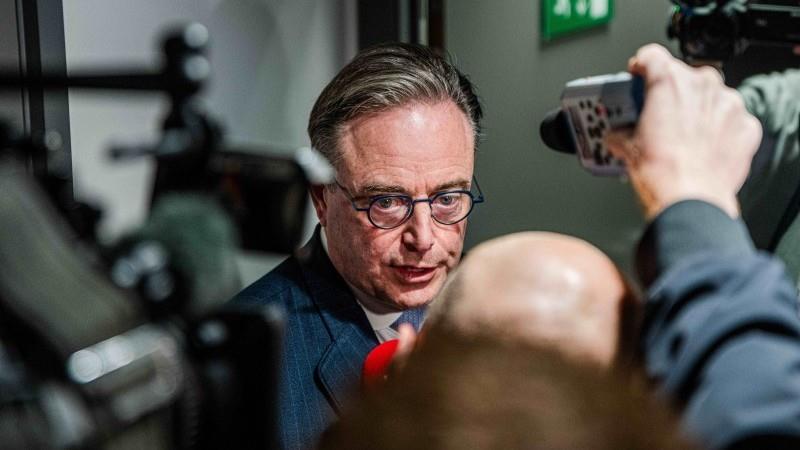
However, last weekend, Prime Minister Bart De Wever had to acknowledge that the negotiations had failed on two fronts. First, given the time needed for parliament to debate and vote on the legislation, it will no longer be possible to start 2027 with a duly approved budget. Second, there are too many sticking points for a political agreement to be reached at this stage.
What are the sticking points?Specifically, the negotiations have been complicated by the withdrawal of a key proposal from the Prime Minister. He had proposed an across-the-board increase in the VAT rate, which would have raised around €4 billion. Although several parties were reluctant, one ruled it out altogether, forcing De Wever to take the proposal off the negotiating table. Since then, however, other parties have also set red lines (on social security savings, for example) or insisted on measures that must be included (notably broader taxation of financial wealth). Finding a compromise has therefore become more difficult.
Furthermore, the social tensions affecting many European countries make it harder to agree on austerity measures. Any spending cut is difficult to implement, but a degree of social cohesion must be maintained to avoid recreating in Belgium the severe tensions seen in France. The challenge is therefore to strike the right balance, which is harder to achieve than it would be during a period of strong economic growth.
The government remains in office for nowFaced with the parties' conflicting red lines and difficulties in the negotiations, De Wever drew the consequences and tendered his resignation to the King on Monday. To the outside world, this could seem like the fall of the government – but some perspective is needed.
First, King Philippe has not yet accepted the Prime Minister's resignation. While he does not exercise personal political authority, he can play an important consultative role at moments of political uncertainty. He has deferred his decision until Friday. In the meantime, the King will meet the leaders of the federal coalition parties to hear their views and call for a compromise.
Second, by offering his resignation, the Prime Minister probably wants to send a clear signal to the other parties, warning them that the price of failed negotiations would be very high. Indeed, the latest opinion polls show that, if new elections were held, the parties forming the current majority would not be able to renew it. The far right would very likely gain ground in the Flemish part of the country, as would the far left in the French-speaking part. This is also a signal to voters across the coalition parties. Their party will have to accept measures that run counter to its programme, but that is the price to pay to put public finances on a sound footing, keep the current coalition together and avoid a political crisis.
Third, the King begins his consultations today, but there have been numerous political reactions since the weekend. Within the majority, all have confirmed a willingness to continue negotiations and called for a sense of responsibility. Nobody wants the government to fall. In the opposition, one party has even offered its support to form an alternative majority, which also puts pressure on some coalition parties to accept compromises within the current majority.
What is the likely scenario?It is difficult to predict what will happen. Tensions are high, and although nobody wants the government to fall, this cannot be ruled out. Our base case nevertheless remains that, following this week's consultations and discussions between the parties, more time will be granted to reach an agreement on the €10bn in savings over the next three years. After this week's political shock, an agreement would ultimately be reached. It would be too late to start 2027 with a budget approved by parliament, but the damage would be relatively limited. A mechanism exists to temporarily“extend” the 2026 budget until the 2027 budget is duly approved.
If the parties fail to reach an agreement, there are two alternative scenarios:
The parties manage to reach a minimal agreement on a budget for 2027, involving a smaller fiscal effort of around €3-4 billion (the Prime Minister had already proposed this option), abandoning a multi-year planned effort. However, even if the government commits to continuing discussions for subsequent years, it will be difficult to go much further. The government would then remain in office, but the effort needed to put public finances on a sound footing and make the debt trajectory sustainable would not be delivered in the short term. Belgium would gain some breathing space but would remain exposed to the risk of weaker investor confidence. The deadlock is too severe, leaving the King with no choice but to accept the government's resignation. A period of considerable uncertainty would then begin. Further initiatives might still be launched to form a new majority, but new elections would be more likely. The current government would remain in office in a caretaker capacity, and the 2026 budget would be extended into 2027. Without savings measures, the public deficit would continue to rise, and the election results could make forming a new coalition very difficult. This scenario would clearly leave Belgium more exposed to investor distrust. The situation would closely resemble that currently being faced in France. To be clear, this scenario cannot be entirely ruled out, but its probability remains low for now.
Legal Disclaimer:
MENAFN provides the
information “as is” without warranty of any kind. We do not accept
any responsibility or liability for the accuracy, content, images,
videos, licenses, completeness, legality, or reliability of the information
contained in this article. If you have any complaints or copyright
issues related to this article, kindly contact the provider above.


Comments
No comment