


Explained: Why US Midterms Are Sparking Fears Of Return To Iran War


The US-Iran war has entered a tense stage, with US President Donald Trump threatening strikes on Iran after the midterm elections and sparking concerns of a full-scale return to war.
Recommended For You Iran says in 'intensive' negotiations with US to avert war via mediatorsHere's why we may be looking at renewed strikes in the region:
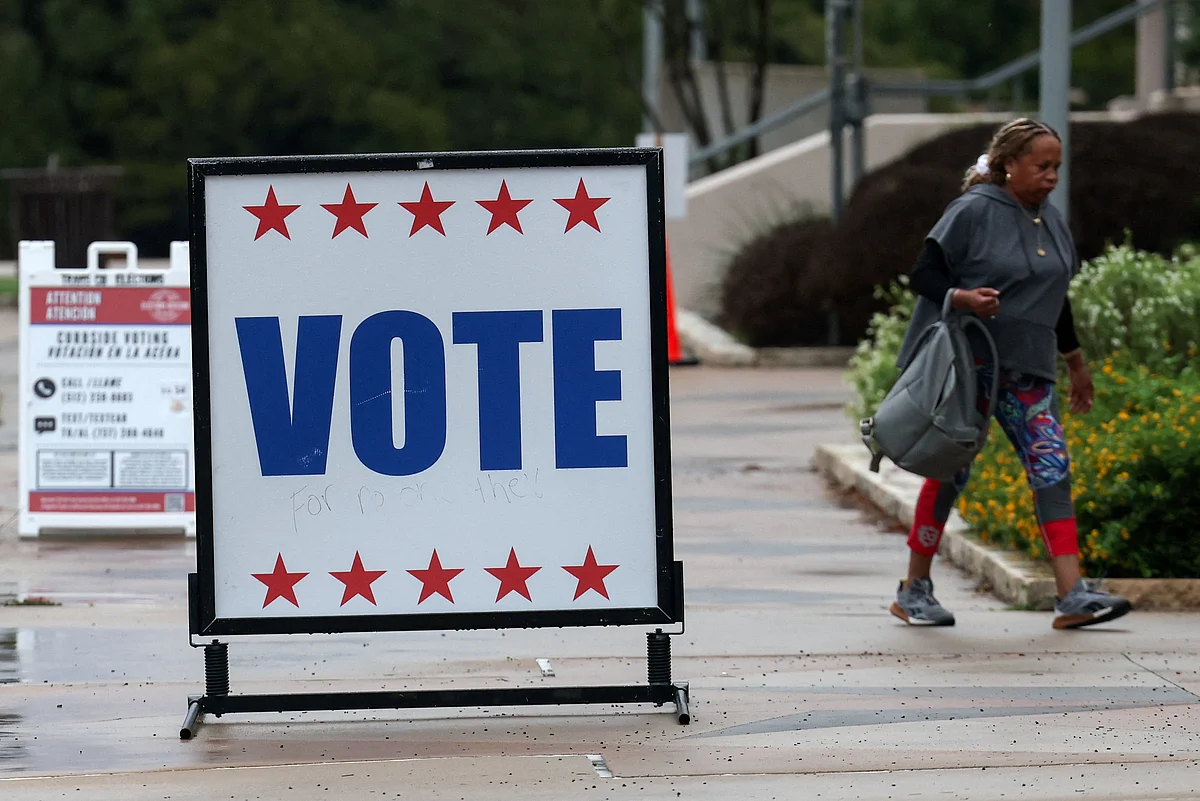
Trump under political pressureThe US President has entered the midterm elections being held on November 3 in a precarious position. Americans are frustrated as fuel costs continue to rise due to the Iran war, and a victory over the Iranians is an important campaign point for Trump.
Stay up to date with the latest news. Follow KT on WhatsApp Channels.
If the Democrats win in the US midterms, Trump may lose some power with regards to the Iran war.
Democrats argue that Republicans have allowed Trump's administration to declare war and control spending, even though the US Constitution reserves those powers for lawmakers, according to Reuters. If they win, Democrats could cut defence spending and force Trump to obtain permission from Congress to continue the war.
On the eve of the midterm elections on Monday, November 2, the US President said that Washington may strike Iran's Pickaxe Mountain - a suspected underground nuclear complex - if Tehran failed to reach a deal to end the war.
He also said on the previous day that US has knocked out much of Iran's military but still has to "take care of" one or two targets.
However, the messaging has been inconsistent, with Trump insisting that a deal remains possible and that negotiations are "going fine."
The US also carried out strikes on Iran's Qeshm Island in the Strait of Hormuz, according to a US official. The strikes, earlier reported by the Wall Street Journal, appeared to be limited and were not a resumption of major combat operations, the official said. There has been no comment from the US military.
Netanyahu pushes for return to warIsrael's Benjamin Netanyahu is under political pressure of his own, after his party lost their parliamentary majority in last week's elections. According to reports, he has pushed for another wave of strikes against Iran after the US midterms.
Media reports say that Netanyahu pushed Trump to launch a quick but extensive air campaign but that the US President has not committed to carrying this out.
A return to war, AP reported, could help Netanyahu form an emergency government.
Iran threatens retaliatory measuresIran has stepped up its rhetoric over the last few days that any strikes will be met with strong retaliation, with Iran's supreme leader Mojtaba Khamenei warning US and Israel against returning to war.
"Any level or type of threat must be met with an immediate, impactful and geographically unrestricted response," Mojtaba Khamenei told top military commanders, according to a statement.
Iran has repeatedly stated that a deal would only be possible if US accepts all seven of their conditions, including a complete end to the hostilities, lifting of sanctions, compensation for war-related damages and more.
Why strikes may not happenUS-Iran talks
Over the last few days, talks between the warring parties have ramped up, with mediators Qatar and Pakistan amplifying diplomatic efforts to end the war.
Qatari mediators travelled to Tehran on Monday night for talks on a version of the draft US-Iran deal that has been under negotiation for the past eight days, according to Reuters. This comes after a trip from an Iranian delegation to Doha, indicating that the indirect talks between Iran and US are ongoing.
US Vice President JD Vance said on Monday that both he and Trump were optimistic about securing an agreement. Last week, news outlet Axios reported that Vance had sent a letter to Iranian national security chief Mohsen Rezaei about possible new talks, marking the highest-level move in months.
Gulf countries push for diplomacy
UAE and other GCC countries have maintained their stance of dialogue and diplomacy being the only way forward.
At a recent conference in Manama, diplomatic adviser to the UAE President Dr Anwar Gargash said, "We're hoping that there is a diplomatic breakthrough. It is not the interest of the region to go through another round... But I think we're also, as we've shown before, braced for the worst."
Qatar's foreign ministry spokesperson said on Tuesday that there is "a unified agreement in the region and the Gulf to avoid escalation."
ALSO READ- Trump says US still has 'one or two targets' in Iran Iranian envoys meet Qatari mediators as threat looms of US strikes after midterms Houthi media renew threats against Saudi Arabia airspace, Aramco

Legal Disclaimer:
MENAFN provides the
information “as is” without warranty of any kind. We do not accept
any responsibility or liability for the accuracy, content, images,
videos, licenses, completeness, legality, or reliability of the information
contained in this article. If you have any complaints or copyright
issues related to this article, kindly contact the provider above.


Comments
No comment