


Commentary: AI Race Must Not Come At The Cost Of Sustainability, Social Equity


During one of my public lectures at a government university, a student asked me a question that seemed simple on the surface but carried profound meaning: Why do we always associate sustainability with climate change, even when we speak about leadership, education, public health, or governance?
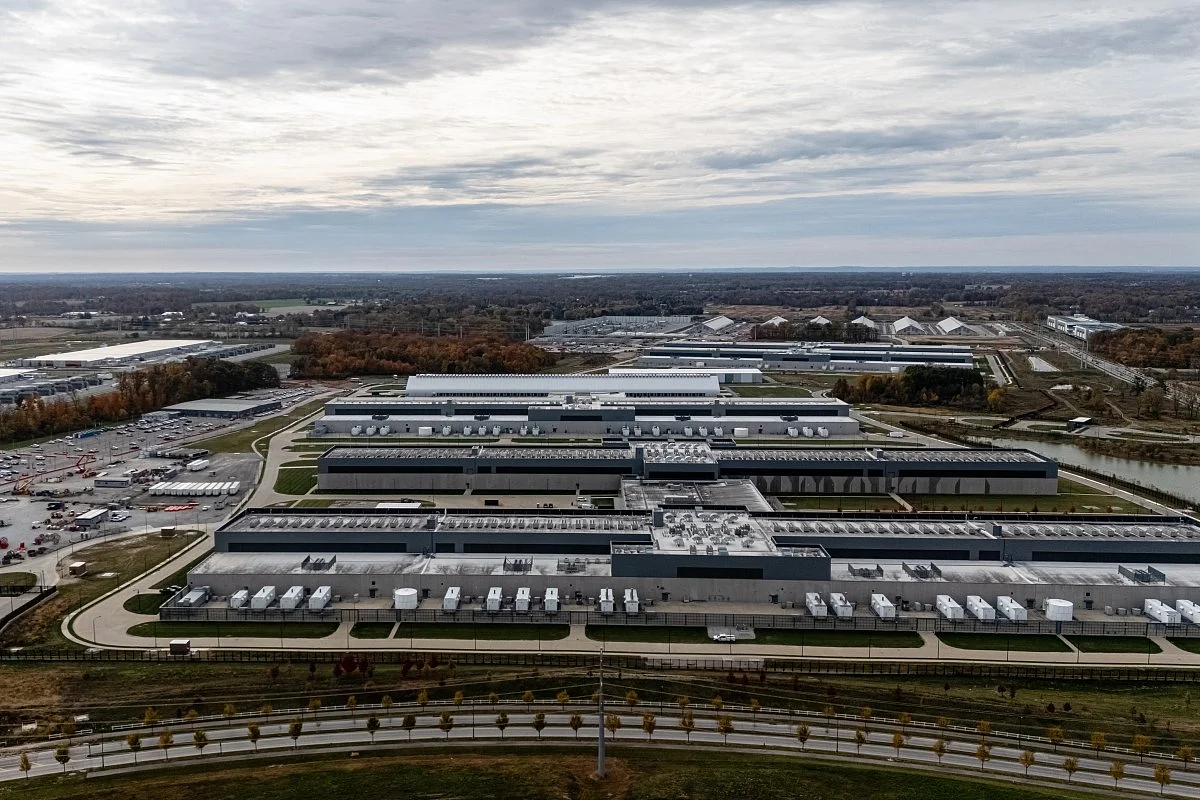
Recommended For You Iran says in 'intensive' negotiations with US to avert war via mediatorsThis question has become even more relevant as societies confront new challenges emerging from rapid technological transformation. Recent debates surrounding environmental permits for large-scale data centres, particularly in the United States, have highlighted the growing tension between technological advancement, economic growth, environmental stewardship, and social responsibility. As nations race to expand AI (artificial intelligence) capabilities and digital infrastructure, sustainability is increasingly becoming the framework through which these competing priorities must be reconciled.
Stay up to date with the latest news. Follow KT on WhatsApp Channels.
Over the past two decades, climate change has become the central lens through which the world re-examines sustainability. As global temperatures have risen, natural disasters have increased in frequency and intensity, and disease patterns have shifted, governments and institutions have realised that these phenomena do not threaten the environment alone. They threaten the sustainability of human systems themselves: food, water, health, the economy, and governance. Climate has therefore become one of the greatest challenges to the long-term resilience of societies.
The global conversation surrounding AI illustrates this broader understanding of sustainability. While AI promises significant advances in productivity, healthcare, education, and innovation, the infrastructure supporting it requires enormous amounts of energy, water, and land resources. This reality raises important questions about environmental impacts, equitable access to resources, and the distribution of costs and benefits. The challenge is no longer whether societies should innovate, but how they can do so responsibly. Sustainability serves as the bridge between technological progress and societal well-being.
There is a deep connection between sustainability and social justice. Climate change does not affect everyone equally. Low-income families often suffer more from heatwaves, air pollution, rising food prices, and disruptions in health services. These are global challenges requiring international solidarity. Decisions made in one region can influence ecological, economic, and social conditions far beyond national boundaries.
This understanding, however, is not entirely new. More than six centuries ago, Arab Tunisian scholar Ibn Khaldun, widely regarded as one of the founding fathers of sociology, historiography, and modern economics, articulated a profound vision of what we now call sustainability.
Khaldun explained the prosperity of a state rests on three pillars: justice, production, and social solidarity. These pillars closely mirror the foundations of modern sustainable development. Justice corresponds to social equity, production to a resilient and diversified economy, and solidarity to the collective capacity of society to adapt and endure.
Now, climate change, resource pressures, and debates over technological development have revived Ibn Khaldun's insight in remarkable ways. Societies that pursue economic growth without justice weaken their social foundations. Societies that neglect productive capacity become vulnerable to external shocks. And societies that fail to cultivate solidarity struggle to respond effectively to crises. Although he did not use the term sustainability, he described its essence with remarkable clarity when he observed that a state without justice loses its cohesion, a state without production loses its strength, and a state without solidarity falters in times of adversity.
In this context, the UAE offers a notable model of sustainable leadership. The UAE was the first country in the region to commit to net-zero emissions by 2050 and has invested more than $50 billion in clean energy projects across more than 70 countries. These initiatives reflect leadership that anticipates the future and builds resilience in a rapidly changing world.
In public health, the UAE demonstrated the strength of its system during the pandemic and continues preparing for climate-related health challenges. In education, sustainability has been integrated into curricula, while research in climate, health, and governance is expanding to prepare a generation capable of navigating uncertainty.
In governance, the UAE has adopted a forward-looking model grounded in innovation, data, and long-term planning, reflected in its artificial intelligence strategy, circular economy initiatives, and food and water security programmes. These efforts demonstrate that sustainability is not achieved through environmental policies alone. It is achieved when technological advancement, economic prosperity, social inclusion, and environmental stewardship reinforce one another.
Climate change did not create sustainability, but it made its importance impossible to ignore. Today, discussions around AI, data centres, resource use, and climate justice further demonstrate that sustainability is not a narrow environmental agenda. It is a comprehensive framework for understanding how societies can balance innovation with responsibility, development with equity, and national ambitions with global solidarity.
The question posed by the student was therefore not only about sustainability. It was about how societies prepare for the future. The answer is that sustainability is ultimately about protecting society's capacity to endure and prosper through effective leadership, quality education, resilient health systems, responsible governance, social justice, and environmental stewardship.
ALSO READ- US midterms may reshape Congress, but uncertainty remains for global markets: Analysts Commentary: Climate resilience must put youth and health at the centre Commentary: Middle East needs sustainable security, not just deterrence to regional conflicts

Legal Disclaimer:
MENAFN provides the
information “as is” without warranty of any kind. We do not accept
any responsibility or liability for the accuracy, content, images,
videos, licenses, completeness, legality, or reliability of the information
contained in this article. If you have any complaints or copyright
issues related to this article, kindly contact the provider above.


Comments
No comment