


Erdogan Courts South Korea for Nuclear Plant, USD15B Trade Push


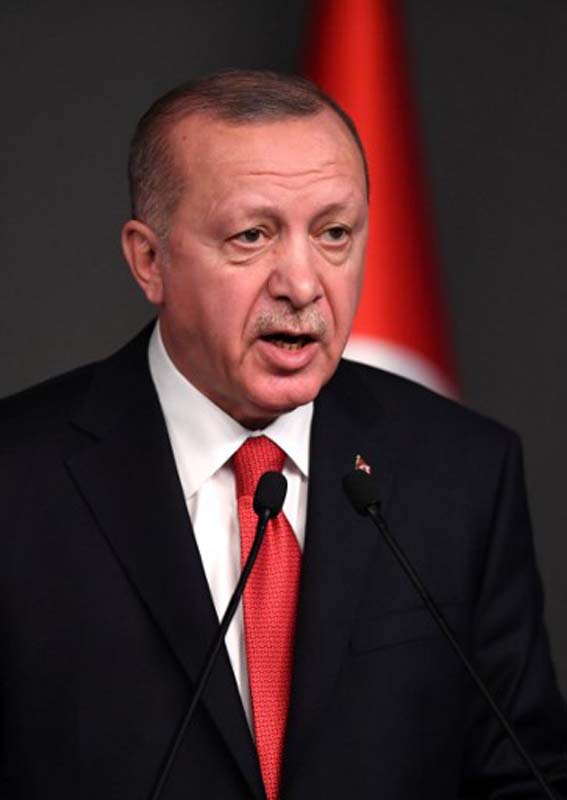
(MENAFN) Turkish President Recep Tayyip Erdogan has singled out South Korea as a possible cornerstone partner for Türkiye’s planned second nuclear power plant, to be built at Sinop on the Black Sea coast, as he prepares for a state visit to Seoul this week.
In an interview with a South Korean news agency, Erdogan said the trip is meant to deepen political dialogue and revive economic ties between the two nations.
“We regard the Republic of Korea as a great potential collaborator on this initiative,” Erdogan said.
NUCLEAR TALKS ADVANCE, BUT NO FINAL DECISION
The two countries signed a memorandum of understanding on nuclear energy cooperation during South Korean President Lee Jae Myung’s state visit to Türkiye last year. The pact covers reactor technology, site assessment, licensing, financing and business models.
Erdogan said Türkiye has since carried out extensive preliminary feasibility studies with South Korea’s state-run Korea Electric Power Corp. (KEPCO) and is still weighing the project’s technical and economic viability.
“We attach considerable importance to the negotiations we are holding with Korea on this topic. We are well aware of our Korean friends’ experience with nuclear energy,” he said.
He cautioned, however, that Ankara’s final call will hinge on electricity generation costs, financing arrangements and the project’s potential benefit to the Turkish economy.
“We are taking into account our contacts with other countries and examining all possible choices in light of our national interests,” he said.
TECHNOLOGY AND DEFENSE IN THE FRAME
Erdogan also voiced optimism about widening cooperation beyond nuclear power, into semiconductors, robotics, artificial intelligence (AI), defense and other advanced technologies.
“Our goal is to transform these prospects into tangible initiatives, facilitate business opportunities for our companies, and enhance reciprocal investments,” he said.
He welcomed South Korea’s interest in Türkiye’s PD170 turbodiesel aircraft engine, pointing to openings for closer defense industry collaboration in unmanned aerial vehicles, engine technologies and electronic systems.
The Turkish leader urged South Korean companies to step up investment in Türkiye and forge tighter partnerships with Turkish firms, especially in joint production and technology development.
“With its strong manufacturing infrastructure, skilled workforce and strategic location, Türkiye offers significant opportunities for Korean investors,” Erdogan said.
“By combining the Republic of Korea’s expertise in technology and innovation with Türkiye’s manufacturing strength, we can achieve far greater success.”
He cited Hyundai Motor Group’s long-running automotive manufacturing operations in Türkiye and South Korean steelmaker POSCO’s investments in the Turkish steel sector as models of successful economic cooperation. He also welcomed Hyundai’s start of electric vehicle production at its Izmit plant.
TRANSPORT AND LOGISTICS: ANKARA WANTS KOREAN CAPITAL
Erdogan called for a bigger South Korean role in Türkiye’s transport and logistics infrastructure, citing growing risks to global energy markets and international trade routes, including disruptions affecting the Strait of Hormuz.
“The current crisis has once again demonstrated just how vital it is to develop reliable alternative routes for international trade,” he said.
He pointed to Türkiye’s push to strengthen transport and logistics links between Asia and Europe, including plans to revive the historic Hejaz Railway, and said Ankara wants more South Korean companies involved in regional infrastructure investments.
“We would like to see greater participation by Korean companies in Türkiye’s regional transport and logistics investments,” Erdogan said, adding that his government was ready to back South Korean firms interested in investing in the country.
LOPSIDED TRADE IN THE SPOTLIGHT
Erdogan urged both sides to tackle what he described as a significant imbalance in bilateral trade. In 2025, Türkiye shipped roughly $1.14 billion in goods to South Korea, while its imports from South Korea reached $10.26 billion, about nine times as much.
“We have set a target of $15 billion in bilateral trade volume. As we work toward this goal, we prioritize developing a more balanced trade structure, expanding investment and encouraging greater collaboration in production,” he said.
He stressed that higher trade volumes should go hand in hand with growing reciprocal investment and stronger industrial partnerships.
‘FORGED IN BLOOD’: A BOND BEYOND BUSINESS
Erdogan also emphasized the depth of the countries’ longstanding friendship, describing the relationship as one “forged in blood.”
“The bonds of brotherhood and mutual trust that have been passed down through generations are at the center of our relationships. It is our responsibility to pass this treasured legacy on to future generations in an even stronger form,” he said.
“I believe that our visit will pave the way for concrete steps to further advance cooperation between our two countries.”
South Korea and Türkiye will mark the 70th anniversary of diplomatic relations in 2027, an occasion to reinforce their political, economic and cultural ties.

Legal Disclaimer:
MENAFN provides the
information “as is” without warranty of any kind. We do not accept
any responsibility or liability for the accuracy, content, images,
videos, licenses, completeness, legality, or reliability of the information
contained in this article. If you have any complaints or copyright
issues related to this article, kindly contact the provider above.


Comments
No comment