


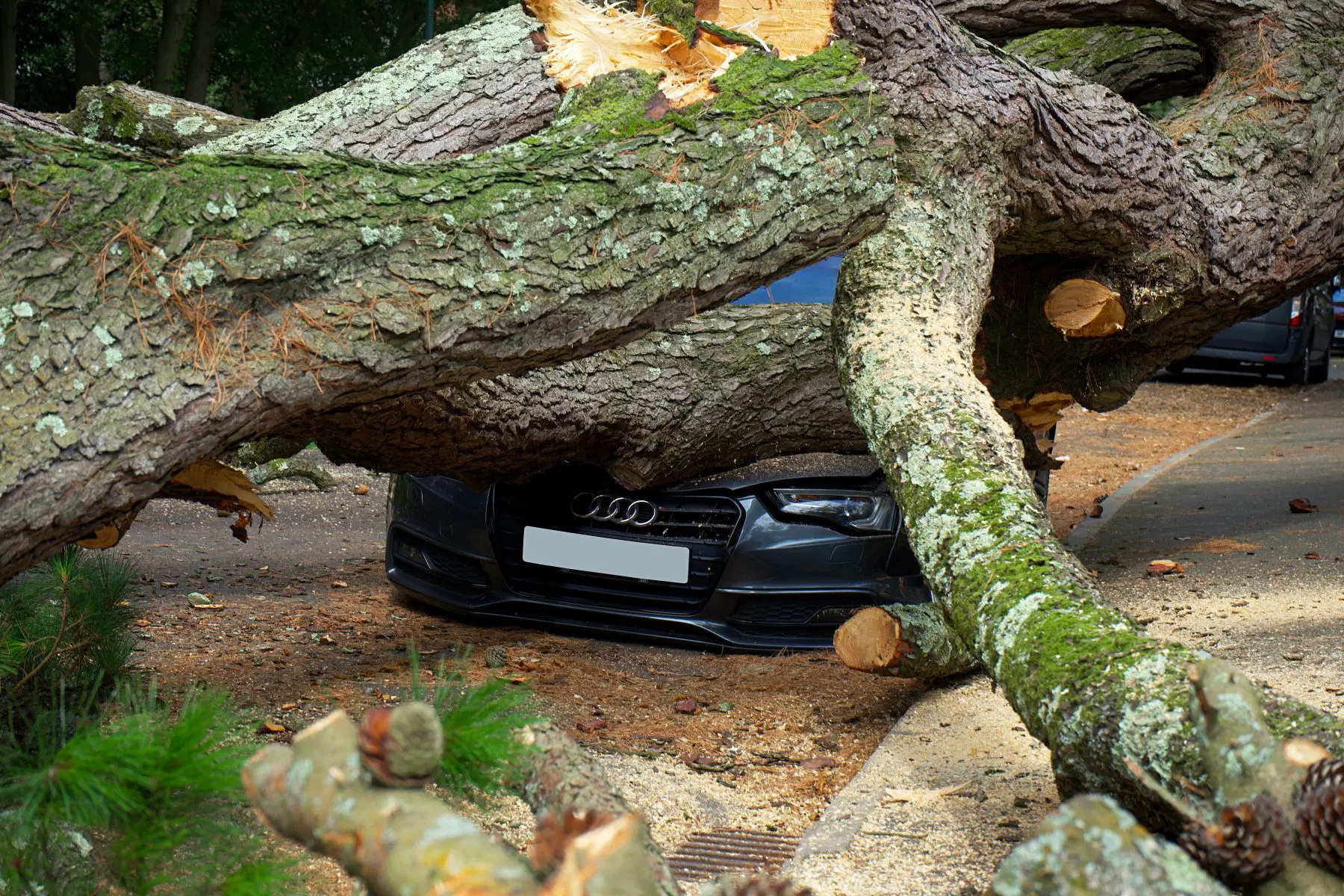
Your Neighbor's Tree Falls On Your Car - Whose Insurance Pays?


So, whose insurance will pay if the neighbor's tree falls on your vehicle? Here's what everyone should know.
Your Auto Insurance Usually Comes FirstWhen a neighbor's tree falls on your vehicle, your own auto insurance is generally the first place to look for coverage. Specifically, comprehensive coverage typically pays for vehicle damage caused by falling trees, branches, hail, and other weather-related events. According to the Insurance Information Institute, comprehensive insurance covers damage from events other than collisions, subject to policy terms and exclusions.
If you only carry liability insurance, however, your policy generally won't pay to repair your own vehicle after a tree falls on it. This distinction makes reviewing your coverage particularly important if you park outdoors near large or aging trees.
Why Your Neighbor Isn't Automatically ResponsibleIt may seem unfair, but owning the tree doesn't necessarily make your neighbor financially responsible for the damage. When a healthy tree falls during an unexpected storm, the incident may be treated as an accident rather than the result of someone's negligence. In many cases, the vehicle owner's comprehensive insurance handles the loss regardless of which property the tree originally stood on.
The National Association of Insurance Commissioners (NAIC) encourages consumers to understand their auto insurance coverage and the protections available under different policies. Determining responsibility often depends on whether the tree owner knew, or reasonably should have known, that the tree presented a dangerous condition.
A Neglected or Dangerous Tree Changes the SituationThe circumstances become more complicated when the fallen tree was visibly dead, severely decayed, or otherwise hazardous before the accident. If your neighbor knew about the danger and failed to take reasonable action, they could potentially be held responsible for resulting damage under applicable state negligence laws.
For example, imagine you've repeatedly warned your neighbor about a large dead branch hanging over your driveway, but they ignore your concerns for months. If that branch eventually falls and crushes your car, your earlier warnings may become important evidence when determining liability. However, proving negligence isn't automatic, and insurance coverage for fallen trees may depend on photographs, written notices, professional inspections, and the specific facts of the incident.
Your Neighbor's Homeowners Insurance Might ApplyIf your neighbor is legally responsible for the damage, the liability portion of their homeowners insurance may potentially cover your vehicle repairs. Homeowners liability insurance generally addresses certain claims involving bodily injury or property damage for which the policyholder is legally responsible.
Standard homeowners policies include liability protection, although exclusions and coverage limits apply. Your neighbor's insurance company may investigate whether the tree was dangerous, whether warnings were ignored, and whether reasonable maintenance could have prevented the accident. Even when negligence appears likely, the insurer may dispute responsibility, making documentation and a clear understanding of your own coverage especially valuable.
Your Deductible Could Still Cost You MoneyEven if comprehensive auto insurance covers the damage, you may still be responsible for paying your policy's deductible. Suppose a fallen tree causes $6,000 in covered repairs and your comprehensive deductible is $500, leaving the insurer to pay $5,500 under the policy. If the vehicle is declared a total loss, the settlement generally depends on its actual cash value, applicable coverage terms, and deductible rather than the price of purchasing a brand-new replacement.
Your insurer might attempt to recover its payment from a negligent neighbor or their insurer through a process called subrogation, which can sometimes result in reimbursement of your deductible. Because insurance coverage for fallen trees varies by policy and state, ask your insurer how deductibles, total-loss valuations, and possible recoveries would work in your situation.
What to Do Immediately After the Tree FallsYour first priority should be safety, especially if the fallen tree has brought down electrical wires or created an unstable structure. Stay away from downed power lines, avoid approaching damaged branches that could shift unexpectedly, and contact emergency services or the utility company when necessary. Once the area is safe, photograph the tree, the damage to your vehicle, nearby conditions, and any visible signs of decay before cleanup begins.
Contact your auto insurance company promptly, document conversations with your neighbor, and ask whether an adjuster needs to inspect the damage before the tree is removed. Keep receipts for towing, temporary transportation, and other related expenses, but remember that reimbursement depends on your specific policy and any applicable coverage.
How to Protect Yourself Before a Tree Becomes a ProblemPreventing a dispute is often easier and less expensive than dealing with the aftermath of a fallen tree. If you notice a neighbor's tree leaning dangerously toward your driveway or displaying obvious signs of decay, document your concerns and communicate with the property owner respectfully. A written notice can establish when you raised the issue, although it doesn't automatically prove the neighbor is legally responsible for future damage. Consider consulting a certified arborist when a tree's condition is uncertain, and review your comprehensive auto coverage before storm season begins.
The Tree's Location Doesn't Always Decide Who PaysWhen your neighbor's tree damages your vehicle, the most important questions usually involve your insurance coverage, the condition of the tree, and whether anyone acted negligently. In many ordinary storm-related incidents, your comprehensive auto insurance provides the clearest path toward getting your car repaired, even though the tree came from next door. If the tree was known to be hazardous, your neighbor or their homeowners insurer may face liability, but establishing responsibility can require evidence and sometimes legal assistance. Before assuming someone else will cover the damage, review your deductible, preserve photographs and communications, and ask your insurer to explain your options under state law.
Have you ever dealt with a neighbor's fallen tree damaging your property, and who ultimately paid for the repairs? Share your experience in the comments.

Legal Disclaimer:
MENAFN provides the
information “as is” without warranty of any kind. We do not accept
any responsibility or liability for the accuracy, content, images,
videos, licenses, completeness, legality, or reliability of the information
contained in this article. If you have any complaints or copyright
issues related to this article, kindly contact the provider above.


Comments
No comment