


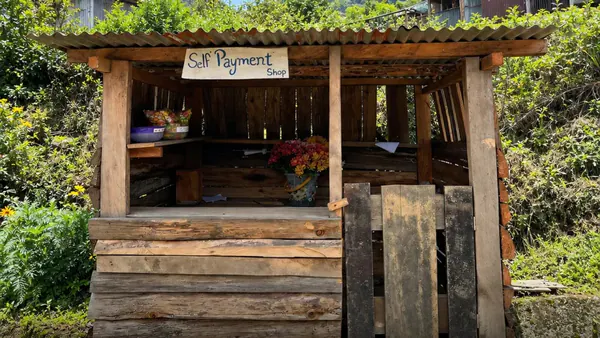
Business Is Not Always Built On Transactions Alone': Shops In This State Run Without Shopkeepers And Customers Pay Too


Along, who also holds the Higher Education portfolio, shared a post on X highlighting the unusual business model and the trust that keeps these shops running.
“No shopkeeper. No CCTV Just trust. Would this work where you live?” Along asked in his post, before explaining how the unattended shops function.
An image accompanying his post described the concept:“A shop that runs without a shopkeeper. No one standing at the counter. No one watching over customers. Just a roadside stall where people can stop, pick what they need, and pay on their own."
Also Read | A marriage made in heaven: how the humble QR code met the small merchant How do Nagaland's 'Honesty Shops' work?The shops operate without salespersons or anyone keeping an eye on customers. Visitors can select the products they want, check the prices displayed alongside them and deposit the payment in a designated cash box before leaving.
Some of these outlets have also adopted digital payment methods, displaying UPI QR codes for customers who prefer cashless transactions.
The concept is particularly dependent on mutual trust. Farmers leave their produce at these roadside stalls and attend to their agricultural work or other daily responsibilities, without having to remain present to oversee sales.
Such self-service shops are not limited to Nagaland but can also be found in other parts of India's Northeast.
Women farmers run around 20 such shops in PfutseroAccording to a 2025 report by India Today, women farmers operate approximately 20 such outlets across Pfutsero in Nagaland.
The roadside shops offer a variety of locally produced goods, including seasonal fruits and vegetables, along with homemade pickles, jams and juices.
Also Read | PM Kisan 24th instalment money payment tomorrow: How to check status?With no shopkeeper present, customers are expected to select their purchases, calculate the amount payable and leave the money in the collection box. The arrangement allows farmers to sell their produce while continuing with their everyday activities.
What did Nagaland minister Temjen Imna Along say?Along, a BJP leader, said the shops reflect the culture of trust prevalent in Nagaland. Their functioning demonstrates how customers are expected to pay for their purchases honestly, even when there is nobody around to monitor their actions.
Reflecting on the idea, the minister highlighted that businesses do not always need supervision or strict monitoring to function.
“Sometimes, trust is enough to keep businesses moving. Because a business is not always built on transactions alone. Sometimes, it also depends on the honesty people bring to the simplest everyday things,” he wrote.

Legal Disclaimer:
MENAFN provides the
information “as is” without warranty of any kind. We do not accept
any responsibility or liability for the accuracy, content, images,
videos, licenses, completeness, legality, or reliability of the information
contained in this article. If you have any complaints or copyright
issues related to this article, kindly contact the provider above.


Comments
No comment