


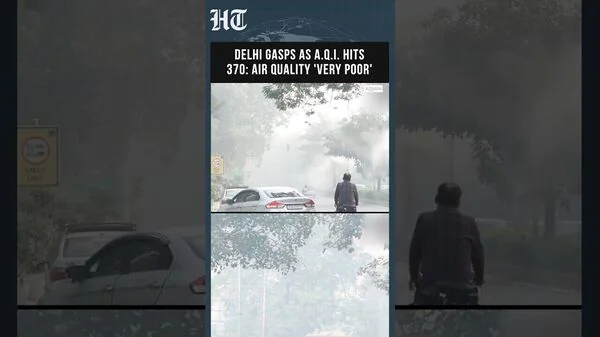
Delhi Air Quality Turns 'Very Poor', CAQM Invokes Stage-II GRAP Across NCR


The decision was taken by the CAQM's sub-committee on GRAP after reviewing the prevailing air quality and forecasts from the India Meteorological Department (IMD) and the Indian Institute of Tropical Meteorology (IITM).
Delhi's AQI rose sharply from 117, in the 'moderate' category, on 31 October to 261, in the 'poor' category, on 1 November, before reaching 324, in the 'very poor' category, on Monday, according to the Central Pollution Control Board's (CPCB) daily AQI bulletin.
Quick answers to key questions
.5 QUESTIONS1Why did CAQM invoke GRAP Stage II across Delhi-NCR?⌵Delhi's daily average AQI reached 324 on November 2, placing it in the 'very poor' category. CAQM cited unfavourable meteorological conditions and forecasts indicating that air quality could remain very poor.
2At what AQI level does GRAP Stage II apply?⌵GRAP Stage II applies when Delhi's AQI is between 301 and 400, the 'very poor' range. It adds measures to those already in force under Stage I.
3What pollution-control measures are introduced under GRAP Stage II?⌵Authorities are to increase mechanical road sweeping and water sprinkling, target pollution hotspots and intensify inspections at construction and demolition sites. The plan also provides for higher parking fees and staggered office hours in specified NCR cities.
4How can Delhi-NCR residents help reduce pollution during GRAP Stage II?⌵Residents are advised to use public transport, limit private vehicle use and avoid dust-generating construction activities. They should also avoid open burning of waste or biomass and consider working from home where their jobs allow.
5What precautions should people with respiratory problems take during very poor air quality?⌵The cited doctor advised people with respiratory problems to avoid going outdoors during periods of excessive pollution, especially early in the morning and at night, and to use masks. People with chronic conditions were also advised to take prescribed medicines regularly and seek medical advice if their health worsens.
Also Read | Delhi-NCR: Construction work to remain banned for 16 daysThe CAQM attributed the deterioration to unfavourable meteorological conditions and said forecasts indicated that air quality was likely to remain in the 'very poor ' category over the coming days.
Delhi-NCR battles persistent air pollution, with air quality typically deteriorating further between November and February. Delhi recorded its worst city-wide air quality of 2025 in November, when its daily average AQI stood at 354, placing it in the 'Very Poor' category, according to Central Pollution Control Board data.
More sweeping, dust control measuresStage-II of GRAP applies when Delhi's AQI is between 301 and 400. Under the framework, NCR authorities must implement additional pollution-control measures alongside those already in force under Stage-I.
These include intensifying mechanical and vacuum-based road sweeping, along with water sprinkling, preferably at night and during early morning hours. Authorities have also been directed to deploy more sweeping machines and ensure that collected dust is disposed of at designated sites.
Also Read | Air pollution alert: 3 Punjab cities among world's top 10 most pollutedWater sprinkling with dust suppressants will be carried out daily on roads, particularly along heavy-traffic corridors and congestion points, before peak traffic hours.
CAQM has directed agencies to step up targeted pollution-control measures at identified hotspots across Delhi-NCR, focusing on the predominant sources of pollution in each area. Inspections at construction and demolition sites will also be intensified to ensure compliance with dust-control norms.
Other measures include higher parking fees to discourage private vehicle use and asking Resident Welfare Associations (RWAs) to provide electric heaters to security guards, sanitation workers, horticulture staff and other service personnel. The move is intended to prevent the open burning of biomass and municipal solid waste during winter.
Staggered office hours, public transport pushThe Stage-II action plan also provides for staggered working hours at government offices and municipal bodies in Delhi, Gurugram, Faridabad, Ghaziabad and Gautam Buddha Nagar.
The Delhi government and the concerned NCR state governments have been asked to implement the measure. Other NCR districts may also consider staggered timings, while the central government may separately decide whether to stagger working hours at its offices in the region.
CAQM has urged residents to follow the citizen charter under both Stage-I and Stage-II of GRAP to prevent further deterioration in air quality.
Also Read | Delhi finalizes time-bound plan to fight winter air pollutionCitizens have been advised to use public transport, minimise private vehicle use, choose less-congested routes and park vehicles properly. Vehicle owners have also been asked to replace air filters at recommended intervals.
Residents have been urged to avoid dust-generating construction activities, particularly between October and January, clean kitchen chimney filters regularly and refrain from outdoor cooking and heating that generate smoke.
The commission has also advised against allowing solid waste and biomass to accumulate or burning them in the open. Those whose jobs permit remote working have been encouraged to work from home.
CAQM said it was closely monitoring the situation and would review air quality regularly over the coming days.

Legal Disclaimer:
MENAFN provides the
information “as is” without warranty of any kind. We do not accept
any responsibility or liability for the accuracy, content, images,
videos, licenses, completeness, legality, or reliability of the information
contained in this article. If you have any complaints or copyright
issues related to this article, kindly contact the provider above.


Comments
No comment