


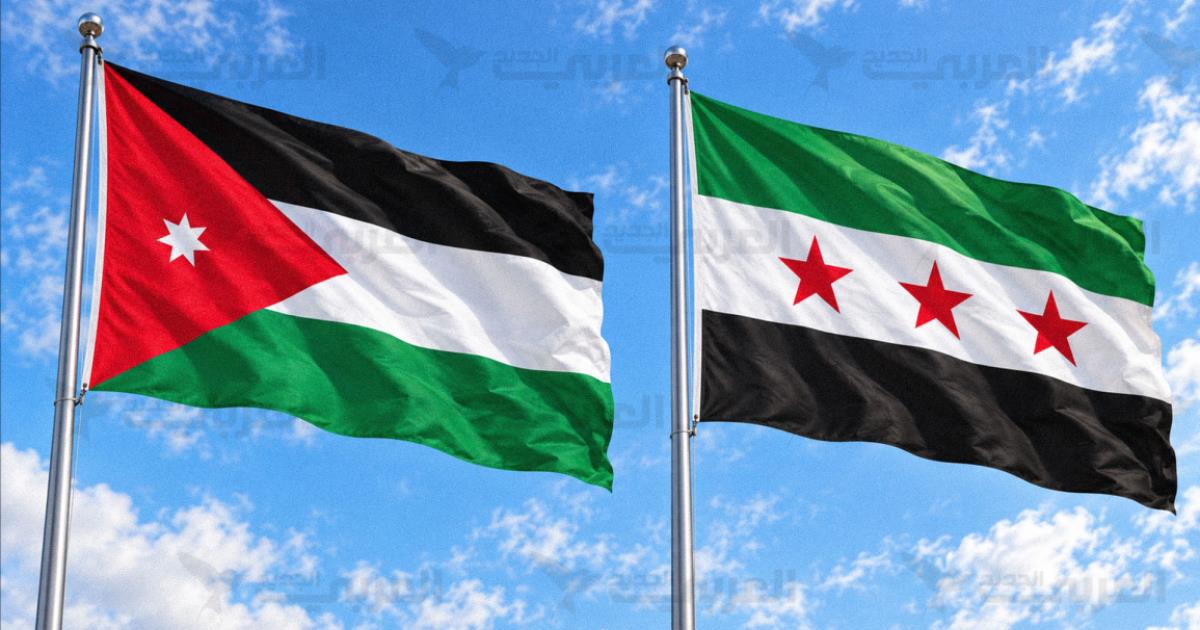
Jordan And Syria: Protect Brotherhood From Incitement


The tragedy has placed the Syrian government under considerable domestic pressure, amid accusations that it failed to defend the country's sovereignty and protect its citizens. Alongside the summoning of the Jordanian ambassador and the delivery of a formal protest note, a joint statement by the two foreign ministers offered a way to contain the crisis. It expressed Jordan's regret over the civilian casualties and announced agreement on a joint security committee to establish the facts surrounding the incident and strengthen coordination.
The importance of this approach lies in the fact that the independently available information is insufficient to establish conclusively what happened during the operation or the circumstances that led to the tragedy. Targeting ISIS was Jordan's stated objective, while determining how civilians were killed remains a matter for investigation. That is the only way to establish a credible account that respects the families' right to know the truth and translates Jordan's stated concern for Syrian civilians into clear answers about what happened, alongside guarantees that it will not happen again.
This concern is consistent with the foundations of Jordan's policy towards the new Syria. Since the fall of Bashar al-Assad's regime, Jordan has been among the leading supporters of the new authorities. It hosted Arab and international meetings in support of the transition, welcomed President Ahmad al-Sharaa and opened new avenues of cooperation with Damascus. This policy has been driven by a clear strategic interest in a unified and stable Syrian state capable of exercising sovereignty over its territory.
That interest has not diminished with the continuing threats posed by terrorism and drug smuggling. On the contrary, these challenges make cooperation more necessary and underline the importance of giving Syrian state institutions the opportunity to rebuild their capacity. This understanding was reflected in the growing rapprochement between Jordanian Foreign Minister Ayman Safadi and his Syrian counterpart Asaad al-Shaibani, who spoke, just days before the incident, of developing bilateral relations into a strategic partnership.
The danger to this partnership begins when the tragedy is exploited to settle scores with Syria's new leadership. A distinction must be made between the legitimate anger of Daraa's residents and the political exploitation of that anger. In my assessment, embarrassing Damascus and narrowing the options available to its new leadership may be the broader objective behind some of the rhetoric directed against Jordan. Supporters of the former regime and hardline factions opposed to the new government's policies may find common ground in this effort with Jordanian voices that have never reconciled themselves to the political changes in Syria.
Such convergence, even without direct coordination, risks turning a tragic incident into a confrontation between two states and their peoples. Others then join exchanges of insults, sometimes in good faith and sometimes out of anger, providing those advocating a rupture with the very resentment they need. Gradually, the debate moves away from the facts and the victims' rights towards mutual accusations and personal attacks.
The relationship now threatened by these exchanges is built on family ties, intermarriage, deep social and tribal connections, and a shared history. On both sides of the border, families share their joys and sorrows. People know one another by name and face. Jordan hosted hundreds of thousands of Syrians during their years of hardship, providing access to education, healthcare and employment opportunities with international support. These experiences deepened a brotherhood lived in homes and neighbourhoods, becoming part of personal and family memories. We have a responsibility to protect that bond from the battles waged on social media platforms.
Protecting this relationship is also a strategic necessity. Tensions between Amman and Damascus would give Israeli policies in southern Syria an additional opportunity to advance. In his address to the United Nations, King Abdullah II linked Israel's expansion in southern Syria to threats against Jordan's national security. This means that weakening coordination between the two countries serves efforts to impose new realities on the ground in southern Syria, undermining their shared interest in protecting Syrian sovereignty and preventing its fragmentation.
What is needed now is to accelerate the work of the joint committee, communicate its findings transparently to the public, support the victims' families and translate political commitments into practical security coordination that prevents a recurrence of the tragedy. This should go hand in hand with stronger people-to-people diplomacy and efforts to involve trusted social and civil society figures in repairing the damage caused by online disputes.
The two foreign ministers have an essential role to play in turning their understanding into tangible initiatives that people can feel, while closing the door to incitement and accusations of disloyalty. Turning the page on this period of tension must begin with justice for those affected and the rebuilding of trust. The bonds of blood, kinship and affection that unite Jordanians and Syrians are far too deep to be left hostage to those seeking to widen the wound.
Al-Araby Al-Jadeed

Legal Disclaimer:
MENAFN provides the
information “as is” without warranty of any kind. We do not accept
any responsibility or liability for the accuracy, content, images,
videos, licenses, completeness, legality, or reliability of the information
contained in this article. If you have any complaints or copyright
issues related to this article, kindly contact the provider above.


Comments
No comment