


Provoke Global 26: What's Changed In Healthcare Comms And What Remains The Same


(MENAFN- PRovoke)
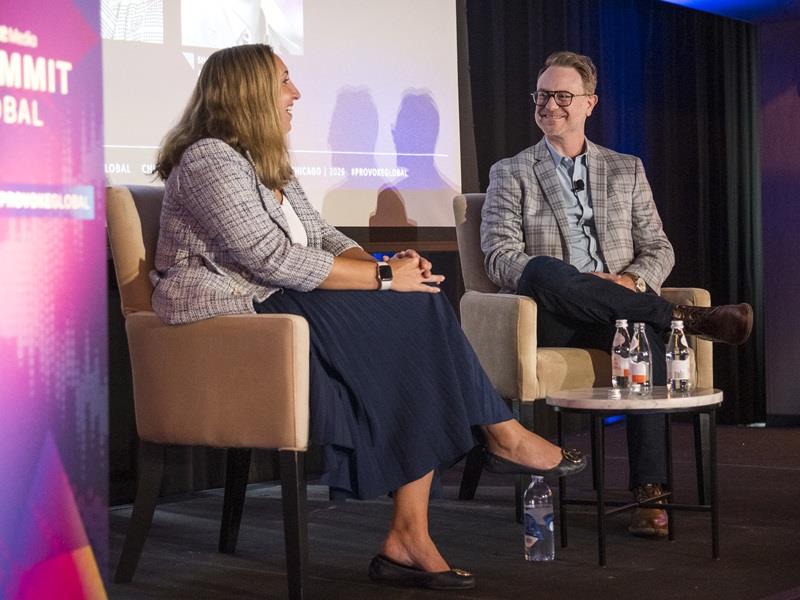
In a conversation entitled“Two Decades of Change in Two Years: Driving Value in a Transformed Healthcare Ecosystem,” GCI Health global chief executive Kristin Cahill and Shant Salakian, head of oncology public affairs at AbbVie, discussed what has changed in healthcare communications and what remains constant.
Salakian talked about the need for communicators to“filter out the signal from the noise. There are so many things that are urgent, but not all of them are going to have the same impact.”
To understand the difference, he says,“I've encouraged my teams to ensure that our stakeholders don't just come to us at the moment of communication. We have to be sitting at the table with them. We understand why we need to communicate about something. We understand the need to communicate it, and so we're feeding into all of that. So it's not a reactive thing.
“I love how communications has been elevated because of this exact thing that we're dealing with, where there's so much to communicate about. There are unintended consequences of staying out of a conversation or jumping into a conversation. You're only going to know that really well if you understand your business. The importance of understanding your business. I think if you if you know your business well, you are going to join in when it's right and stay out when it's not.”
Another of the key takeaways concerned the way Salakian and his teams are using AI in their daily work.
“You don't get good at running by just looking at your treadmill,” he says.“You have to get on the treadmill and run, and that is super important. So we're just allowing our teams to experiment. We're not telling them how to go to Copilot, what you put in the chat. There's none of that. It's more getting our teams into the mindset of, what is possible? What have you always wanted to do? What did you want to do quicker?How can we better leverage our partners creatively?
“So that's one of the changes. I think it's being curious. It's being willing to take that risk of quickly seeing if something works or doesn't, and then implementing it.”
Salakian says he uses AI as a“second brain” in team meetings, to test ideas.
“What I found recently to be helpful is not just transcribing a meeting but actually bringing Copilot into that meeting, and challenging the assumptions of people in the meeting. And so I will ask it to give me something to that that counters what Kristen is saying because I think AI can give you an additional brain to help you think of things that you cannot see yourself.”
But humans remain essential. There are concerns if“you are not involved in the output, just taking what AI is giving you and just putting it out there is absolute. It is wildly powerful. But some of the things that it still cannot do is it does not have the context of the conversation I had with the CEO. You know, five minutes before something was meant to go out. It does not have relationships
“In a world where we are going way more digital and tech and AI, doubling down on what is human is something that my teams are working on. So we are looking at ways to bring people together more in real settings, events and things like that. AI can help us write two incredible headlines, but only the human is going to understand which one is going to resonate with the stakeholders, and which one is going to be good for the reputation of the company?”
And finally, despite all the change, both Cahill and Salakian were clear About one constant: that listening to and speaking clearly to patients remains at the center of everything healthcare communicators do.
“There's been so much change, but what hasn't changed is that you absolutely need to know your business,” said Salakian.“I think my background [in chemistry and cell biology] gave me that close up view of what it's like to develop a drug.
“When you're communicating to physicians, you do need that technical language. But when you're communicating to patients or caregivers, you have to ensure that that message is fitted to them. What does a hazard ratio mean? Means nothing to most people. So dialing up or dialing down those technicalities is really important.”
Speaking the right language at the right time helps companies engage with the patient advocates and the patient populations that they are trying to communicate with.
“We were working in a space where we were dealing with a certain type of breast cancer that was very hard to treat, and the outcomes for these women who were diagnosed with breast cancer was not that great. So we wanted to create a resource for them to come together, and what we heard immediately in all our interviews with them that many of the great advances that happen with breast cancer, didn't really apply to them.
“So we created a campaign with them from the start. The way we spoke about how they were diagnosed, their outcomes wildly different from how it's spoken about in other spaces, and as a result, we created this beautiful resource that was just really authentic to them.”

Legal Disclaimer:
MENAFN provides the
information “as is” without warranty of any kind. We do not accept any
responsibility or liability for the accuracy, content, images, videos,
licenses, completeness, legality, or reliability of the information
contained in this article. If you have any complaints or copyright issues
related to this article, kindly contact the provider above.


Comments
No comment