


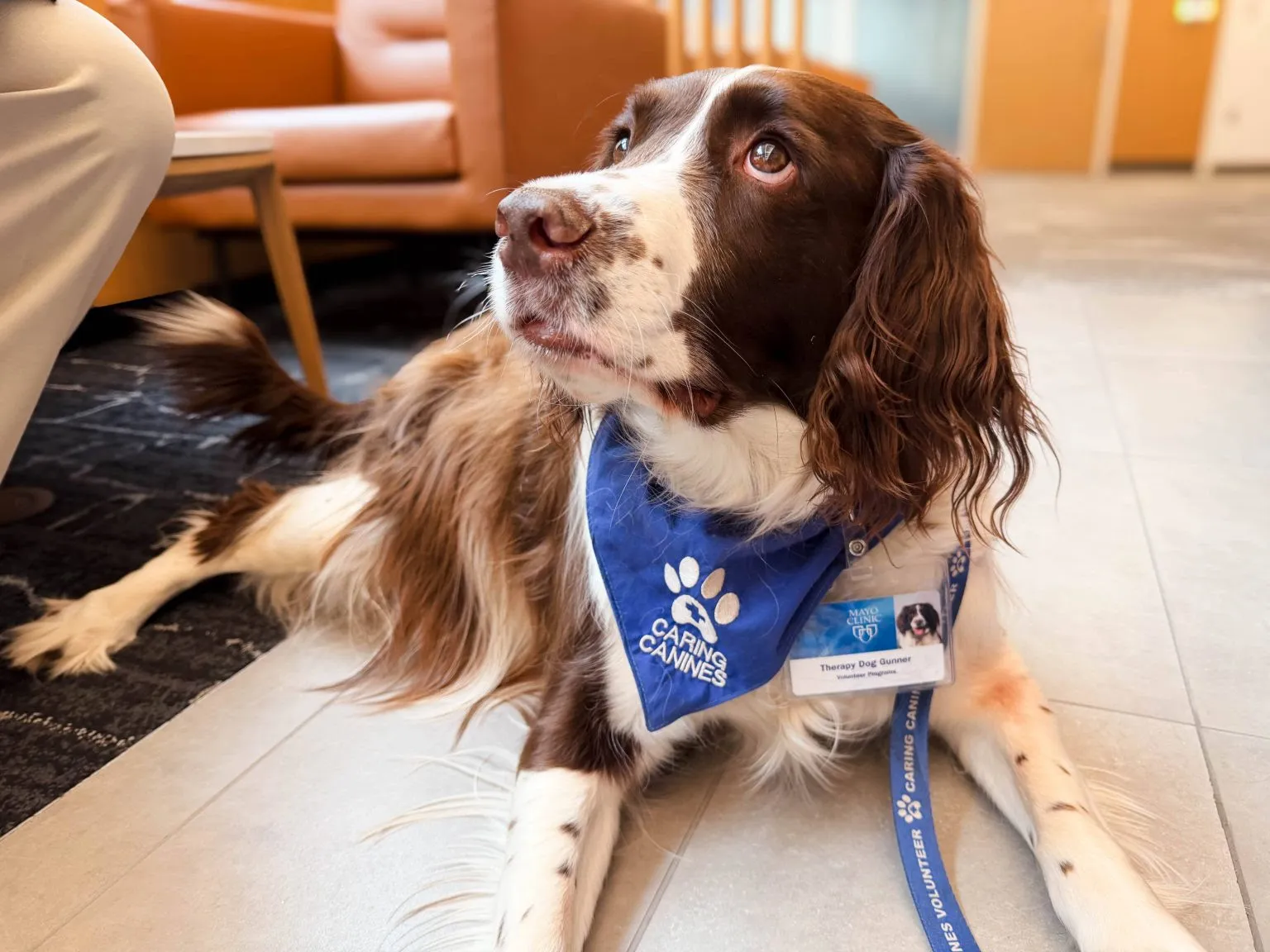
Mayo Clinic Study Highlights Benefits Of Animal-Assisted Treatment In Stroke Rehabilitation


(MENAFN- Mid-East Info) A visit from a therapy animal may do more than lift spirits. A new study in Mayo Clinic Proceedings highlights how animal-assisted treatment can support inpatient stroke rehabilitation. Patients who interacted with therapy animals showed greater engagement in their treatment, increased physical activity and longer mobility compared with those who did not.
Borderless Finance. AI-Native.
Your digital companion for smarter everyday choices. Built for how you live, earn, and grow. Move money at your pace with AI-powered finance, all in one tap.
Join the waiting list. Earn The findings suggest a promising approach to addressing common barriers patients face with stroke recovery, including limited motivation, reduced energy, lack of companionship and decreased interest in therapy activities. By incorporating trained therapy dog-handler teams into rehabilitation care, patients can do a variety of activities including walking, playing fetch, and petting or brushing the dog. “The presence of a therapy dog can change the entire dynamic of a rehabilitation session,” says Whitney Romine, manager of animal-assisted services at Mayo Clinic.“Patients often share that they feel more grounded, safe and empowered to engage in therapy activities, which can make a meaningful difference in their recovery experience.” The paper,“The Impact of Animal-Assisted Treatment on Inpatient Stroke Rehabilitation,” shows how patient care could be improved using a clinical care delivery model that includes qualified animal handler teams. The study also explores how these changes could be applied across a variety of medical specialties and patient populations. “Stroke recovery can be challenging, particularly when patients face barriers such as low motivation or limited energy,” says Brent Bauer, M.D., a physician in internal medicine at Mayo Clinic.“This research demonstrates that animal-assisted treatment may offer a practical and effective way to enhance engagement and support better rehabilitation outcomes.” This research was conducted in collaboration with Nestlé Purina PetCare. For a complete list of authors, disclosures and funding, review the study.
Legal Disclaimer:
MENAFN provides the
information “as is” without warranty of any kind. We do not accept
any responsibility or liability for the accuracy, content, images,
videos, licenses, completeness, legality, or reliability of the information
contained in this article. If you have any complaints or copyright
issues related to this article, kindly contact the provider above.


Comments
No comment