


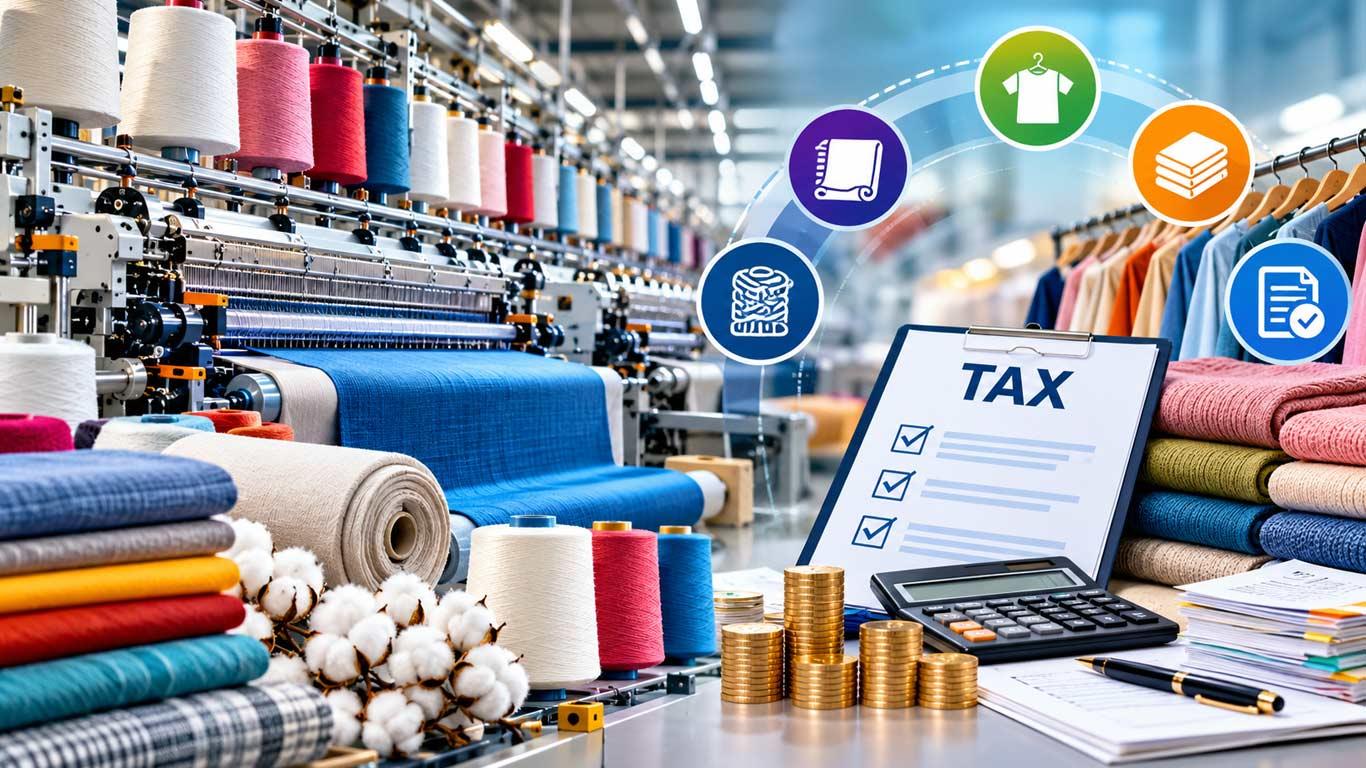
Govt Plans Integrated Tax Framework For Textile Sector To Ease Tax Burden On Raw Materials, Machinery: Report


The proposed framework may cover GST on textile products and inputs, basic customs duties on raw materials and imported machinery, and anti-dumping duties on select man-made fibre and yarn imports. The aim is to address cost pressures across the production chain, from fibre and yarn to finished products, The Economic Times reported.
The exercise comes as the government seeks to expand textile manufacturing, promote technical textiles, modernise traditional clusters and increase India's global market share.
“This is a priority sector for the government, and we are looking at an integrated tax frame to make it competitive rather than a tweak here and there,” a senior official told ET.
Industry Seeks Relief on Raw Materials and Inputs
The Department of Revenue is working with the textiles ministry on industry demands. These include customs duty removal on caprolactam, nylon chips, rayon-grade wood pulp and cotton, along with removal or deferment of anti-dumping duties on elastomeric filament yarn and viscose rayon filament yarn.
The ministry has cited the impact of these duties on downstream manufacturers, micro, small and medium enterprises (MSMEs) and employment.
Industry representatives have also sought a six-month basic customs duty waiver on five polyester-chain products: monoethylene glycol (MEG), purified terephthalic acid (PTA), partially oriented yarn (POY), fully drawn yarn (FDY) and drawn textured yarn (DTY). The demand has gained urgency after temporary duty exemptions on MEG and PTA were withdrawn in July.
Machinery Costs Also Under Review
The textiles ministry has separately asked the revenue department to review machinery costs.
The proposed tax changes would complement the Rs 40,000-crore Textile Expansion and Employment Scheme announced in the Union Budget 2026-27, which aims to support machinery upgrades, technology adoption and common testing facilities in traditional clusters.
Industry representatives have argued that investment support alone may not be sufficient if manufacturers continue to face high or uneven duties on raw materials, intermediate goods and machinery.
(KNN Bureau)

Legal Disclaimer:
MENAFN provides the
information “as is” without warranty of any kind. We do not accept
any responsibility or liability for the accuracy, content, images,
videos, licenses, completeness, legality, or reliability of the information
contained in this article. If you have any complaints or copyright
issues related to this article, kindly contact the provider above.


Comments
No comment