


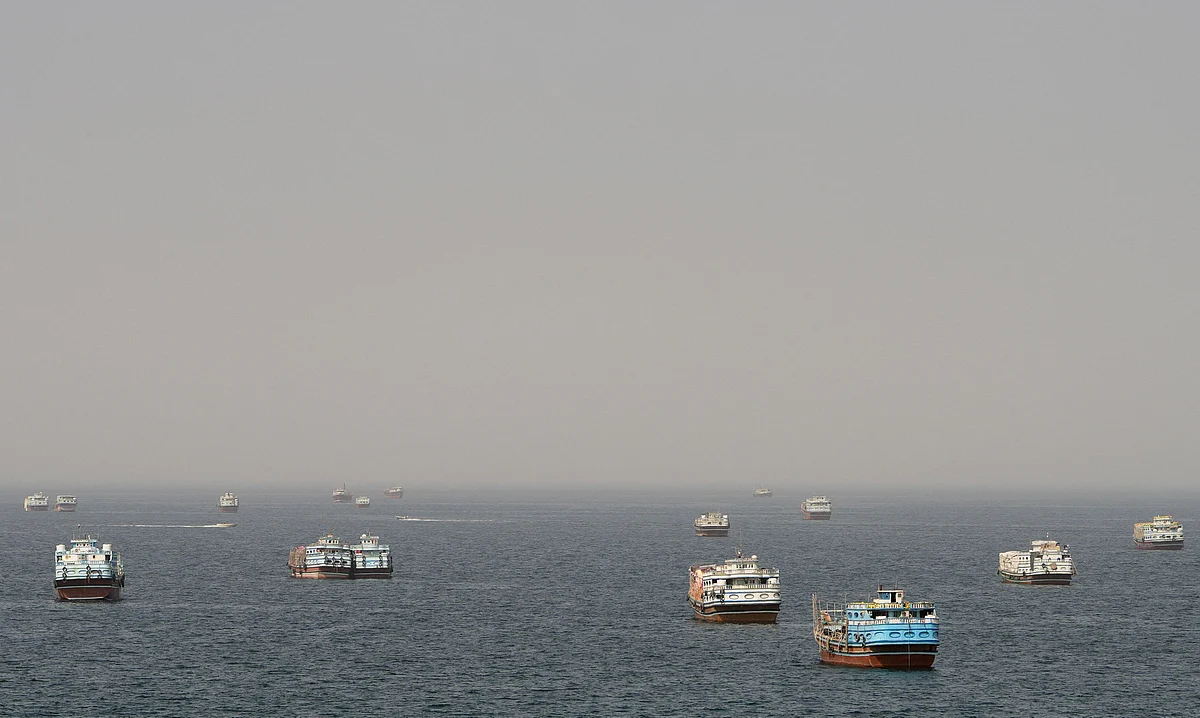
Disruption In Hormuz Strait Diverts Steel Shipment Bound For Abu Dhabi To India


A shipment of specialised steel plate bound for Abu Dhabi was diverted to India during disruption around the Strait of Hormuz, delaying its delivery to Al Gharbia Pipe Company by about two months.
Recommended For YouThe cargo, originally destined for Khalifa Port, was discharged at Jakhau on India's western coast under provisions allowing the vessel to seek a safe port. Al Gharbia, which manufactures large-diametre steel pipes in Abu Dhabi, had a maximum 30-day storage window and had to arrange another vessel to collect the material.
The incident illustrates the logistical challenges facing energy supply chains as companies navigate disruption in and around the Strait of Hormuz, even when cargoes are not ultimately prevented from reaching their destinations.
Stay up to date with the latest news. Follow KT on WhatsApp Channels.
Most of Al Gharbia's shipments continue to arrive through Khalifa Port, but the company cannot know in advance whether a vessel will cross the strait, as that decision rests with the shipowner, said Junya Kako, the company's chief commercial officer.
“The recovery is there to an extent where it is now a logistics problem, because the barrels are coming back faster than the means to transport them,” said Aditya Saraswat, partner and head of EMEA oil and gas research. Both were speaking during a media roundtable at the company's headquarters in KEZAD.
For Al Gharbia, the disruption comes alongside the deferral of oil and gas projects, which the company says has been the main reason for a slowdown in production. Contractors working on projects, including those linked to Adnoc, had postponed pipe purchases despite having received engineering, procurement and construction awards, Kako said. The reasons varied, including project economics, logistics constraints and the wider geopolitical situation.
The company produced more than 250,000 tonnes of pipes in each of the previous two years, but said it is producing 60,000 tonnes by end of December 2026. It is targeting production of 200,000 tonnes in 2027, with a slower first half expected before activity picks up in the second half.
Al Gharbia has an annual production capacity of 400,000 tonnes and makes large-diameter longitudinal submerged arc welded (LSAW) steel pipes ranging from 18 to 60 inches. Its plant is in KEZAD, about 10km from Khalifa Port.
Alternative shipping routes have limitations. Fujairah cannot fully replace Khalifa Port because of storage constraints and the size of cargoes, while routes through Oman and Saudi Arabia can add weeks to delivery times. The company has made arrangements to ease customs crossings, but rerouting remains a challenge.
The specialised steel plate used in pipe production is sourced from Europe, South Korea and Japan, with China becoming a more prominent supplier. The material is not currently manufactured in the UAE, according to Kako. Establishing domestic production would require substantial investment, he added.
Pipeline investment could support recoveryDespite the current slowdown, the regional oil and gas project pipeline could bring more orders for pipe manufacturers over the next two years, Saraswat said.
He presented a market update report which cited $67 billion in Middle East greenfield project approvals in 2026, with another $100 billion in projects awaiting progress. These figures represent the investment pipeline rather than completed projects or confirmed orders for pipe manufacturers.
Saraswat also estimated that announced investments in pipelines designed to bypass disrupted shipping routes total $25 billion to $30 billion across the UAE, Saudi Arabia and Iraq. The extent to which those plans translate into orders will depend on project execution and a return to more normal operating conditions.
“We are seeing some dip in the demand for this year, of course, because of the conflict. But we see active pickup coming up in the next 12 to 24 months,” he pointed.
The outlook is not without uncertainty. Project delays could continue to affect when contractors place orders, while higher costs could add pressure to budgets. Saraswat said project costs could rise by close to 20 per cent over the next 18 to 24 months, making the timing of procurement decisions important.
For Al Gharbia, the immediate priority is to manage deliveries and prepare for demand to recover. The company's 2027 production target remains below its annual capacity, reflecting expectations of a gradual rather than immediate return to stronger activity.
ALSO READ- UAE, GCC freight charges set to rise further due to container shortage, Hormuz closure UAE activates alternative trade corridors as Hormuz closure tests supply chains Oil market braces for post-Hormuz reality as Fitch predicts oversupply, lower prices

Legal Disclaimer:
MENAFN provides the
information “as is” without warranty of any kind. We do not accept
any responsibility or liability for the accuracy, content, images,
videos, licenses, completeness, legality, or reliability of the information
contained in this article. If you have any complaints or copyright
issues related to this article, kindly contact the provider above.


Comments
No comment