


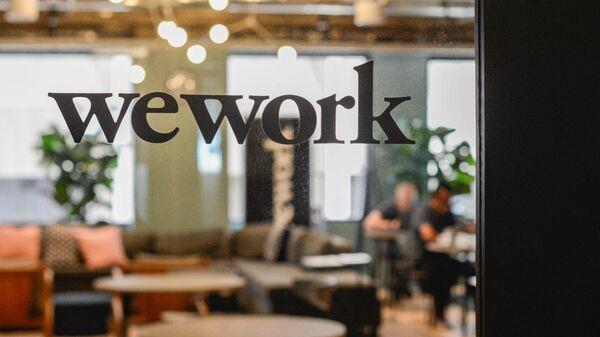
Wework India Bets On Demand As Premium Office Supply Tightens


Availability of Grade A offices - premium commercial properties with modern infrastructure, high-quality amenities and strong connectivity - in the country's eight largest cities, including Delhi, Mumbai, Bengaluru and Gurgaon, is likely to remain limited over the next two years, Clifford Lobo, chief financial officer of WeWork India Management, said. With fresh supply expected to pick up in 2029 and 2030, the shortage could shape operators' expansion plans and drive up the cost of securing premium properties.
WeWork India's September-quarter results underline the opportunity. Revenue rose 31.6% year-on-year to ₹768.7 crore, while earnings before interest, taxes, depreciation and amortisation (Ebitda) increased 37.6% to ₹162.9 crore. Net profit surged 67.4% to ₹65.8 crore. The company added 11,700 desks during the quarter, its largest-ever quarterly capacity addition.
Also Read | Cognizant bets on managed office deal with WeWork in Chennai“There is very limited capacity becoming available, at least over the next couple of years,” Lobo told Mint in an interview, adding that WeWork had already secured about 80% of the capacity it plans to add next year.
The results point to a maturing business model in which rising occupancy and operating leverage are beginning to offset the costs of taking on new properties. Rent and fit-out expenses often precede revenue, leaving quarterly earnings vulnerable to the timing of expansion. The previous financial year highlighted how this can weigh on performance before new centres start generating income.
“The year-on-year view, because same period last year, where was I, where am I now? I think those have shown pretty significant growth,” Lobo said, arguing for a longer-term view of the company's performance.
Also Read | Sunteck Realty, Radico Khaitan, WeWork, Supreme Industries, Kajaria by JefferiesWeWork India's first-half numbers reinforce the improvement. Revenue increased 30.1% to ₹1,466.7 crore, Ebitda rose 50.6% to ₹301.2 crore, and net profit climbed 149.5% to ₹119 crore. Free cash flow from operations reached ₹379.8 crore during the half year to 30 September.
The company added 18,400 desks in the first half, its largest 6-month addition, taking operational capacity to 145,300 desks across 85 centres in eight cities. Membership grew 32.5% year-on-year to 121,700, outpacing the 26.9% increase in operational desk capacity. Portfolio occupanc stood at 83.7%, while occupancy at mature centres was 87.7%.
The expansion comes as flexible workspaces gain a larger share of India's office market. According to Colliers' India Office Snapshot Q2 2026 report, flex operators accounted for 24% of leasing across the top seven cities in the first half, taking up 8.6 million sq. ft.
CBRE Research, in its India Office Figures Q2 2026 report, said the office sector had recorded its“highest-ever half-yearly absorption of 45.5 mn. sq. ft.”, driven by sustained occupier demand and strong global capability centre (GCC) and flexible workspace activity.
Also Read | Cognizant bets on managed office deal with WeWork in ChennaiGCCs are central to the next phase of growth. As multinational companies expand their technology, analytics and specialised operations in India, flexible workspaces allow them to establish teams quickly without immediately committing to large, long-term offices. WeWork India said GCCs contributed 40.8% of its core revenue in the September quarter.
Lobo said demand was also broadening beyond technology companies to manufacturers, pharmaceutical businesses and other traditional enterprises. Flexible offices give companies a presence across cities without requiring them to establish their own facilities, while allowing them to adjust capacity as business needs change.
The challenge is to convert this demand into sustainable returns rather than simply a larger leased portfolio. Lobo said that post-pandemic, WeWork shifted from pursuing capacity for its own sake towards demand-led expansion, higher occupancy and better utilisation of existing space.
“It's not enough to grow revenue just by adding more desks and we have to figure out a way to grow the wallet share,” he said, describing the focus on extracting more value from existing real estate through additional services and higher revenue per desk.
WeWork India estimates that its break-even occupancy has fallen to 56%, from 74% during the covid period. In the September quarter, Ebitda margin expanded to 21.2%, while free cash flow to firm turned positive at ₹61.9 crore. The company moved to a net cash position of ₹23.1 crore from net debt of ₹310.5 crore a year earlier.

Legal Disclaimer:
MENAFN provides the
information “as is” without warranty of any kind. We do not accept
any responsibility or liability for the accuracy, content, images,
videos, licenses, completeness, legality, or reliability of the information
contained in this article. If you have any complaints or copyright
issues related to this article, kindly contact the provider above.


Comments
No comment