


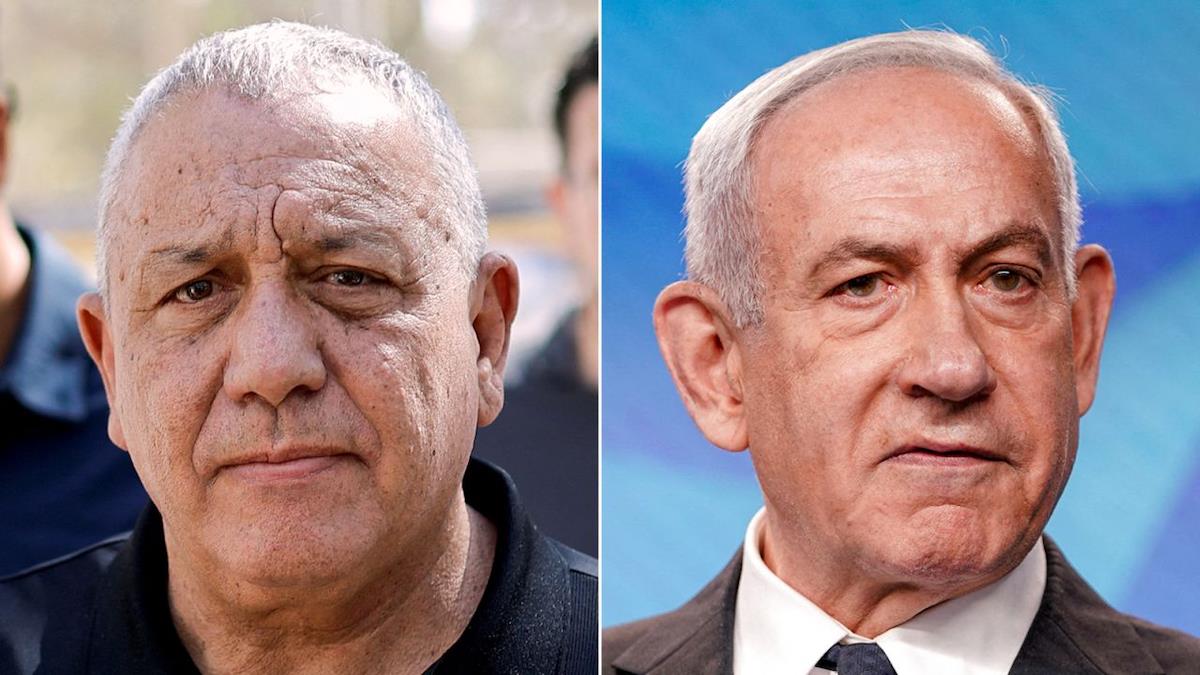
Israel's Inconclusive Election Reveals A Sharply Divided Nation


Both men have nonetheless claimed the night. Eisenkot told supporters the old era was over and a new one beginning. Netanyahu answered that Likud is the largest party by a wide margin and that the right holds a decisive majority among Jewish and Zionist voters.
Each is describing something real. The result is less a winner and loser than a map of a divided country, and the bargaining that follows will matter more than the ballots themselves.
With roughly 55% of votes counted, the outgoing coalition holds 56 seats, the opposition“change” bloc 49, and the Arab-led parties 15. Likud leads all lists with 27 seats; Eisenkot's new Yashar party is second with 21.
Behind them sit Naftali Bennett and Yair Lapid's joint list Together and the Arab-led Joint List at 11 each, Yair Golan's Democrats and United Torah Judaism at nine and Avigdor Liberman's Yisrael Beytenu at eight. Shas and Itamar Ben-Gvir's Otzma Yehudit have seven each, Bezalel Smotrich's Religious Zionist list six and Ra'am four.
The count has drifted toward Netanyahu overnight. Exit polls on the main channels had the blocs roughly level, with Channel 12 and Kan putting Eisenkot's side narrowly ahead. The overnight tallies have since moved the coalition up by several seats.
Two things are true at once. Likud remains comfortably Israel's largest party, as it has been for most of a decade. But 27 seats would be a sharp fall from the 32 it won in 2022, and the coalition as a whole is down from the 64 that made Netanyahu's last government possible.

Legal Disclaimer:
MENAFN provides the
information “as is” without warranty of any kind. We do not accept
any responsibility or liability for the accuracy, content, images,
videos, licenses, completeness, legality, or reliability of the information
contained in this article. If you have any complaints or copyright
issues related to this article, kindly contact the provider above.


Comments
No comment