


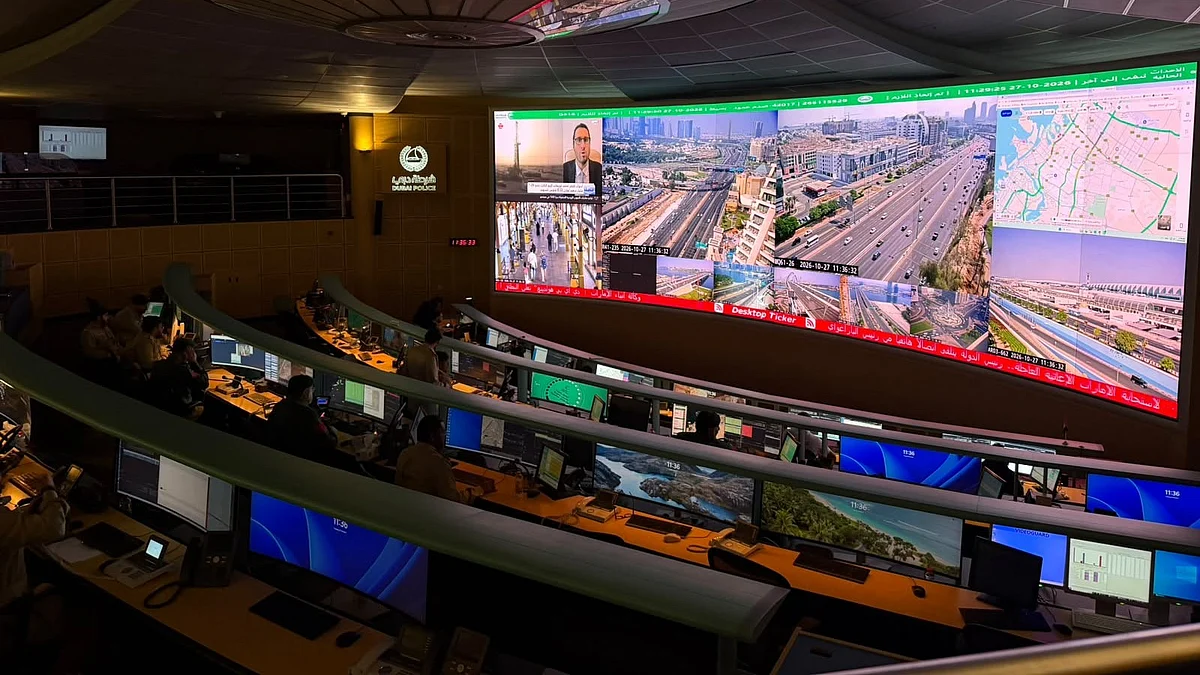
Dubai Police Drones Can Reach Emergency Scenes Before Patrols: Inside The 999 Control Room


If surveillance cameras do not cover the location, a drone can be dispatched automatically to give officers an early view of the situation. The information can help them decide whether they need additional emergency resources, even before the first patrol arrives.
Recommended For YouThis is part of a network of technologies that the Dubai Police uses to manage emergency calls, locate incidents and coordinate responses across the emirate.
Stay up to date with the latest news. Follow KT on WhatsApp Channels.
In an interview with Khaleej Times, Captain Abdullah Rashid Al Maamari, Head of the Command and Control Section at Dubai Police, explained how these systems work together, from the moment someone calls 999 to the analysis of incidents after each shift.
What happens when a caller cannot explain their location
One of the first challenges for emergency operators is establishing exactly where help is needed.
Not every caller knows their location. Some may be unfamiliar with their surroundings, while others may be unable to provide complete information.
Al Maamari said the operations room uses GPS and location-based technologies to identify incident locations. Once it establishes a location, the system can display the nearest available surveillance camera, allowing officers to assess the surroundings.
The importance of this capability became clear in an incident the police had revealed in August. A woman called Dubai Police at 3.30am, managing only a few words about being at an intersection before falling silent.
Officers traced her phone to the Nad Al Sheba area and alerted nearby patrols. They eventually found her unconscious inside a locked car and rescued her.
Even when callers provide only fragments of information, the operations room can work with the details available. Al Maamari explained that something as basic as a vehicle registration number could help specialised teams locate a vehicle using available police systems and surveillance cameras.
A drone can arrive before the patrol
Surveillance cameras, however, do not cover every location. This is where Dubai Police's Drone Box system comes in. "If there is no camera at the location, we have a system called Drone Box. The drone can be deployed automatically to the scene without direct intervention," Al Maamari explained.
The drones allow officers to assess incidents remotely rather than relying entirely on information provided over the telephone.
"Even before the patrol arrives, the drone provides us with information about the incident and whether additional resources are required," he said.
The Drone Box initiative was introduced in 2021. During an earlier Khaleej Times visit to the drone operations facility, officials explained how the aircraft transmit live footage to the command centre and help assess emergencies before response teams reach the location.
The system has also been deployed in high-rise communities, including Jumeirah Lake Towers and Uptown Dubai, to support emergency response and remote monitoring.
The role of technology doesn't end when an incident is resolved.
At the end of every shift, artificial intelligence helps Dubai Police analyse and categorise incident reports, identifying areas where emergencies are concentrated.
"At present, artificial intelligence does not directly intervene in receiving calls. However, we use it to analyse reports and identify areas where incidents are concentrated," Al Maamari said.
Officers then discuss the findings during daily briefings, which helps them understand incident patterns and prepare for upcoming shifts.
AI is therefore used to support the analysis of emergency reports, rather than replace the operators who answer public calls.
Technology is only one part of the operation. Another challenge is ensuring enough personnel are available to answer emergency calls throughout the day. Al Maamari said Dubai Police studies incoming call patterns and adjusts staffing levels accordingly.
During the second quarter of 2025, 99.8 per cent of emergency calls were answered within 10 seconds.
Dubai Police also recorded an average response time of two minutes and 27 seconds for the most critical emergency incidents in 2025. "Our goal is not to miss a single emergency call. We want to respond to every emergency call we receive," Al Maamari said.
Why every call to 999 mattersHowever, not every call received on the emergency number involves an actual emergency. Al Maamari said operators regularly receive calls about traffic enquiries, everyday problems, and matters that fall under other authorities' responsibility.
Previous cases reported by Khaleej Times have included people calling 999 for directions, to ask about traffic fines and, in one unusual instance, to invite police officers to lunch. Such calls place additional demands on a system designed to respond to urgent situations.
Residents are therefore reminded to use 999 for emergencies and 901 for non-emergency police enquiries. For tourists unfamiliar with the UAE's emergency numbers, Al Maamari said Dubai's emergency system can also receive calls dialled to international emergency numbers, including 911 and 112, allowing visitors to reach emergency services.
Meanwhile, more changes are planned for the operations room.
According to Al Maamari, Dubai Police is preparing a comprehensive systems transformation over the next two years, with greater integration of artificial intelligence and advanced technologies.
The aim is to strengthen the processes already supporting emergency response, from answering the first call to ensuring officers reach those who need help.
- 'Join me for lunch': Dubai Police recall non-emergency calls on 999, warn against them Dubai Police takes marine pollution response to the skies with drones, satellite tech

Legal Disclaimer:
MENAFN provides the
information “as is” without warranty of any kind. We do not accept
any responsibility or liability for the accuracy, content, images,
videos, licenses, completeness, legality, or reliability of the information
contained in this article. If you have any complaints or copyright
issues related to this article, kindly contact the provider above.


Comments
No comment